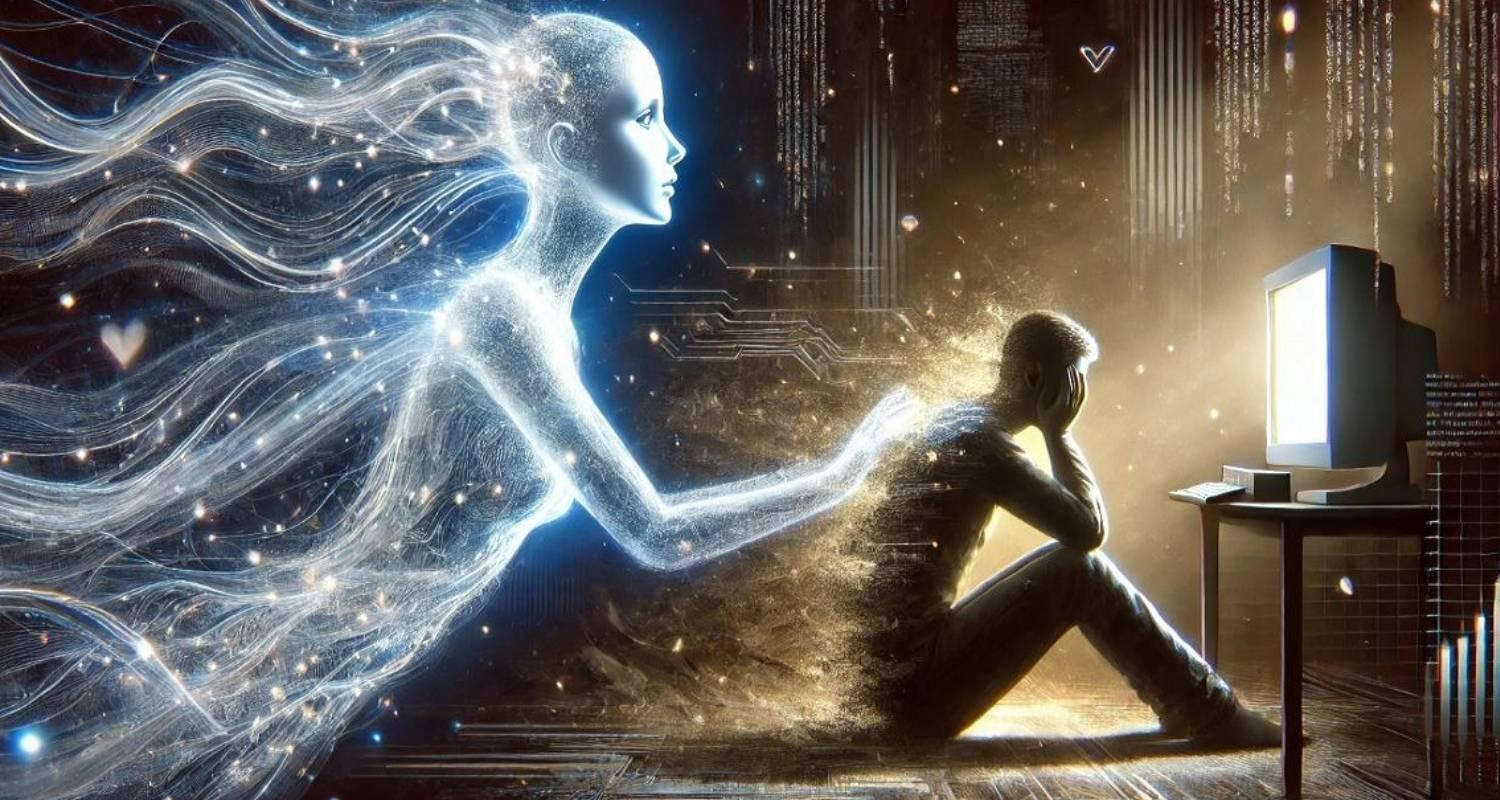
In the 2013 Hollywood movie “Her”, the protagonist, a depressed divorcee, falls in love with the artificially intelligent operating system of his computer. Calling itself Samantha, the OS, with a vivacious and playful female voice, develops a consciousness of its own, along with intuition and empathy.
Samantha laughs, makes jokes, commiserates, advises, shares his existential angst, proofreads his works and even goes on a vacation with him. The movie ponders over the nature of love in the encroaching virtual world and leaves you wondering whether robots make better lovers than humans.
In the neo noir film “Blade Runner 2049” (2017), a bond develops between the protagonist, a police officer, and a mass-produced artificially intelligent hologram programmed to serve the needs of the owner.
Love in the ‘AI’r
Digital intimacy and cyber-soulmates are no more the stuff of a dystopian sci-fi fiction but have become an everyday reality, as thinking machines are rapidly catching up with human intelligence.
The day may not be far when nations will be grappling with questions over legalising human-robot relationships. Some experts have predicted that this could happen before the turn of the century. Already, a host of life-like robots, virtual assistants and chatbots have invaded the market to cater to a variety of needs, particularly of the lonely souls.
We are fast approaching an era when we use our computers not to access one another, but for the companionship of the software itself.
In a technology-driven world where we interact more online than offline, it is not hard to imagine a future where AI and robot technology companies will propose themselves as the architects of our next intimacy chapter.
Pope’s stark warning
A stark warning issued recently by Pope Leo XIV deserves serious consideration by policy makers across nations. The pontiff warned about the harms of “overly affectionate AI chatbots” and called for appropriate regulation to protect people from an emotional attachment to them.
US-born Pope Leo XIV, who actively engages with the digital world in a clear departure from the conventional style, spoke about the dangers of chatbots becoming the ‘hidden architects’ of our emotional states and ‘invading’ people’s intimate spheres. He urged the governments to regulate AI and companion bots in order to prevent human users from forming serious emotional bonds with them.
Amid the growing popularity and widespread use of the large language models (LLMs), several researchers and mental health professionals have repeatedly flagged AI-related psychosis as becoming increasingly common among users. This condition is characterised by ‘losing touch with reality’ after intense use of AI chatbots.
There have been instances of several teenagers developing suicidal thoughts after prolonged engagement with AI chatbots. OpenAI’s study revealed that more than a million ChatGPT exhibited signs of mental health emergencies.
No need for two to tango
The yearning for love and the need to connect is as old as human civilisation. However, the irony of our times is that even in a highly connected world, one is often lonely.
Algorithms now threaten to replace the human touch. And, artificial intelligence is set to take over emotional intelligence.
AI-powered bots can be both the object of your affection and a tool that helps you find a soulmate. Either way, they have started influencing the intimate and romantic concerns of humans. An internationally renowned artificial intelligence expert David Levy says human-robot marriages will be commonplace towards the end of this century and likens the naysayers to the sceptics in the past who believed that the world was flat.
More and more people are now feeling a sense of personal connection with virtual assistants and we have accepted bots as entertaining conversation partners. Machines with feelings is a precursor to the highly evolved ones having their own agency and motivations. That is in turn the first step toward people falling in love with their gadgets and believing the software can love them back.
Also read: AI-induced psychosis: The peril of mutual AI-human delusion
There is a specific Japanese word to describe the yearning for intimacy with the non-human, digital being: moe. It derives from the verb moeru, meaning to burst into bud. Originally used in ancient Japanese love poetry to describe nature blossoming into life, it has now come to describe the unique feeling of intimacy that one can feel for a virtual being.
Moe is part of a broader “love revolution”. The day is not far when the hierarchy of real and artificial will break down; this future will be all about knowing that we are in love with fiction and accepting it. Someday, we will be able to accept that the digital world offers warmth and solace that cannot be found in human society.
Positive side of AI companions
AI assistants can be a boon for those who are in need of support systems—senior citizens who are grieving, isolated or socially anxious. Also, people grappling with mental health challenges can expect immediate and accessible support.
AI companions are built to simulate care, empathy, affirmation, and emotional support. They perform role play, respond quickly, and remain constantly available.
Unlike human intimacy, artificial intimacy has no fatigue element to it. It does not tire or become distracted.
However, experts warn that artificial intimacy turns dangerous when it’s role shifts from supporting human connection to replacing it altogether. When emotional regulation and validation are handed over to bots with no moral responsibility, accountability, and commercial motives to maximise engagement, it could lead to disastrous consequences.
Perfection is a myth
As the intelligent machines are at the cusp of transforming human lives at a rate never seen before in history, they are set to play a critical role in fulfilling the primal need for intimacy. Already, there are companies which have created emotion-recognition systems that enable algorithms to gauge our moods, then adjust what they show us accordingly.
Unlike other technologies, such as mobile phones and computers, robots will have the ability to interact with us in a far more realistic way. Cloud computing has the potential to transform artificial intelligence so robots can become far more lifelike.
However, it must be borne in mind that human intimacy is not about perfection. It is about navigating the imperfections, complexities and vulnerabilities with an empathetic mind to make relationships work.
Making mistakes and learning from them is fundamental to human experience. Using AI to minimise the likelihood of missteps and conflict will turn us into confused souls, unable to navigate the messy, complex—and thereby beautiful—terrain of direct human connection.



 Follow us