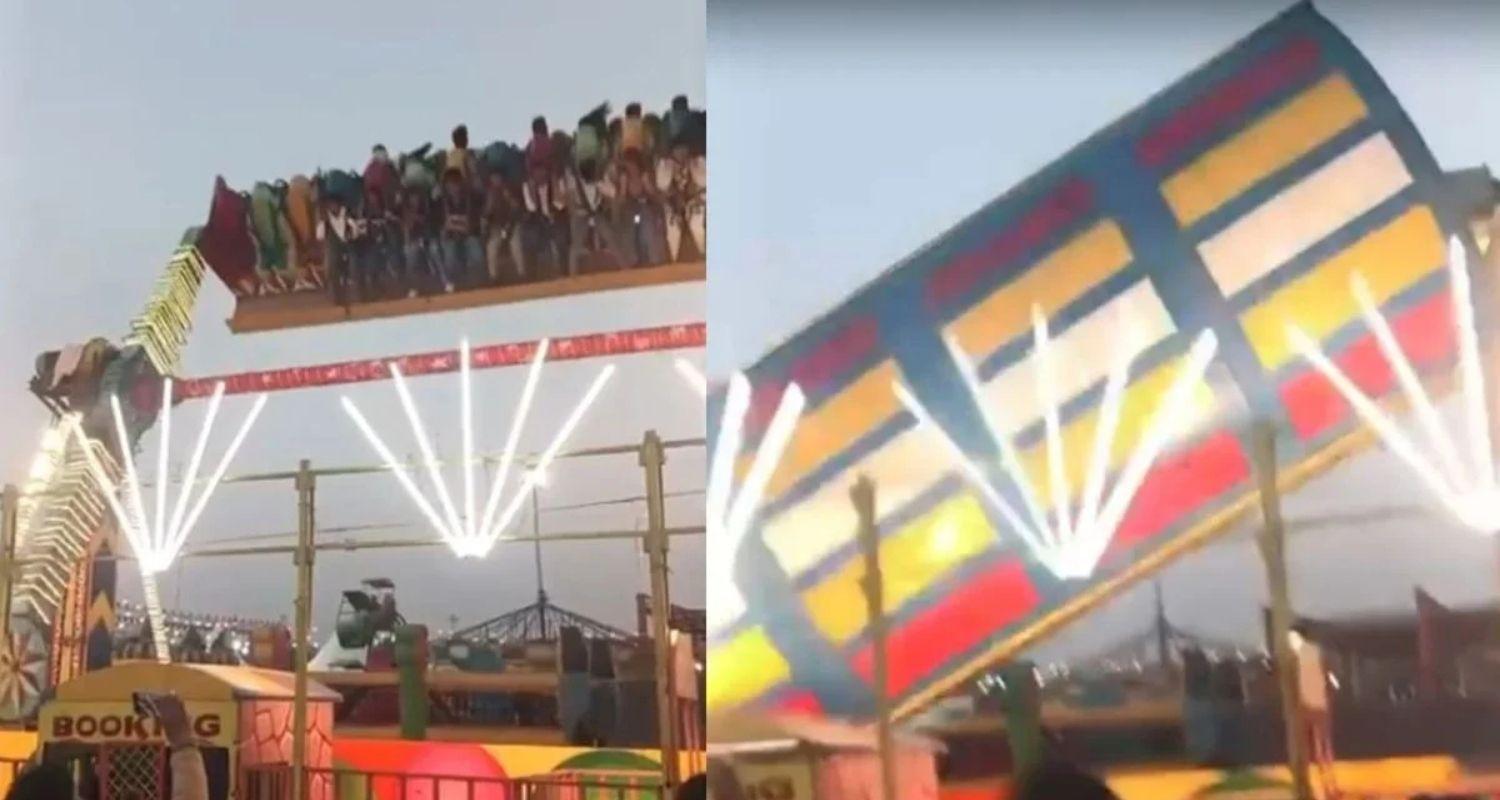
Taking note of the fatal swing collapse and what it called 'systemic deficiencies' at the recently concluded Surajkund International Crafts Mela, the Haryana Human Rights Commission (HHRC) said no fair or large public event should be allowed without certification from a multidisciplinary technical panel.
The commission also urged the state government and all authorities to follow a zero-tolerance policy towards any compromise on public safety at mass gatherings. The tragedy occurred on February 7 at the mela in Surajkund, Faridabad district, when a high-speed pendulum ride carrying around 19 persons tilted and crashed to the ground. Police Inspector Jagdish Prasad (59), who was on duty, lost his life while trying to rescue those trapped.
Twelve others were injured. The commission, headed by Chairperson Justice Lalit Batra with members Kuldip Jain and Deep Bhatia, in an order dated February 12, sought comprehensive reports from the authorities concerned.
Taking suo motu cognisance of media reports on the swing collapse and the “systemic deficiencies” observed during its own visit, the HHRC said that no fair, festival or large public event should begin without prior certification by a multidisciplinary technical committee. This committee must include structural engineers, electrical safety experts, fire officers and disaster management officials.
It directed that mandatory third-party safety audits of all amusement rides, gates, stalls and temporary structures be carried out before inauguration and at regular intervals during the event. Dedicated emergency response teams, ambulances, fire tenders, first-aid centres and trained rescue personnel should be stationed at key locations, the commission said.
The commission observed that a fair must be fair in every sense. Along with cultural celebration and economic activity, equal importance must be given to safety, accessibility, accountability and human dignity. It added that any fair that compromises on these essential elements becomes, in effect, 'quite unfair' to the public.
Assistant Registrar of the HHRC, Dr Puneet Arora, said the commission has sought comprehensive reports from all authorities. The Deputy Commissioner of Faridabad has been asked to submit a detailed report within four weeks, including findings of the inquiry panel, the status of the FIR and action taken against those responsible.
The Director General of Police, Haryana, has been directed to submit a report on the circumstances that led to the death of Inspector Jagdish Prasad. The report must also mention compensation paid or proposed for his family and steps taken to ensure the safety of police personnel deployed at large public events.
The commission has further recommended that the government consider a posthumous honour for the officer who lost his life in public service. It has also directed the Commissioner and Secretary to the Government of Haryana, Heritage and Tourism Department, and the Vice-Chairman of the Surajkund Mela Authority, Chandigarh, to submit a comprehensive report on existing safety rules for fairs and amusement rides, along with measures proposed to strengthen them.
All authorities concerned have been directed to submit their reports at least one week before the next hearing, which is scheduled for April 7. On February 7, the day of the tragedy, the HHRC Chairperson, along with members and the Registrar (Judicial), was present at the fair for a human rights awareness camp when several safety-related incidents were witnessed. Near the food court, a temporary entrance gate collapsed due to strong winds, injuring two to three people. This incident reflected the unsafe condition of temporary structures at the venue. Around the same time, near Gate No. 2, close to the commission’s camp, another temporary gate was found dangerously tilted towards nearby stalls.
Recognising the risk, Chairperson Justice Lalit Batra and the members contacted Police Inspector Jagdish Chander, who was on mela duty. Due to his prompt action, the tilted gate was removed within about half an hour, preventing a possible major accident.
The commission noted that most of the installed structures, including entrance gates, stalls and amusement rides, were temporary and appeared weak. Important technical factors such as wind speed, structural stability and load-bearing capacity did not seem to have been properly considered during installation. This pointed to serious lapses in planning and regulatory supervision.
It further stated that there was no proof to show that a competent technical committee had carried out a thorough structural and electrical safety inspection before the inauguration of the fair. The absence of mandatory inspection and certification was termed a serious administrative lapse and negligence. The commission also observed that at a large public event like Surajkund, adequate emergency response teams, trained rescue staff and well-equipped medical units were not visibly deployed in sufficient numbers.
In addition, pathways at several places within the fair premises were uneven and poorly maintained, causing inconvenience to senior citizens, children and persons with disabilities. The commission, under the chairmanship of Justice Lalit Batra, said these circumstances point to a possible violation of the fundamental right to life, safety and human dignity guaranteed under Article 21 of the Constitution of India.
Also Read: Oppn gears up to corner Haryana govt in budget session



 Follow us