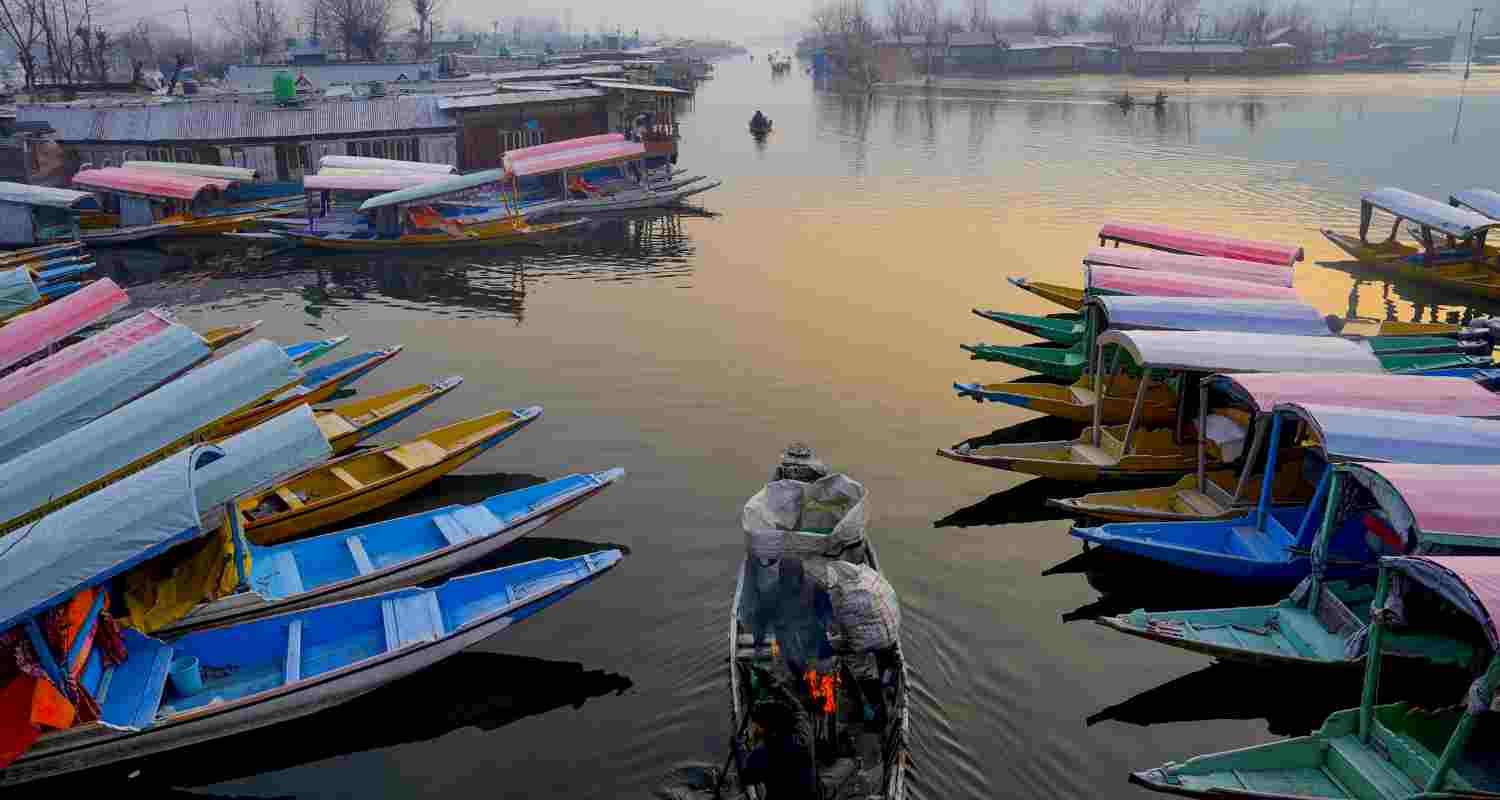
The freezing weather conditions have persisted in Jammu and Kashmir as minimum temperatures on Saturday slipped several degrees across most weather stations, officials said. According to the MeT office in Srinagar, “The summer capital recorded a minimum temperature of minus 5.2 degrees Celsius on Friday night compared to minus 5.9 degrees Celsius recorded the night before.”
The severe cold conditions have led to the freezing of several water bodies, including the famous Dal Lake in Srinagar.
Earlier on Thursday, Srinagar recorded the season’s coldest night, with minimum temperatures plunging to minus 6.0 degrees Celsius, 4.2 degrees below the season’s normal. However, temperatures on Saturday night showed a slight improvement.
Most of the weather stations in the Kashmir Valley, including those in the north, south, and central regions, are experiencing intensified cold wave conditions after the higher reaches of the Kashmir Valley continued to receive fresh snowfall. The dry weather conditions have also led to a surge in seasonal illnesses. Doctors have advised people to keep warm and avoid unnecessary early morning travel.
Also Read: Severe cold wave persists across Kashmir Valley
Meanwhile, in the Jammu region, minimum temperatures remained above normal at most weather stations, including Jammu city, Katra, Reasi, Kathua, Udhampur, and Mata Vaishno Devi. Jammu city remained the warmest place, with minimum temperatures at 3.2 degrees Celsius, while South Kashmir’s Shopian emerged as the coldest, with minus 8.6 degrees Celsius.
The Valley’s main tourist attractions, Gulmarg, Sonamarg, and Pahalgam, are witnessing a massive rush of tourists following the recent snowfall. The Kashmir Valley is in the middle of the harshest winter period, Chillai-Kalan, a 40-day cold spell typically accompanied by major snowfall.
However, the deficit in rain and snowfall in the plains has caused uncertainties among the farming community in the region.
During this period, the Kashmir Valley usually receives heavy snowfall, which replenishes the agricultural land, particularly the horticulture and saffron fields.



 Follow us