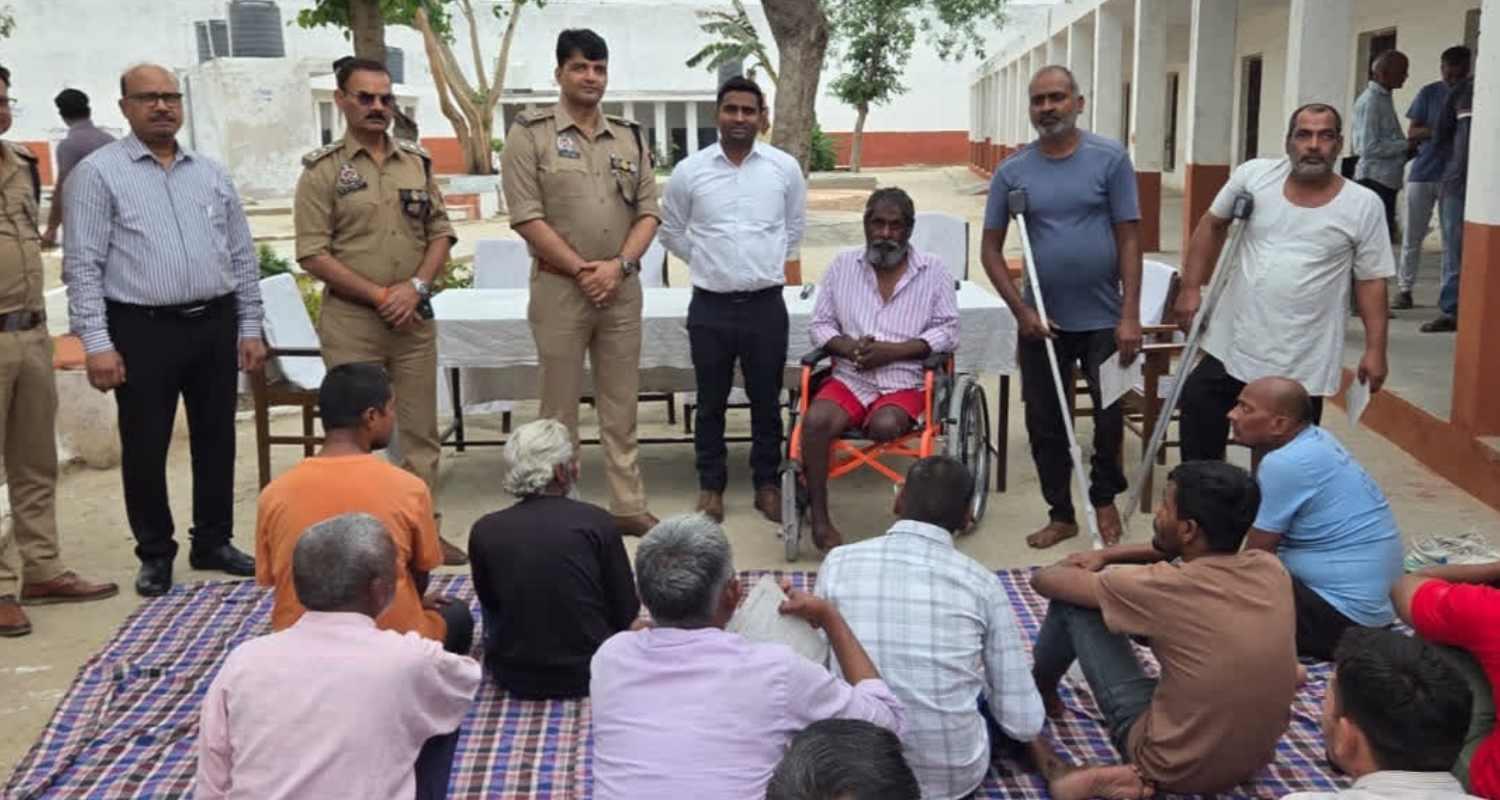
In a significant step towards inclusive governance, authorities in Ghaziabad have launched a targeted initiative to ensure that prisoners with disabilities are not excluded from welfare schemes due to procedural hurdles or lack of awareness.
The move has been undertaken jointly by the Department for Empowerment of Persons with Disabilities and the District Jail, Ghaziabad, following directives from the Supreme Court, which emphasised the state’s responsibility to extend welfare benefits to marginalised groups, including inmates with disabilities.
Officials noted that the initiative seeks to address a systemic gap that has long gone unnoticed. A large number of disabled prisoners lack valid disability certificates or essential documents such as Aadhaar cards and bank account details, rendering them ineligible for government welfare schemes.
Disability Empowerment Officer Anshul Chauhan, who is leading the effort at the district level, said that a recent inspection revealed several inmates had not been formally certified.
“Without certification, they remain outside the ambit of welfare schemes. This initiative is designed to close that gap,” he said.
To overcome logistical challenges, authorities have introduced an on-site certification mechanism within the jail premises.
Traditionally, persons with disabilities are required to appear before a medical board at the MMG District Hospital, where assessments are conducted weekly. However, for prisoners, such arrangements are often difficult to execute.
Under the new plan, a special medical board will be set up inside the jail in coordination with the Health Department, enabling inmates to undergo assessment and obtain official disability certificates without leaving the facility.
Beyond certification, the initiative also focuses on ensuring that inmates possess the necessary documentation to access welfare benefits. Officials will assist prisoners in obtaining Aadhaar cards, opening bank accounts, and completing other formalities required for inclusion in government schemes. Once certified and documented, eligible inmates will be enrolled in disability pension programmes and provided assistive devices suited to their needs.
Authorities said that the initiative goes beyond immediate welfare, aiming to improve long-term rehabilitation outcomes. Special awareness programmes will be conducted within the jail to educate inmates about their rights, available schemes, and opportunities for reintegration into society.
Additionally, disabled prisoners will be linked to employment-oriented schemes, enabling them to pursue self-employment and achieve financial independence after their release. The district administration emphasised that the initiative is designed with a long-term perspective.
“Their life is not only about being confined to the prison but ensuring once they step out, they have all the information and are equipped to relive their lives,” Chauhan said.
The programme is expected to serve as a model for similar interventions aimed at ensuring that even the most marginalised sections are not left behind in accessing welfare benefits.



 Follow us