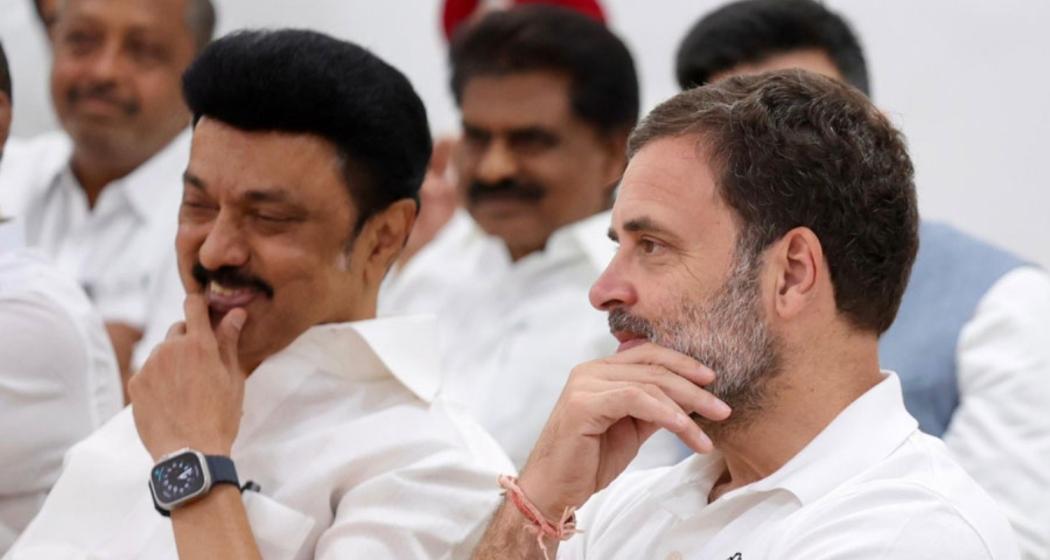
The INDIA bloc's proposed meeting in the national capital on June 8 is set to proceed without the DMK, highlighting growing strains within the Opposition alliance following recent political developments in Tamil Nadu.
Around 17 Opposition parties are expected to participate in the gathering, which has been convened to project unity and discuss political strategy both inside and outside Parliament. However, the absence of the DMK, one of the alliance's key constituents, is likely to attract attention amid its deteriorating relationship with the Congress.
The friction follows the Congress's decision to sever ties with the ruling DMK in Tamil Nadu and align with actor Vijay's Tamilaga Vettri Kazhagam (TVK), eventually becoming part of the state government.
Signs of the widening divide had surfaced earlier when DMK Lok Sabha leader K. Kanimozhi wrote to Lok Sabha Speaker Om Birla seeking separate seating arrangements for DMK MPs, away from Congress members in the House.
Also read: CM Vijay orders probe into TN minor girl murder case
Despite the setback, several prominent Opposition leaders are expected to attend the June 8 meeting.
Trinamool Congress supremo and former West Bengal chief minister Mamata Banerjee is likely to participate, despite often maintaining a cautious distance from the INDIA bloc. She is expected to be accompanied by party national general secretary Abhishek Banerjee.
Several Opposition parties recently rallied behind Abhishek Banerjee following an alleged attack on him in West Bengal, criticising the BJP over the incident.
Jammu and Kashmir Chief Minister Omar Abdullah and Jharkhand Chief Minister Hemant Soren are also expected to attend the meeting. Samajwadi Party chief Akhilesh Yadav, Rashtriya Janata Dal leader Tejashwi Yadav and Shiv Sena (UBT) president Uddhav Thackeray are among the leaders scheduled to be in Delhi for the discussions.
The meeting is being viewed as an attempt by Opposition parties to present a united front ahead of upcoming political battles. However, the DMK's decision to stay away is likely to fuel questions about cohesion within the alliance and the challenges of maintaining unity among its diverse constituents.



 Follow us