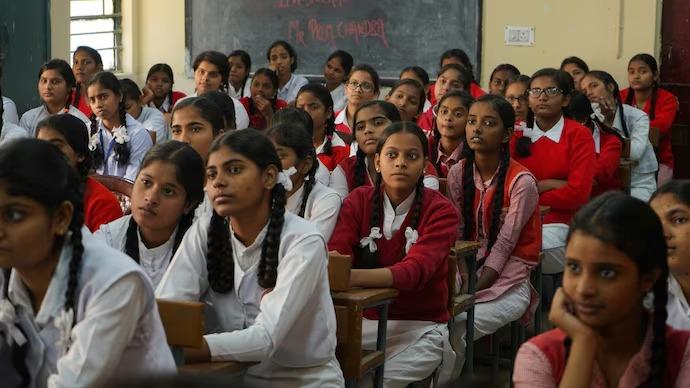
Punjab Education Minister Harjot Singh Bains on Thursday announced a ₹400 crore digitalisation initiative, aimed at replacing outdated hardware and phasing out obsolete computer systems from government schools across Punjab. The project, launched under the banner of ‘Punjab Sikhya Kranti’, seeks to equip schools with modern technology and transform classroom teaching in Punjab.
Detailing the rollout, the minister said 38,649 new desktop computers loaded with the latest software are being distributed across 5,012 government schools. The computers will be supplied to all senior secondary and high schools, as well as 50 per cent of middle schools, ensuring wider student access to updated hardware and digital tools. In addition, dedicated computer labs will be set up in 5,000 government schools, covering all secondary and senior secondary
institutions.
Also read: Shah’s Badlav Rally to boost BJP in Punjab: Grewal
To promote interactive and technology-enabled learning, the government is installing 8,268 interactive flat panels in 3,694 schools. Every senior secondary and high school will receive the panels, with larger schools allocated four, five or even eight units depending on enrolment strength. Bains said the large-scale induction of technology would ensure that digital literacy and smart classrooms are no longer confined to private institutions, but become a basic right for students in the public education system.
Calling the initiative a decisive move away from traditional chalkboards toward smart classrooms, the minister said many students had been working on severely outdated systems that were barely functional. “For too long, our students were using computers running old versions of basic software. We are changing that permanently,” he said, adding that the implementation has already begun. Deliveries are underway, and the government aims to ensure that every school in every district receives the new equipment by March 20.
Bains described the introduction of interactive flat panels as a structural shift in pedagogy that will fundamentally alter how lessons are delivered and understood in classrooms.
Responding to concerns regarding Teacher Eligibility Test (TET) requirements, the minister assured educators that their jobs remain secure. He acknowledged anxiety among teachers who have been serving for two to three decades and said the government is exploring legal solutions. He added that he is in constant dialogue with teacher unions and examining all available legal options.
The assurance comes in the backdrop of a Supreme Court ruling last year making TET qualification mandatory for all serving teachers. In September 2025, the Apex Court directed that in-service teachers who have not cleared the eligibility test must do so within two years to continue in service. However, those with fewer than five years of service remaining have been allowed to continue without qualifying the TET.



 Follow us