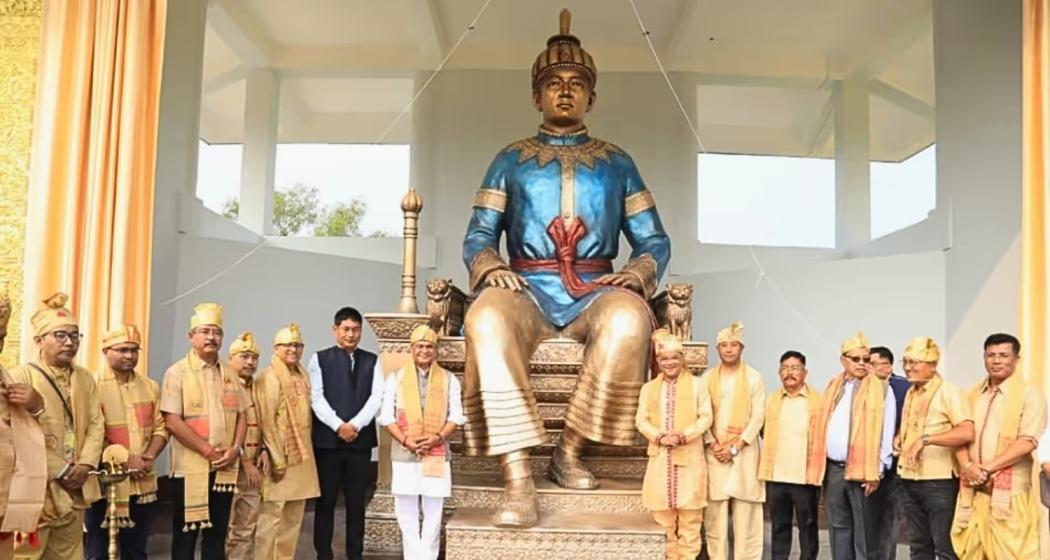
Assam Chief Minister Himanta Biswa Sarma on Saturday paid homage to Swargadeo Chaolung Siu-Ka-Pha, the founder of the Ahom dynasty, by unveiling a grand statue of him at Notboma in Guwahati during the Tai-Ahom community's sacred ancestral festival, Me-Dam-Me-Phi.
The event honoured Siu-Ka-Pha's legacy of uniting diverse communities and establishing a harmonious kingdom that endured for nearly six centuries. Sarma highlighted the king's role in fostering consensus-based governance and preserving cultural identity.
“Swargadeo Chaolung Siu-Ka-Pha established one of the greatest kingdoms of Bharatvarsha, a realm guided by consensus and rooted in the protection of heritage and identity. Today, on the sacred occasion of Me-Dam-Me-Phi, we dedicated his Bhavya Murti in the heart of Guwahati,” Sarma wrote on X.
The Chief Minister’s Office posted: “Recalling the visionary legacy of the founder of the Ahom dynasty, Hon’ble CM remarked that the Swargadeo united diverse communities into a bond of harmony, laying the foundation of a Bor Asom.”
Also read: Ahom General Borphukan's documentary to be telecasted soon
Me-Dam-Me-Phi, meaning “offerings to ancestors and gods” in the Tai-Ahom language, is observed annually on 31 January with rituals, prayers, and community gatherings to honour forebears and seek blessings.
Swargadeo Chaolung Siu-Ka-Pha (also known as Sukaphaa), born around 1189 in Möng Mao (present-day northern Myanmar or Yunnan border region), was a Tai prince who led his followers across the Patkai hills to the Brahmaputra Valley in 1228. He founded the Ahom kingdom, which began as a small settlement but grew into a multi-ethnic state through diplomacy, alliances with local tribes such as the Chutiyas, Kacharis, and Morans, and innovative administration. Rather than conquest, Sukaphaa emphasised integration, wet-rice agriculture, and consensus governance, laying the foundations for Bor Asom (Greater Assam). His dynasty ruled until 1826, resisting Mughal invasions multiple times and fostering cultural syncretism that shaped modern Assamese identity.



 Follow us