


Trending:
Vizag tragedy exposes safety loopholes in steel plants
It was a preventable tragedy. Unfortunately, no lessons were learned from the past mistakes. One feels a grim sense of déjà vu whenever an industrial mishap occurs. The patterns are disturbingly familiar. So are the responses that follow. Follow us
News Arena Network - Chandigarh - UPDATED: June 9, 2026, 01:01 PM - 2 min read
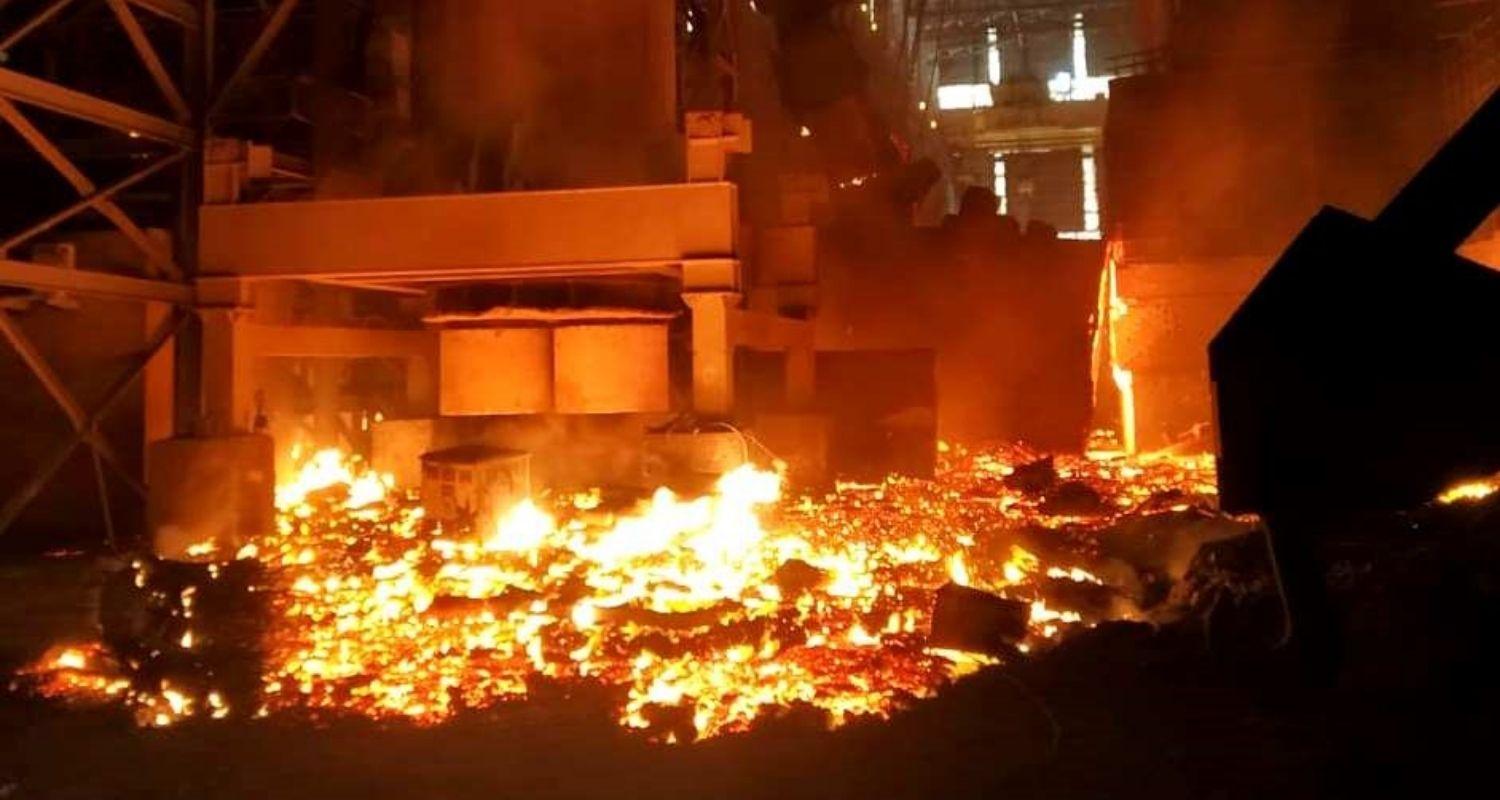
A ladle carrying nearly 150 tonnes of liquid steel at 1,500-1,600 degrees Celsius exploded at the steel melting shop, instantly killing eight workers, engulfed in a torrent of molten metal.
The death of eight workers at the Visakhapatnam Steel Plant (VSP) came as a grim reminder of the loopholes in the safety standards at India’s first shore-based integrated public sector steel plant.
A ladle carrying nearly 150 tonnes of liquid steel at 1,500-1,600 degrees Celsius exploded at the steel melting shop, instantly killing eight workers, engulfed in a torrent of molten metal.
The mishap occurred on Monday in the plant’s continuous casting department (CCD) under the steel melting shop (SMS) section. The intense heat and resulting fire, due to the leakage of the liquid metal, trapped the workers in the vicinity.
It was a preventable tragedy. Unfortunately, no lessons were learned from the past mistakes. One feels a grim sense of déjà vu whenever an industrial mishap occurs. The patterns are disturbingly familiar. So are the responses that follow. Ex-gratia is announced, a probe is ordered, and a few officials are suspended amid a political blame game. It’s business as usual till the next tragedy strikes.
Apart from the investigation initiated by the Rashtriya Ispat Nigam Limited (RINL), which runs the plant, the Union Steel Ministry has constituted a three-member external enquiry, headed by the Director-in-Charge, Bokaro Steel Plant, Steel Authority of India Limited (SAIL), to conduct an independent inquiry.
Long history of accidents
Monday’s tragedy is not an isolated incident in the history of the steel plant, operational since 1991. It is the latest in a long record of preventable accidents.
On May 1, 2012, two contract workers were burnt to death in an explosion inside blast furnace-3. Six weeks later, on June 13, came the worst industrial accident in the history of Indian steel production at that time.
An explosion ripped through the newly commissioned oxygen plant in steel melt shop-2 during a trial run. Nineteen workers were killed.
The blast was so powerful that cars parked near the unit were flung into the air. In the immediate aftermath, trade union leaders made a damning allegation that routine maintenance at the plant had been neglected for more than twelve months.
In June 2014, two engineers were fatally injured in a suspected case of carbon monoxide poisoning, a silent killer that stalks blast furnace operations. In February 2023, nine workers were injured, including a deputy general manager, when hot slag unexpectedly fell on them, illustrating that the risk is not confined to the most dramatic explosions. Everyday operations carry lethal potential.
After every major accident at VSP, inquiry committees were constituted and they came to the same conclusion that ‘no human error was involved’ in the incidents. This raises serious questions over safety protocols.
For the record, the VSP, which has a capacity of 7.3 million tonnes per annum, conducts an external safety audit every year and internal inspections every three months through the plant’s safety engineering department.
Need for independent probe
The inquiry committees led by officials from the sister PSUs, however competent the members may be, cannot substitute for genuinely independent forensic investigation.
The inquiry after each major accident should include independent metallurgists, safety engineers not employed by any Ministry of Steel entity, and workers’ union representatives.
Also read: Eight workers die in Vizag Plant after molten steel fell on them
There is a need to critically assess the operational efficiency of the old equipment as the plant has been operating since 1992, with capacity expansions in 2015 and 2017. Rigorous life-cycle assessments of critical equipment—ladles, cranes, refractory linings, oxygen supply systems—must be conducted and acted upon, not merely documented.
Given that two major accidents at VSP, in 2012 and 2026, involved explosions in the steel melting shop, the entire cycle of ladle preparation, preheating, moisture checks, slide-gate integrity inspection, and crane certification must be subject to a mandatory, documented, and independently verified protocol before every heat.
In both the 2012 and 2026 disasters, contract workers figured prominently among the victims. Contract workers, who are often less trained and less empowered to raise safety concerns, must be brought fully within the ambit of safety regulations, with equal access to training, PPE (Personal Protective Equipment), and whistleblower protections.
Safety regulator
The steel sector is highly hazardous and currently lacks a dedicated, independent statutory safety regulator. While the Steel Ministry has established process-based safety guidelines for integrated and secondary plants, enforcement relies heavily on state-level factory inspections rather than a specialised, centralised federal safety authority.
Workplace safety audits and enforcement fall under state-level factory inspections governed by the Factories Act, rather than a specialised steel-specific federal regulator.
The steel sector needs a dedicated technical safety authority—modelled on the UK's Health and Safety Executive with sector-specific expertise, enforcement powers, and the authority to shut down operations that fail inspection.
Globally, steel producers prioritise safety through stringent standards and technological innovations. Countries like Japan, Germany, and South Korea have achieved exemplary workplace safety records, with accident rates substantially lower than India’s.
While India is the second-largest steel producer globally, safety remains a critical concern. According to the Directorate General of Mines Safety (DGMS), over 4,500 industrial accidents occur annually in India, with a significant share from the steel sector. A 2023 report indicated that India’s steel industry accounted for 20 per cent of total industrial fatalities.
Way forward
Experts have been pushing India to adopt international safety benchmarks like ISO 45001 and OHSAS 18001. Mandatory compliance across all steel plants can bridge the gap between India and global leaders.
There is also a need for stepping up investments to upgrade technology. Technological advancements such as real-time monitoring systems for gas leaks, automated slag handling, and predictive maintenance tools can prevent accidents. For instance, POSCO in South Korea uses AI-driven systems to monitor furnace conditions, achieving near-zero fatalities.
Contract workers constitute over 40 per cent of the workforce in Indian steel plants. Structured training programmes, certifications, and periodic refresher courses can significantly reduce human error.
Regulatory mechanism is another area that needs urgent attention. India’s Factories Act of 1948 is outdated for modern steel production processes. Revising it to include specific safety mandates for heavy industries is imperative. Additionally, regular third-party audits should be mandated.
India's steel industry is central to its infrastructure ambitions and future economic growth. Ensuring workers’ safety is integral to the task of realising that ambition.