Punjab Chief Minister Bhagwant Singh Mann during an interaction with a private television news channel claimed that while the BJP may win one or two seats, the Congress may win about nine and the Akalis will draw a blank. He suggested over 100 seats for his own Aam Aadmi Party. Boasting does not cost anything to anyone, much less in politics.
In the last assembly elections held in 2022, the AAP achieved a phenomenal score of 92 out of 117 seats. In no case the AAP is in a position to repeat the previous performance, leave aside improving upon it, as claimed by Mann “in writing”.
The AAP leaders, be it Mann or party supremo Arvind Kejriwal, are known for making big claims ahead of the elections. Kerjiwal made similar claims ahead of the 2017 and 2022 assembly elections also. While in 2017 the party, in its maiden election won 20 seats, in 2022 it swept to power with an overwhelming majority. Much water has flown down the Satluj since then.
Punjabi voters are traditionally anti-incumbent and have always voted out the sitting government. The year 2012 was an exception when the Akali-BJP was re-elected. But again the difference between the vote share of the Congress and the winning Akali-BJP was just about 1 per cent. While the Congress polled 40 per cent, the Akali-BJP alliance polled 41 per cent and that made a huge difference in terms of the number of seats.
By all accounts, the AAP is also faced with a strong anti-incumbency. Failing economy, unemployment, rising crime, particularly the gangster culture and prevalence of drugs, a problem the AAP inherited from its predecessors, will badly haunt the ruling party in Punjab in the ensuing elections. The AAP is banking upon the Rs 1000 monthly cash assistance it is likely to start paying to women from August. That may improve the party’s performance, but that alone will not necessarily deliver it the victory.
Although the AAP has won most of the by-elections and local bodies elections held since 2022, it fared badly in the 2024 General Elections. The by-elections are mostly won by the ruling parties in every state and the AAP in Punjab was no exception. However, in the 2024 General Elections, the AAP’s performance was far below what it was in 2022.
Also read: Congress dilemma in Punjab may cost it dear
The AAP could win just 3 of the 13 parliamentary constituencies from Punjab. It led from 32 assembly segments, a massive fall from its 92 assembly wins in 2022. Compared to that, the Congress won seven parliamentary constituencies and led from 38 assembly segments. Although the BJP could not win any parliamentary constituency in Punjab in 2024, which was for the first time in recent history, it led from 23 assembly segments, which was a phenomenal performance. The Shiromani Akali Dal won a single parliamentary constituency of Bathinda and led from 13 assembly segments with 13.5 per cent overall vote share.
In terms of vote share also, the Congress was slightly ahead of the AAP. While the Congress got 26.4 per cent votes, the AAP got 26.2 and the BJP and the Akalis got 18.6 and 13.5 per cent respectively. There was a difference of less than 8 per cent vote share between the BJP and both the Congress as well as the AAP. This brings the party within the striking distance of the two main players.
From these figures, anyone being dismissive about the BJP would be doing at his own peril. The BJP also has the option of having an alliance with the Shiromani Akali Dal. In fact, the two parties do not have any other option for alliance except between two of them. There is no other possible combination in Punjab as of now. And in case that happens, it will be quite a formidable alliance.
The two parties have realised that had they fought the 2024 General elections together, they would have straightway won 6 parliamentary constituencies. While the Akalis won Bathinda, in five other constituencies including Ludhiana, Patiala, Ferozepur, Gurdaspur and Amritsar, the BJP and Akali candidates polled more votes together than the winning candidate. Besides, they would have been close in two constituencies of Anandpur Sahib and Hoshiarpur.
The BJP’s repeated assertions of going it alone in the 2027 assembly elections apart, the parliamentary results and the ground situation in Punjab will weigh heavily in the leadership’s mind while taking the final decision. If the Akalis and the BJP align together, they will be a formidable force in a three-cornered contest. If they go separately, in the four-cornered contest it may be anybody’s game with a definite and decisive edge for the Congress.
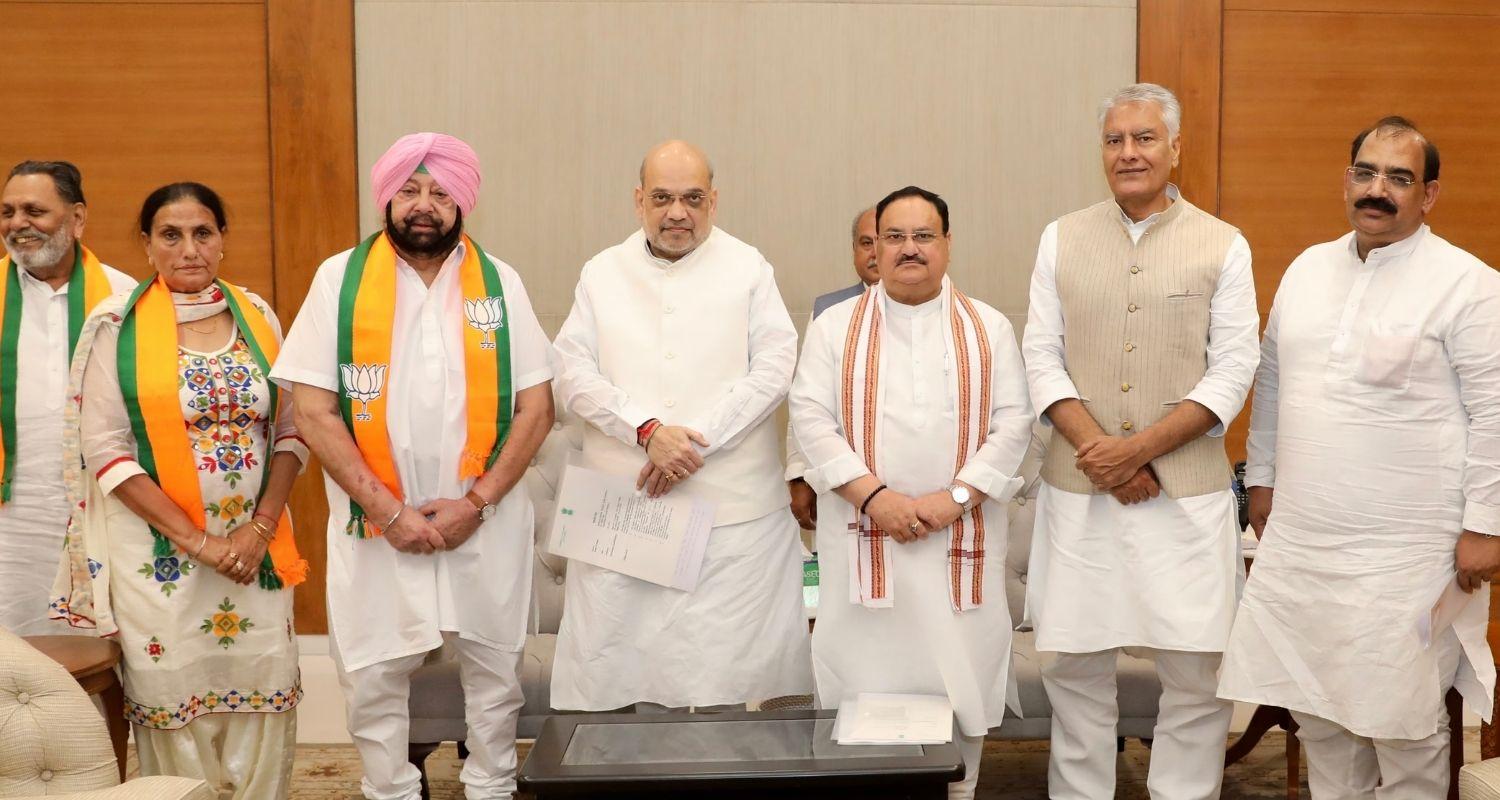
The BJP right now is a power-packed team with the most senior and seasoned leaders, most of them having joined from the Congress. They include Capt Amarinder Singh, Sunil Jakhar, Manpreet Badal, Praneet Kaur, Ravneet Singh Bittu, Tarun Chugh, Ashwani Sharma, Avinash Rai Khanna, Manoranjan Kalia and many others. The stature and seniority of the leaders does matter and the BJP scores over all other parties on that count.
As the situation prevails right now in Punjab, it is clearly an edge for the Congress. That is because only the Congress has a pan-Punjab presence across the urban and rural areas and also among all the communities cutting across the religious and caste lines. While the AAP did manage to break all these barriers in 2022, it could not retain its hold in the urban areas where it was completely wiped out during the parliamentary elections. While the BJP got an edge, the Congress put up a strong resistance.
Union Home Minister Amit Shah, during his public rally in Moga, boasted that wherever the BJP gets 18 per cent vote share, it subsequently forms the government there. Shah’s election management skills are legendary. What he says, he means, and what he means, he does. That is his proven record, so far. Political parties in Punjab must not take refuge in the argument that "Punjab is not like UP or Bihar". The Trinamool Congress leaders used to say the same thing about Bengal. Eventually, Bengal proved much better for the BJP and much worse for the Trinamool Congress.



 Follow us