


Trending:
Back to the moon and beyond
Artemis is more than just a trip around the moon. It is part of a larger plan to return humans to the lunar surface, establish a permanent base and eventually prepare for missions to Mars. It envisages using the Moon as both a laboratory and a launch pad for future expeditions deep into space. Follow us
News Arena Network - Chandigarh - UPDATED: April 7, 2026, 05:25 PM - 2 min read
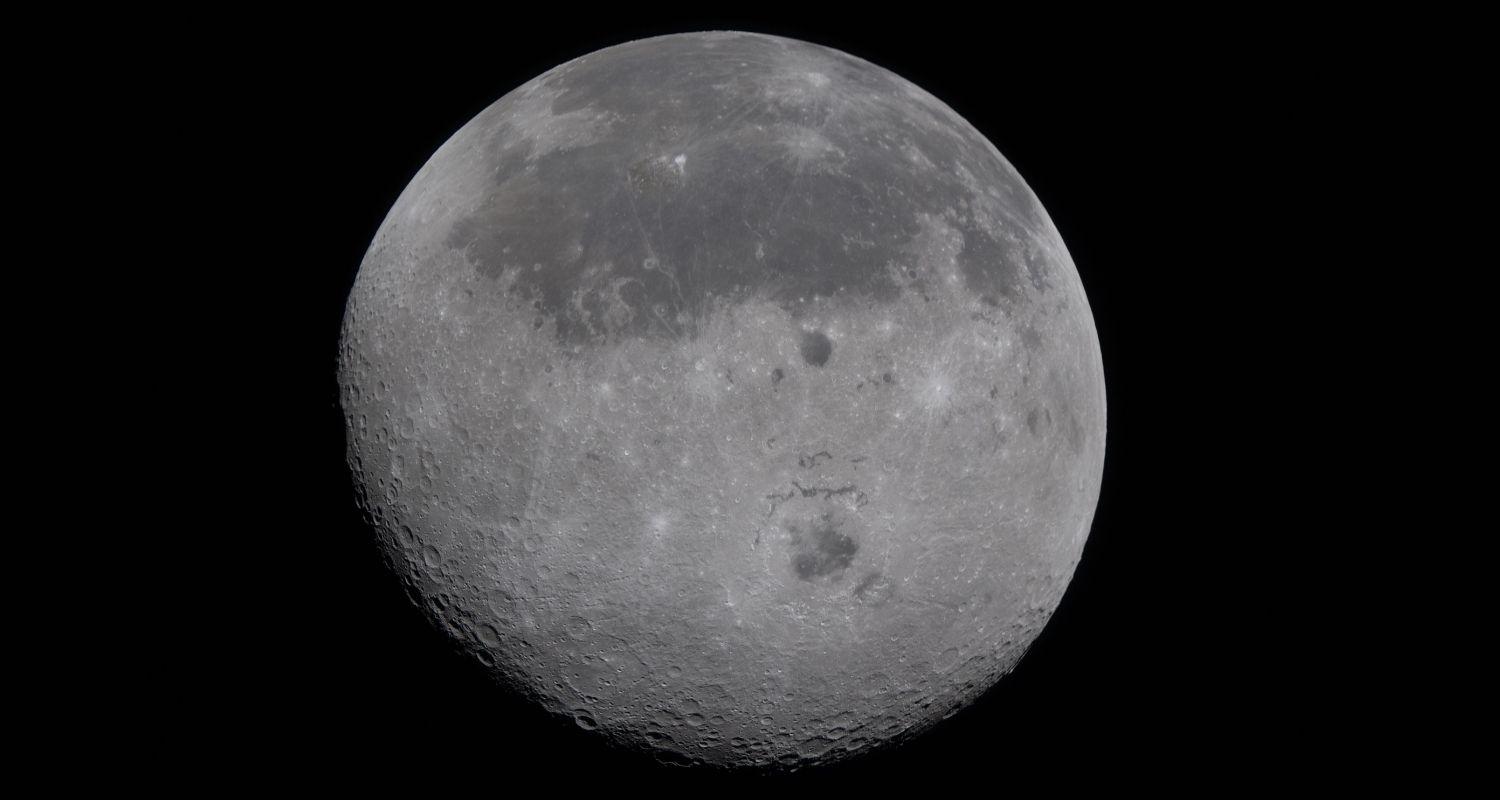
The lunar missions of the coming years are going to be fundamentally different from the Apollo programme that landed 12 humans on the Moon between 1969 and 1972.
Whenever the world is caught in a state of turmoil, it is the scientific endeavours that show a way out of despair and bring a ray of hope for humanity; the hope to find a common purpose and meaning.
The moon mission, Artemis-II, holds a similar promise now.
Its successful launch has brought back a sense of optimism that is missing in the present turbulent world being ripped apart by wars and trade tensions. The flyby moon mission has rekindled a sense of wonder and curiosity about space exploration at a time when there is a growing despondency over global conflicts and economic uncertainties.
The excitement of the Apollo era missions—covering the first moon landing in 1969—is back with the same intensity and a sense of awe. The passage of time and massive technological changes have not diminished the thrill of space exploration in any way.
Why moon missions now?
NASA landed astronauts on the moon five times between 1969 and 1972 as part of the iconic Apollo programme. The lunar explorations of that era reflected a space race that gave Americans a sense of victory over rival Soviet Union. In the subsequent decades, NASA has focused on low-Earth orbit with the space shuttles and the International Space Station (ISS).
Why another moon mission now, more than five decades after the last manned mission? When the technology of moon landing was demonstrated way back in the 1960s, what is there to be proved now?
The dynamics of the space race has changed dramatically over the last few decades. For the US, there is a new rival in China which is equally keen to send manned missions to the moon to explore its resources and also the possibilities of using the earth’s natural satellite as a hub for future space explorations to Mars and beyond.
The moon is a logical place to send people, both as a place to explore scientifically, and as somewhere that could be mined for resources like frozen water for later space missions, and helium-3 for futuristic energy technologies.
Under the current schedule, NASA wants to attempt two landings in 2028 while China has plans to send a manned mission in 2030.
Water on the moon
There is water at the moon’s poles, frozen in the eternal shadows within craters. Water molecules can be broken apart into hydrogen and oxygen. If countries set up moon bases there, the oxygen could provide breathable air, and hydrogen and oxygen could be used as rocket propellants.
Astronauts could also get their drinking water from the moon's ice. NASA has identified potential landing sites in this area, and China wants to build outposts around the moon's south pole.
For scientists, the water and other chemicals trapped in the shadowed regions could provide a record of comet and asteroid impacts. Cores drilled from the crater floors could provide a history of the solar system stretching back 4.5 billion years, similar to how ice cores extracted from Greenland and Antarctica tell of Earth's climate over the past few thousand years.
Another important lunar resource is Helium-3, a lighter version of helium, with only one neutron in its nucleus instead of two. It is exceedingly rare on Earth and the biggest source is decayed tritium, a heavy form of hydrogen found in nuclear weapons stockpiles.
The moon could provide much more. The sun spews out helium-3 as part of the solar wind that blows outward into the solar system. Some of those atoms slam into the moon and become embedded in the lunar soil.
Also read: Artemis II travels farthest ever into space, outpaces Apollo 13
Titanium-rich minerals are more likely to trap helium-3. The rocks on the near side of the moon contain more of these minerals and those locations are believed to be most promising for the mining of helium-3.
In the distant future, helium-3 could be an ideal fuel for fusion power plants. A more immediate use could be for ultracold refrigerator systems needed for quantum computing.
Also, a lunar telescope could be installed in a crater on the far side of the moon. A location near the equator in the middle of the far side could be an ideal listening spot.
Many firsts
Artemis-II, carrying four astronauts of diverse ethnic backgrounds, has several firsts to its credit. While moving around the Moon, the Orion spacecraft will travel to a distance of about 6,500 km from the far side of the Moon. This will be the farthest that humans have ever ventured into space.
The SLS (Space Launch System) rockets being used for the Artemis missions are the most powerful launch vehicles available to NASA right now. This is the first time that the SLS rocket and Orion spacecraft are being used to carry astronauts. The long-dormant dream of establishing a permanent lunar base draws one step closer, with the launch of Artemis-II. It will not land on the Moon but circle it and return to Earth after a 10-day journey.
A successor mission, planned for 2028, is scheduled to make a Moon landing with another set of four astronauts. Artemis II is sort of a test-ride mission, meant to test and validate all systems before astronauts finally make the landing on the Moon.
Artemis is more than just a trip around the moon. It is part of a larger plan to return humans to the lunar surface, establish a permanent base and eventually prepare for missions to Mars. It envisages using the Moon as both a laboratory and a launch pad for future expeditions deep into space.
The lunar missions of the coming years are going to be fundamentally different from the Apollo programme that landed 12 humans on the Moon between 1969 and 1972. The future engagements with the Moon will use it as a launchpad for going further into space. The set-up being attempted for the Moon is very similar to the International Space Station (ISS): regular missions carrying humans and logistics, continuous astronaut presence, and ongoing experiments.
India too in the lunar race
There are multiple players in the space race now. Russia, which inherited the Soviet space programme, has not been very aggressive about going to the Moon again, but China, Japan, and India are serious contenders. There are a host of other countries, including in Europe, that would be very important collaborators in these endeavours.
India too has lunar ambitions. It has plans to send an astronaut to the Moon by 2040. It is a signatory to the Artemis Accords, a set of non-binding, bilateral principles that guides sustainable, peaceful civil space exploration led by NASA, particularly for the Moon and Mars.
The successful Chandrayaan missions have earned India a place on the high table of the global space club. Chandrayaan-1 had made a path-breaking discovery of water molecules on lunar surface and new rock types with unique chemical composition, a feat duly acknowledged by NASA. The finding has been a great contribution by India to the understanding of the lunar environment. It also gave a major fillip to the country’s indigenous space technology.
Both the US and China have plans to establish lunar bases within the next few years. Elon Musk and Jeff Bezos are vying for the landing vessel contract via SpaceX and Blue Origin respectively. A Chinese military-civilian joint venture, meanwhile, is pursuing a twin-track approach of manned and robotic missions.
Unlike Earth, whose surface is constantly being shaped by tectonic activity, weather and erosion, the moon preserves billions of years of history. Studying it can give scientists a sense of what conditions were like in the solar system’s past, helping them understand how habitable places like Venus and Mars might once have been.