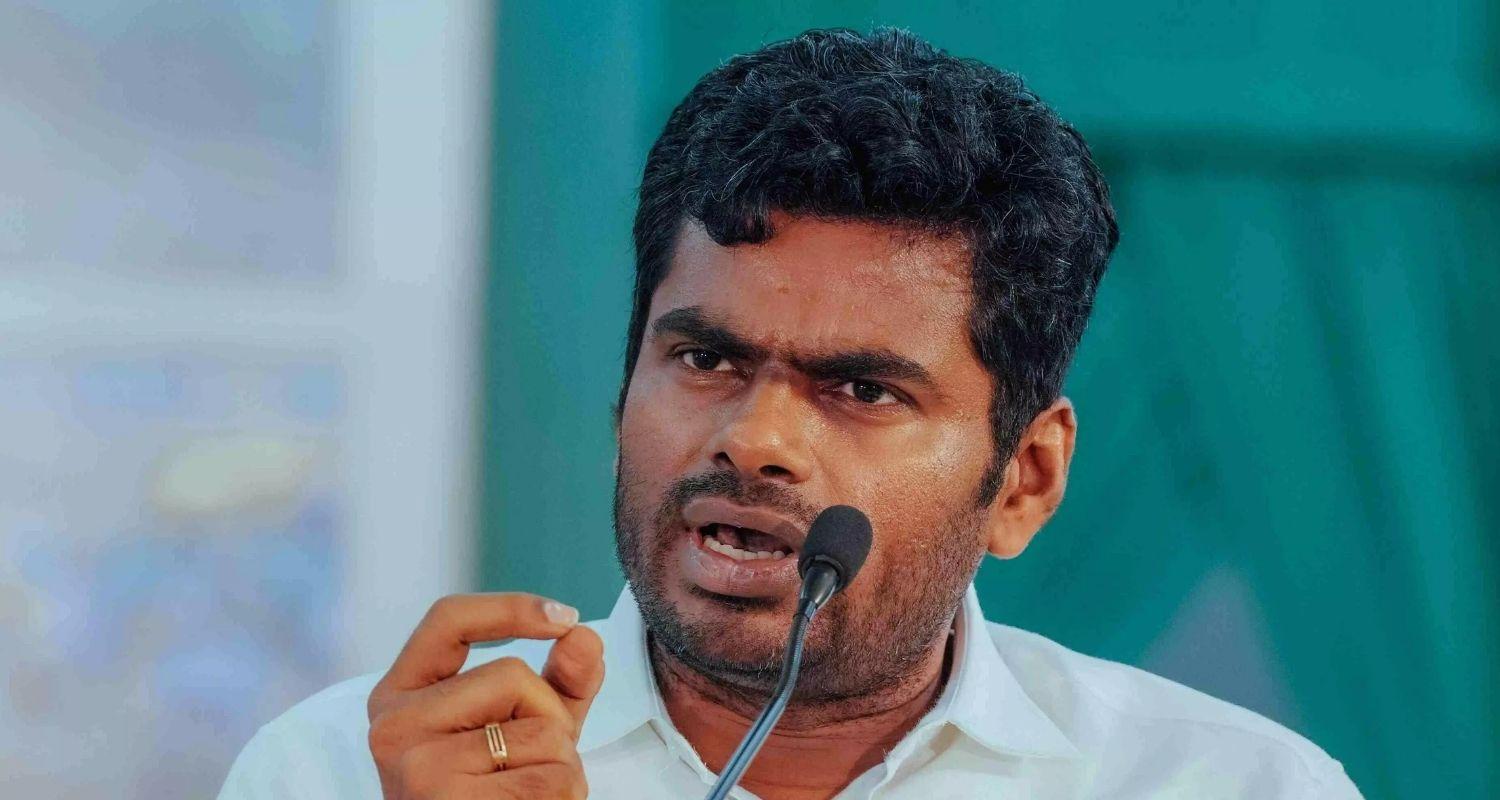
An aggrieved K Annamalai, former Tamil Nadu Bharatiya Janata Party president, reportedly resigning from the party may not have any immediate impact for multiple reasons, but it certainly is not good news for the party. The BJP may not have any stakes in Tamil Nadu and Annamalai’s staying or leaving will not make any difference to the party’s fortunes there, if it really has any, the party can ignore this exit at its own risk.
Given the overwhelming power, expanse and spread the BJP enjoys across the country right now, Annamalai’s resignation may sound inconsequential right now. In the short term, it certainly is. But that does not guarantee it will not have any consequences in the long term, particularly in the BJP’s larger scheme of things about having a firm foothold in the important southern state.
Annamalai’s resignation from the BJP today has striking parallels with Mamata Banerjee’s resignation from the Congress 29 years ago in West Bengal. The circumstances in both the cases are similar. Banerjee, who recently lost West Bengal elections after touching the pinnacle of her political glory, was a fierce and firebrand Congress leader till 1997. She wanted the Congress to put up a strong fight against the two-decade long Left Front rule in West Bengal. As she was a fierce fighter, she led and fought from the front.
Sitaram Kesri was Congress president at that time. The Congress had practically given up against the Left Front in Bengal. But the feisty Mamata had other ideas. She parted ways with the Congress and formed the All India Trinamool Congress within a month. Initially, it faced strong resistance. It had mixed success in the initial years. During this time, she aligned with both the BJP as well as the Congress and became minister in the NDA and the UPA governments.
Her moment of reckoning came in Singur in 2006, when she strongly resisted setting up of an automobile plant by the Tatas. That agitation put her at the forefront as the main challenger against the deeply entrenched Left Front government in Bengal. Within a few years, she stormed to power in 2011 and continued to retain it till 2026, when she was ousted by an assertive BJP.
Although the BJP has not positioned itself in Tamil Nadu the way the Congress had placed itself in Bengal, Annamalai is faced with a similar situation as Mamata in 1997. Annamalai, a former IPS officer, who resigned from the service at a young age, like Mamata in 1997, has an entire career ahead of him. He does not see it taking any shape in the BJP the way it is going in Tamil Nadu. He did lead from the front as the BJP state president. Given the limited scope and influence of the party, he could not deliver much. But it was too early to expect much for the BJP in Tamil Nadu at this stage.
Also read: Annamalai likely to quit BJP, plans political movement
Annamalai was opposed to BJP’s alliance with the AIADMK. Instead, he wanted the BJP to fight on its own, across the state. This, according to him, would have helped the party to build its base at the grassroots level. Aligning with a bigger regional party does not suit a national party like the BJP. The AIADMK left a very negligible number of 27 of the 234 seats for the BJP and most of these were quite difficult ones. The BJP, at the national level, wanted to forge an alliance in Tamil Nadu in the hope of getting another important southern state in the NDA kitty. That did not work. The alliance lost and the BJP lost badly. It won just one assembly seat, against four it had in the outgoing house. The BJP’s vote share tumbled down to 3 per cent against 11 per cent it had got in the parliament elections.
It is difficult to predict how Annamalai may be able to pull it through on his own and whether he will prove to be as successful as Mamata Banerjee. The BJP on its part, till the writing of this report, was still trying to convince him to stay back. The party has reportedly offered him a Rajya Sabha berth, which he has declined so far as he wants to remain focused on Tamil Nadu only.
Moreover, after actor Vijay’s phenomenal success, every ambitious and enterprising leader like him will naturally think if he can pull it, why cannot someone else, particularly the BJP. While Vijay had the star appeal as one of the most popular Tamil film actors, the BJP has huge potential and ability to establish a strong organisation. Moreover, the 11 per cent vote share it got in the 2024 General Elections in Tamil Nadu, should have been enough to build up a solid and strong foundation. By aligning with the AIADMK, the party has squandered away the chance this time.
The BJP will need to reorient itself in Tamil Nadu and ensure that promising leaders like Annamalai see a future for the party in the state. Tamil Nadu is a challenge for the BJP and it cannot afford to lose leaders like Annamalai in taking up such challenges. The party is doing well in trying to persuade him to continue. But in case he insists on resignation, the party must take some lessons from the reasons.
During the 2024 General Elections, the BJP allied with smaller parties and contested 20 of the 39 parliamentary constituencies. Although it could not win any of the parliamentary seats, it still got a respectable 11 per cent vote share, that too while fighting only half of the seats. In the assembly elections, it joined the AIADMK-led alliance and contested only 27 of the 234 assembly segments. It won just one seat with 3 per cent votes.
The Congress has refused to take such lessons since 1997 after Mamata’s resignation. In fact, the Congress was never prepared to learn. There were many more after Mamata who left the Congress and which led to the progressive decline of the party.
The BJP in comparison is taking things seriously the way it is dealing with Annamalai’s resignation. So far, he has met Union Home Minister Amit Shah, general secretary BL Santosh and party president Nitin Nabin, all trying to convince him to stay back in a coordinated manner, something which is still missing in the Congress.



 Follow us