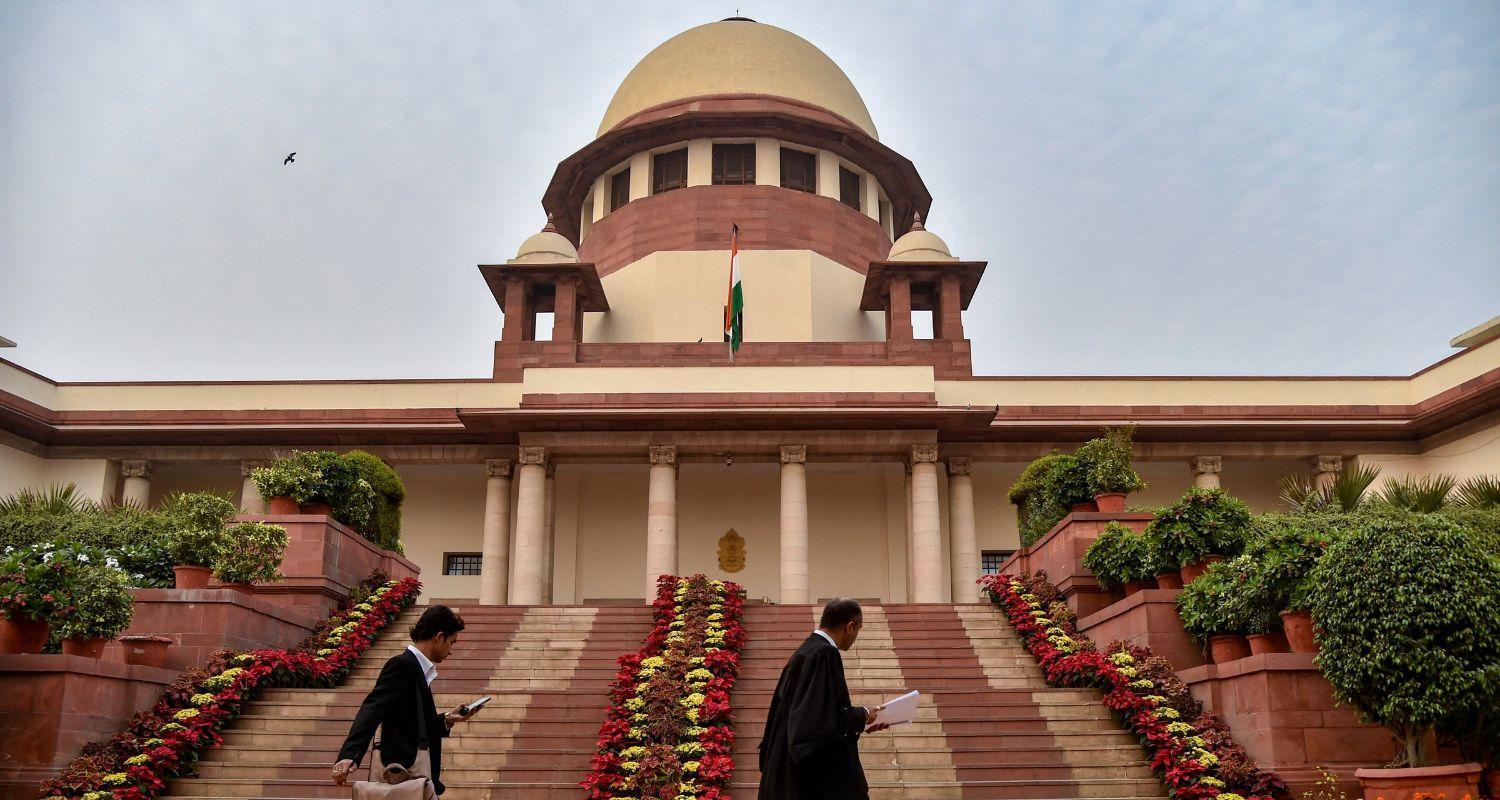
The Supreme Court on Monday dismissed a plea seeking a police case and an SIT probe into Assam Chief Minister Himanta Biswa Sarma’s alleged hate remarks against Miyas, directing petitioners to approach the Gauhati High Court instead.
A bench comprising Chief Justice Surya Kant, and Justices Joymalya Bagchi and Vipul Pancholi observed that approaching the Supreme Court directly before elections was becoming “a trend” and urged political parties to “act within the boundaries of constitutional morality”. Assam is expected to hold assembly elections in March or April.
The case relates to a video released by the BJP Assam unit showing Sarma shooting at a photograph of Muslims and earlier remarks targeting Miyas, Bengali-speaking Muslims the party has labelled “illegal infiltrators”.
“Don’t undermine the validity of our high courts. You are demoralising the (Gauhati) High Court,” Chief Justice Surya Kant told petitioners, who had claimed their letters to the High Court had not prompted suo motu action.
Also read: SC to hear Assam CM AI video row
Senior Advocate Abhishek Singhvi argued the Supreme Court could invoke discretionary powers to take up the matter and sought a Special Investigation Team probe. “If this is not heard then the rights of people will be diminished. This is the sitting Chief Minister who is asking for land not to be given… we are seeking a police case,” Singhvi said.
Singhvi contended the matter involved fundamental rights under Articles 14, 15 and 21, and raised concerns about the Chief Minister being a “habitual and repeat offender”.
The bench, however, was unmoved. “The Supreme Court can’t be a convenience forum (for) shopping… just because all senior lawyers are based here. There are good lawyers there as well. The entire effort is to undermine the authority of the High Courts and this is a calculated effort,” the Chief Justice said.
Earlier, the Jamiat Ulama-I-Hind, an organisation of Indian Muslims and scholars, filed the plea through Maulana Mahmood Madani, claiming the term “Miya” was derogatory and its use by a constitutional officeholder could not be dismissed as mere political rhetoric or free speech.



 Follow us