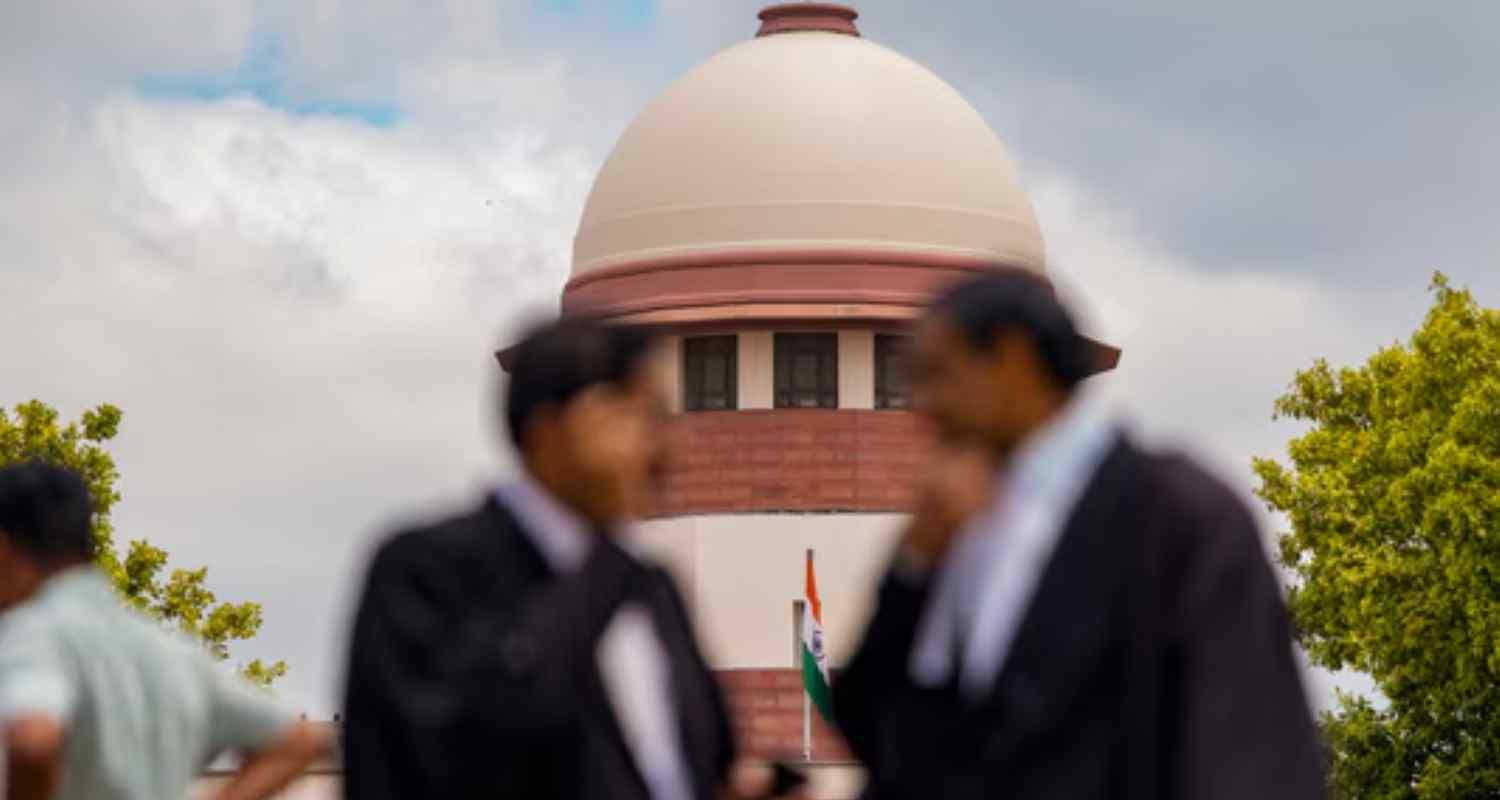
After President Droupadi Murmu’s approval of the Union Cabinet's decision, the strength of the Supreme Court judges will be increased to 38, which currently is 34. The announcement was made by the Union Law Minister Arjun Ram Meghwal on Sunday.
In an X post, Meghwal said, "The President is pleased to increase the Judge strength of the Supreme Court from 33 to 37 Judges (Excluding the Chief Justice of India) by promulgating The Supreme Court (Number of Judges) Amendment Ordinance, 2026, which has further amended the "Supreme Court (Number of Judges) Act, 1956".
The Union Cabinet, chaired by Prime Minister Narendra Modi, on May 5 approved the proposal for introducing The Supreme Court (Number of Judges) Amendment Bill, 2026 in Parliament to amend The Supreme Court (Number of Judges) Act, 1956 for increasing the number of Judges of the Supreme Court of India by 4 from the present 33 to 37 (excluding the Chief Justice of India).
It has been widely welcomed by members of the legal fraternity, who described it as a timely step to deal with rising pendency and growing litigation before the apex court.
President of the Supreme Court Bar Association, Senior Advocate Vikas Singh, said the demand for increasing the number of Supreme Court judges had existed for a long time due to the steady rise in filings before the apex court. He said that although the disposal rate of Supreme Court judges has been commendable, the heavy volume of cases requires more judges.
Singh also highlighted the need for matching infrastructure and expressed hope that a part of the new Supreme Court building would become operational by the end of this year. According to him, the Court can comfortably accommodate 38 judges and may even require around 50 judges in the coming years once the entire new building becomes functional.
Advocate Sumit Gehlot, a Supreme Court lawyer known for his views on constitutional and judicial issues, said the move was welcome but noted that merely increasing the number of judges would not fully solve the problem of pendency. Referring to the nearly 95,000 pending cases in the Supreme Court, he stressed the need for structural reforms and better case management systems alongside increasing judicial strength.
However, former Union Law Secretary PK Malhotra said that simply increasing the number of judges may not bring major judicial reforms. He suggested that the government should consider setting up regional Courts of Appeal so that the Supreme Court can focus mainly on constitutional matters.
Overall, while legal experts have largely welcomed the Centre's decision, many believe that increasing the number of judges must be accompanied by wider judicial reforms to effectively tackle delays and pendency in the justice delivery system.



 Follow us