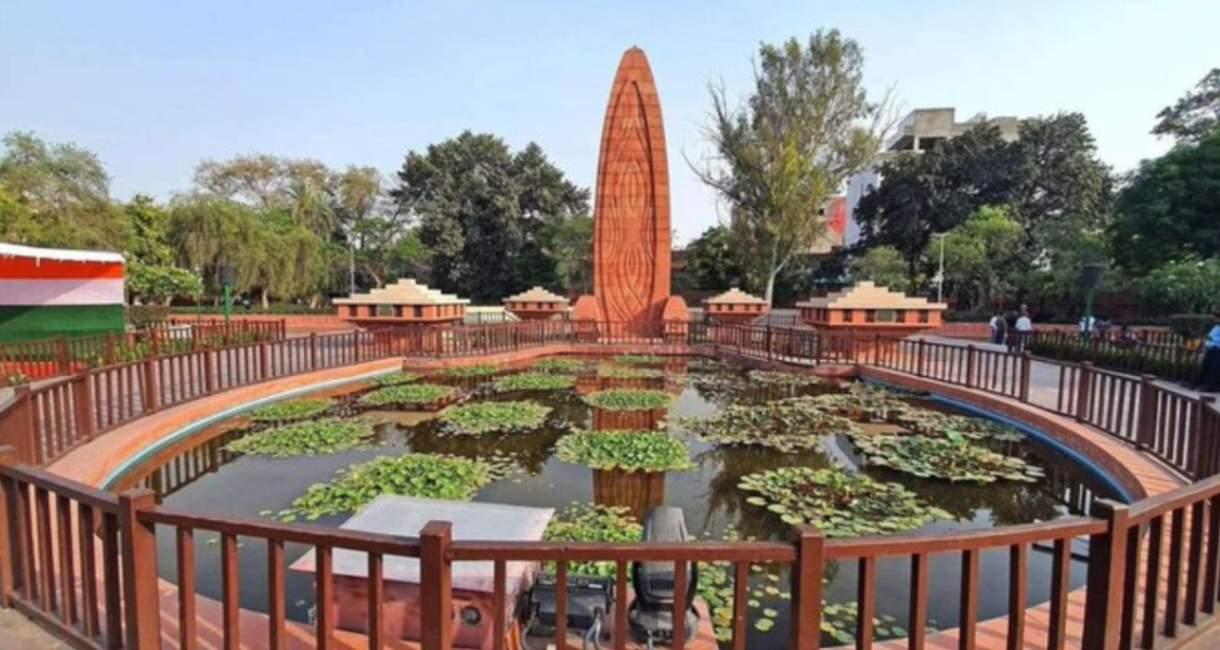
The President of India, Droupadi Murmu, along with the Prime Minister of India, Narendra Modi, on Monday paid their solemn respects to the victims of the Jallianwala Bagh Massacre that happened 106 years ago. The President paid her respects to the martyrs through her social media accounts and hailed them as immortal souls who made an indelible impression on the country. Their deaths, she said, ignited a new level of awareness and resolve among Indians and showed great gratitude toward the martyrs.
The Vice President of India, CP Radhakrishnan, also expressed his sentiments about the massacre and said that what happened in Amritsar a hundred years ago was a testament to the heavy cost that Indians paid for their independence. He hoped that the memory of the massacre would inspire the citizens to continue upholding the values of justice and solidarity in creating a kinder society.
Prime Minister Modi shared his own heartfelt tributes, emphasising that the courage shown at Jallianwala Bagh continues to inspire successive generations to defend liberty and dignity. A noteworthy contribution in this context was the citation by the Prime Minister of a subhashitam in Sanskrit, which encouraged people to nurture those qualities that lead to prosperity and self-reliance in a nation while avoiding anything that is divisive and destructive.
Further tributes came from Lok Sabha Speaker Om Birla, who noted how the firing on unarmed civilians united a fractured nation against colonial rule, and Home Minister Amit Shah, who characterised the massacre as the "inhuman face" of British governance. Shah highlighted how the tragedy acted as a historic turning point, radicalising future revolutionaries like Bhagat Singh and Udham Singh. The massacre, which occurred on April 13, 1919 during the Baisakhi festival, remains one of the most significant and tragic events in the history of the freedom movement, forever altering the course of India's struggle for self-rule.
Also read: PM Modi addresses 'Nari Shakti Vandan Sammelan'



 Follow us