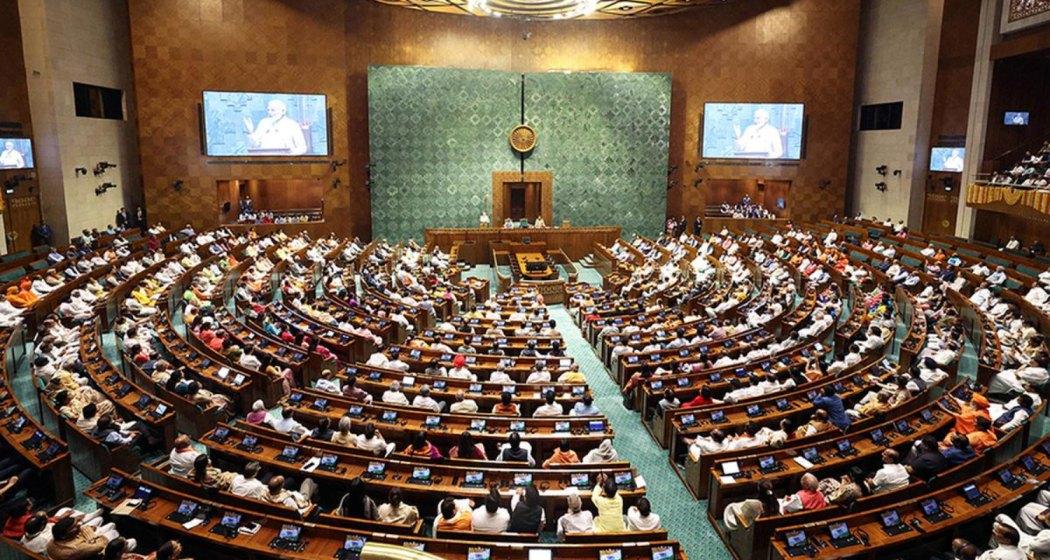
The Monsoon Session of Parliament will be held from July 20 to August 13 after President Droupadi Murmu approved the government's recommendation to summon both Houses, Union Parliamentary Affairs Minister Kiren Rijiju announced on Saturday.
Making the announcement on X, Rijiju said the session would provide an opportunity for "meaningful debate, discussion and decisions on issues of national importance". The nearly four-week session is expected to witness an extensive legislative agenda alongside confrontations between the ruling National
Democratic Alliance (NDA) and the Opposition on a range of political and governance issues.
Several parliamentary standing committees and joint committees have already met over the past week to finalise reports and prepare pending legislative business before Parliament reconvenes.
The committee is scheduled to meet on July 17 to adopt its report before submitting it to Parliament. The government is expected to prioritise key constitutional reform measures, including the Women's Reservation Implementation Bill and the Delimitation Bill, during the session. The Opposition, meanwhile, is set to corner the Centre over inflation, unemployment, alleged irregularities in the NEET examination and concerns over deficient monsoon conditions. Among the key matters likely to come before Parliament is the report of the Joint Parliamentary Committee (JPC) examining the 130th Constitution Amendment Bill.
Also read: JPC set to clear Bill to sack jailed CMs, ministers
Bill to sack jailed CMs, ministers on the cards
According to sources, the JPC is unlikely to recommend dropping the Bill's most controversial provision, which proposes the automatic removal of the Prime Minister, Chief Ministers, Union ministers and state ministers from office if they are arrested and remain in judicial custody for 30 consecutive days in cases involving serious offences.
The proposed provision has generated sharp political debate. Proponents argue that it would strengthen accountability and integrity in public office by ensuring that those facing serious criminal proceedings do not continue to hold executive positions. Opposition parties and several stakeholders, however, have expressed concern that the clause could be misused through politically motivated investigations or arrests to unseat elected governments.
Sources said the committee is expected to recommend safeguards to minimise the possibility of misuse while retaining the provision. The report, once adopted, will be placed before Parliament for further consideration.
The Monsoon Session is also expected to witness political fireworks over the Congress's demand for privilege proceedings against Defence Minister Rajnath Singh. The Opposition has accused Singh of misleading Parliament over the number of Indian soldiers killed during Operation Sindoor, an allegation rejected by the government.
Besides legislative business, both Houses are expected to deliberate on national security, the economy, foreign policy, inflation, employment and other issues of public importance, with the Opposition preparing to press the government on several contentious matters.



 Follow us