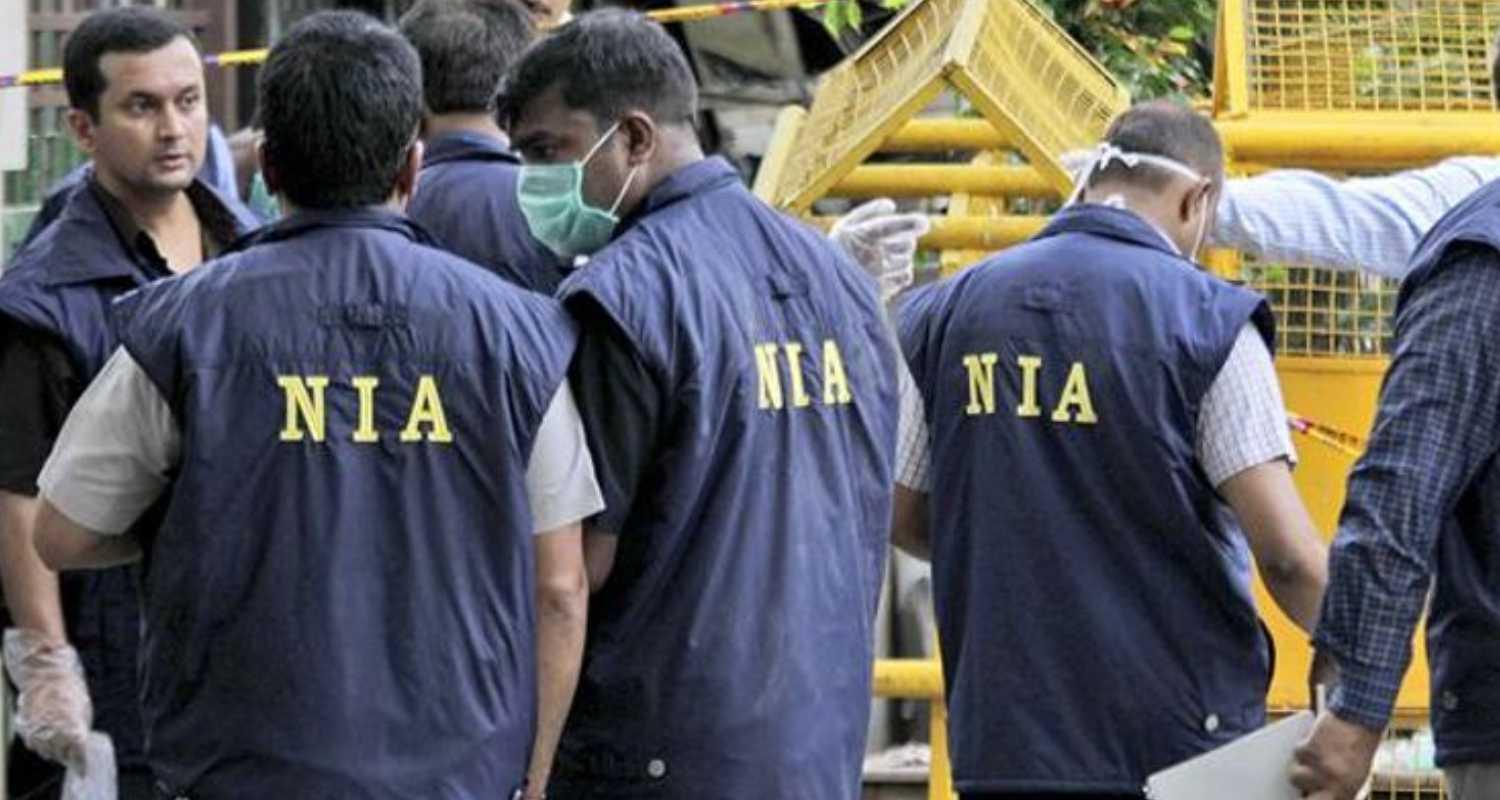
Even as the National Investigation Agency (NIA) recently arrested seven foreign nationals for allegedly training Myanmar-based rebel groups, intelligence sources have revealed that several other batches of mercenaries had already slipped out of India undetected after using the same covert route through Mizoram.
According to officials, at least four such batches entered India over the past months, crossed into Myanmar via the porous India-Myanmar border in Mizoram, and later exited the country from different cities without raising suspicion.
The latest arrests—an American citizen, Mathew Aaron VanDyke, and six Ukrainian nationals—are now believed to represent only the “tail end” of a much larger and previously undetected network.
Investigators say the foreign mercenaries adopted a highly calculated modus operandi to avoid detection. They entered India individually, often through smaller airports, instead of major international hubs. From there, they travelled by road to Mizoram.
Using vehicles with local registration plates, they reached remote border points—particularly in Champhai district—where enforcement of Inner Line Permit regulations could be bypassed. They then crossed into Myanmar on different dates, maintaining a low profile.
Crucially, after completing their activities, many of them returned to India and exited through the same cities they had originally used to enter, just before their visas expired.
“This circular movement helped them blend in as regular travellers and avoid triggering suspicion,” an intelligence official said.
Sources indicate that a significant number of such operatives managed to leave India without being identified by authorities. Between February and May 2024 alone, around 1,240 foreign nationals—mostly Americans—were suspected to have crossed into Myanmar through Mizoram, with many later exiting India quietly.
Security agencies now believe that gaps in monitoring border movement, combined with the use of staggered travel plans, enabled these individuals to evade surveillance.
The mercenaries are suspected to have provided military training to Myanmar-based insurgent outfits, including the People’s Defence Force (PDF) and various Ethnic Armed Groups (EAGs), particularly in Chin State.
Intelligence inputs suggest their role may have extended beyond training to assisting in logistics, weapons handling, and possibly coordinating cross-border movement of resources.
Earlier incidents reinforce the pattern of entry, cross-border movement, and quiet exit.
In one case, two American nationals and a British citizen—allegedly linked to foreign militant networks—entered Myanmar through Mizoram. After one of them was injured in a landmine blast, they re-entered India for medical treatment in Aizawl before eventually being allowed to leave.
“Another case involved a British national who was arrested in Mizoram in 2024 for possessing restricted ammunition but later fled India after jumping bail. He reportedly resurfaced months later in Myanmar,” said an intelligence wing official.
Investigations have also pointed to attempts at establishing financial channels within India. In May 2025, a US-based doctor couple visited Mizoram and allegedly attempted to transfer funds to local bank accounts while making contact with insurgent-linked groups. They were eventually sent back from Lengpui airport.
Security agencies are now examining the scale of the network and how multiple foreign nationals managed to exploit India’s northeastern corridor with relative ease.
Officials warn that the ability of trained foreign operatives to enter, operate across borders, and exit undetected poses a serious national security concern.
The NIA, along with intelligence and security agencies, is continuing its investigation to identify those who facilitated these movements and to plug gaps that allowed such repeated breaches.



 Follow us