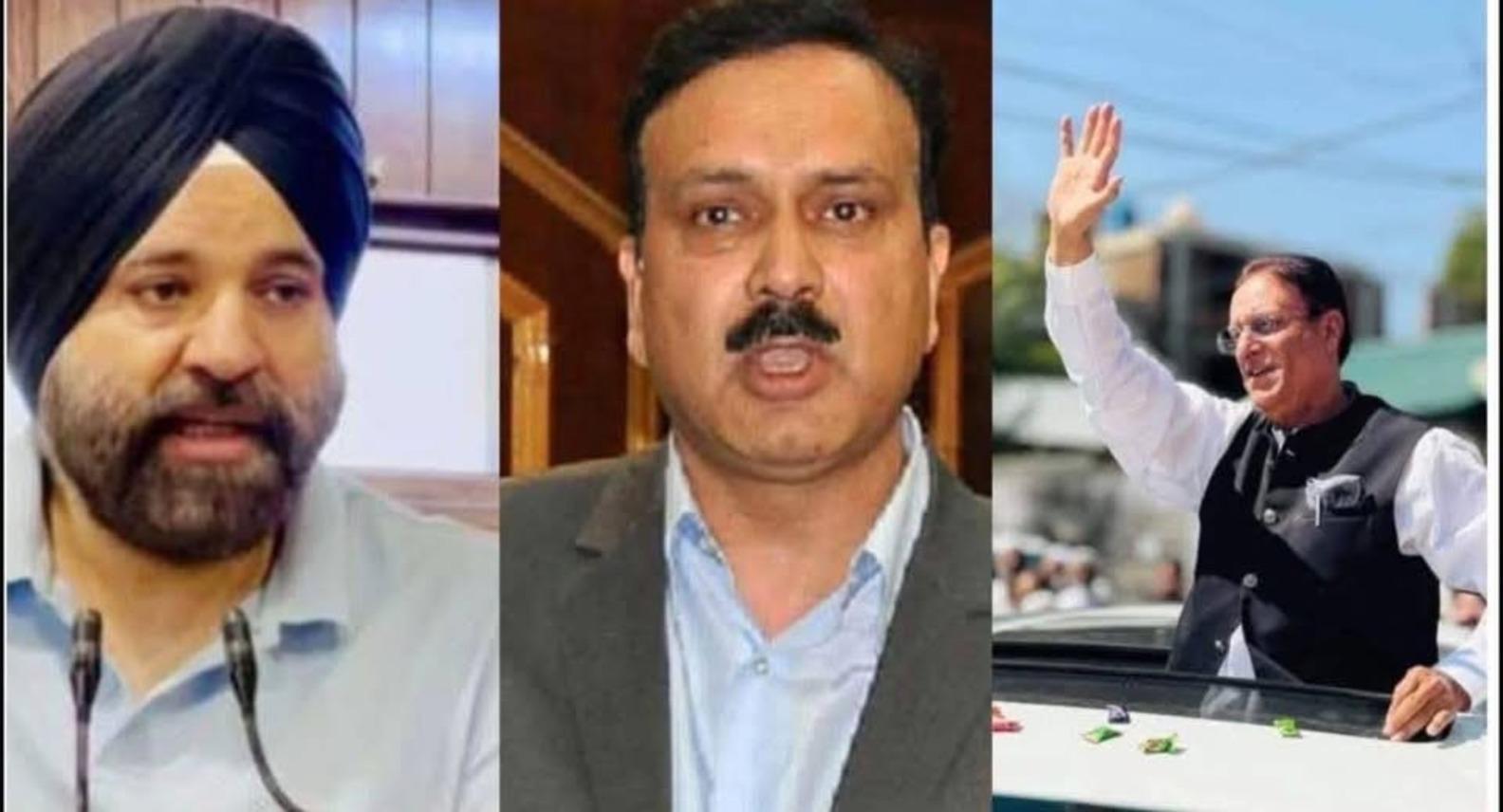
In a significant development for the UT, Jammu and Kashmir will have representation in the Rajya Sabha after nearly five years, with three of National Conference leaders who recently won the elections, set to take their oath as members of the Upper House of Parliament on Monday, the first day of the Winter Session.
Rajya Sabha elections were held in October this year when NC won on three seats while as BJP managed to secure one seat. All the four members elected by the members of J&K Legislative Assembly shall have a term of 6 years.While BJP’s Sat Sharma has already taken oath as MP, NC’s Shammi Oberoi, Sajjad Ahmad Kichloo, and Chowdhary Mohammad Ramzan will be administered the oath by Vice-President and Rajya Sabha Chairman C.P. Radhakrishnan.
With this, Jammu and Kashmir will formally resume participation in Rajya Sabha proceedings following a prolonged gap since the reorganization of the state and the abrogation of Article 370 in 2019.The members were elected in the Rajya Sabha polls held on October 24 for the four seats allocated to the Union Territory.
The National Conference secured three of these seats, while the Bharatiya Janata Party won one seat, with its nominee Sat Sharma having already taken the oath earlier.Chowdhary Mohammad Ramzan, a former minister with multiple terms in the Jammu and Kashmir Assembly, will bring his legislative experience to the Upper House.
Sajjad Ahmad Kichloo, also a former minister from Kishtwar, and Shammi Oberoi, the party treasurer, will join him in representing the National Conference in Parliament.For Jammu and Kashmir, the participation of the newly elected Rajya Sabha members marks a significant step in restoring the Union Territory’s voice in national policymaking.
The leaders will formally take part in parliamentary debates and discussions from Monday, marking the return of J&K’s representation in the Upper House after a hiatus of nearly five years.Ahead of the session, Parliamentary Affairs Minister Kiren Rijiju convened a meeting of floor leaders on Sunday to discuss coordination during the Winter Session.
The three-week-long session, scheduled from December 1 to December 19, will see the government push several key legislative proposals, including the ‘Atomic Energy Bill, 2025’ to regulate atomic energy use, the Higher Education Commission of India Bill, and eight other draft legislations.



 Follow us