India and the European Union have set their sights on signing a landmark Free Trade Agreement (FTA) by the end of this year, with Prime Minister Narendra Modi and the bloc’s top leadership reviewing progress on the proposed pact during high-level talks on the sidelines of the G7 Summit in France.
The proposed agreement, described by European leaders as the “mother of all trade deals”, is expected to create one of the world’s largest free trade areas, covering nearly two billion people and around a quarter of the global economy.
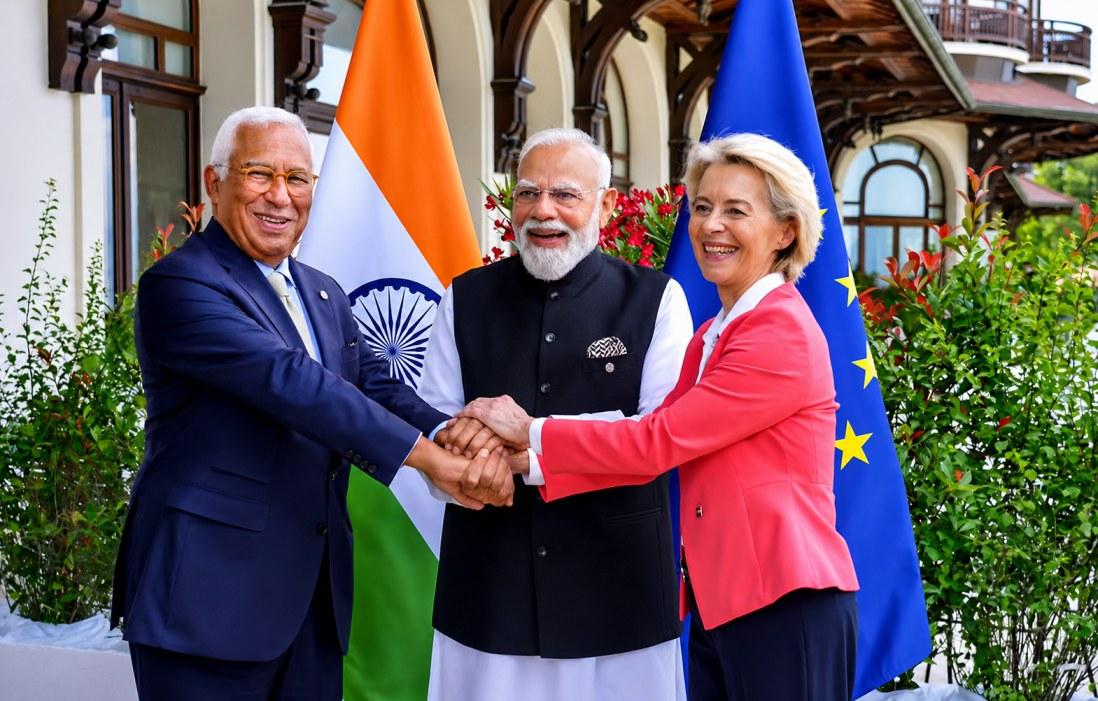
Prime Minister Narendra Modi held a trilateral meeting with European Council President Antonio Costa and European Commission President Ursula von der Leyen in Évian, where both sides discussed the next steps towards formalising the ambitious trade pact.
In a joint message following the meeting, Costa and von der Leyen said India and the EU had been moving swiftly to fulfil commitments made after concluding negotiations on the agreement earlier this year. They expressed confidence that the FTA would be signed before the end of 2026 and said work would also be accelerated on a separate investment agreement.
The leaders also agreed to strengthen cooperation in security and defence while advancing connectivity initiatives, including the India-Middle East-Europe Economic Corridor (IMEC).
Also read: Hitesh Rameshchandra Joshi appointed CMD of GIC
Modi described the meeting as another milestone in rapidly expanding India-EU relations. He said discussions focused on deepening economic linkages and enhancing cooperation in a changing global environment.
“During our talks, we discussed how to further deepen economic linkages in the times to come. Our growing cooperation can play an important role in strengthening peace, stability and prosperity in today’s global environment,” Modi said.
The meeting came amid a broader diplomatic push by India at the G7 Summit. Earlier in the day, Modi held talks with German Chancellor Friedrich Merz, with both leaders reaffirming their commitment to expanding cooperation in trade, investment, defence, technology and sustainable development.
According to the Ministry of External Affairs, the leaders also agreed that the early implementation of the India-EU FTA would further strengthen India-Germany ties.
The proposed agreement is expected to significantly boost bilateral trade, investment flows and technology partnerships, marking a major step forward in India’s economic engagement with Europe.


 Follow us