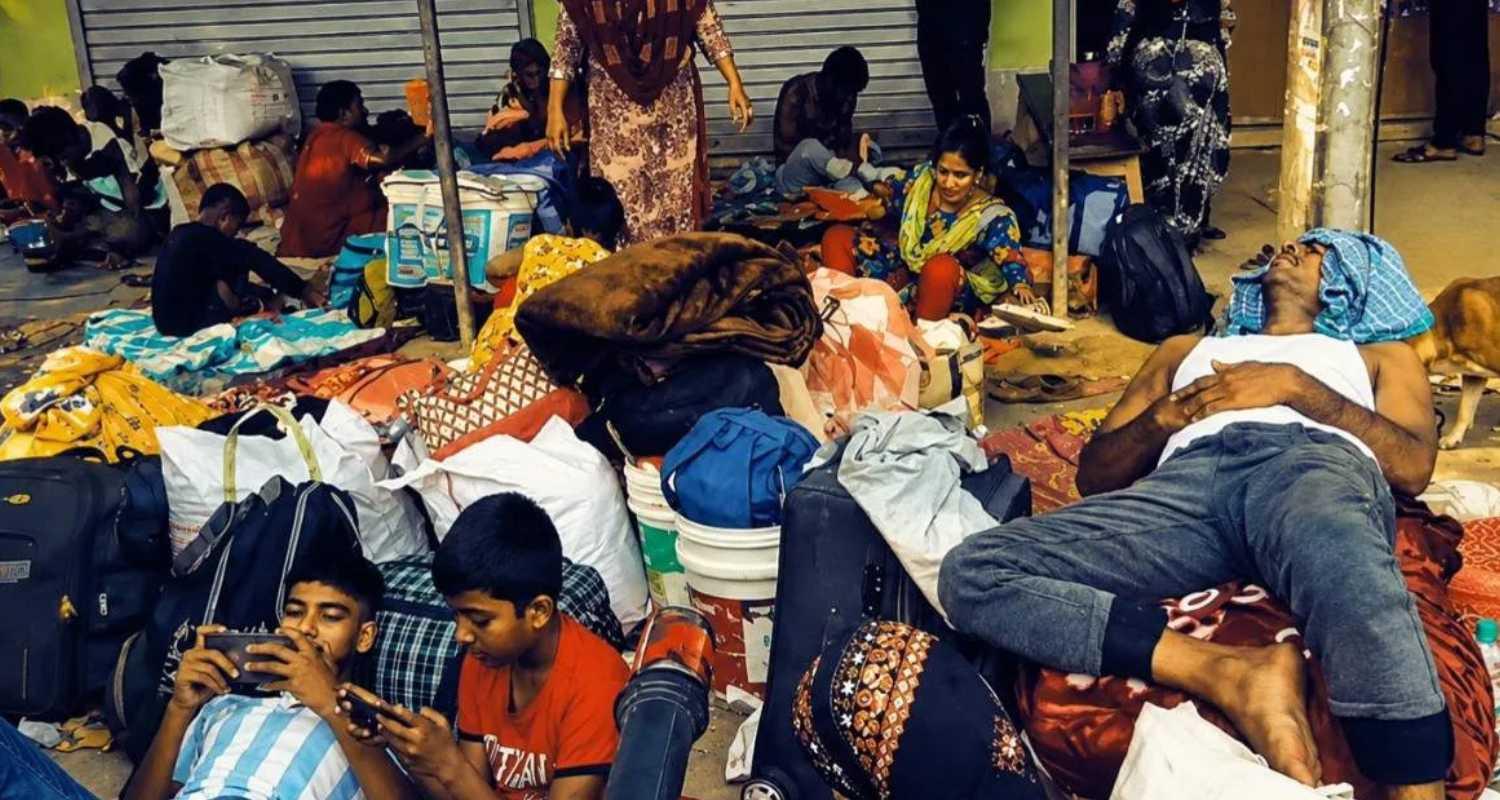
Following the recent political transition in West Bengal, groups of suspected illegal immigrants have gathered near Border Security Force (BSF) checkpoints along the Hakimpur border in Basirhat, under North 24 Parganas, awaiting an opportunity to cross over into Bangladesh.
On Tuesday morning, several individuals were seen assembled near the border carrying luggage, trolleys, and basic belongings such as water containers and blankets. Many were seated on plastic sheets spread on the ground, waiting for clearance to return across the international boundary. Similar scenes were reported on Monday, when around 100 individuals gathered near a makeshift shelter close to the border, while another group of 30 to 40 people queued nearby.
The developments come amid the state government’s intensified implementation of its “Detect-Delete-Deport” policy, aimed at identifying illegal immigrants, removing their names from official records, and facilitating their repatriation. Chief Minister Suvendu Adhikari has directed authorities to establish holding centres across districts to detain suspected infiltrators as part of this process.
Addressing the media after an administrative review meeting in Kalyani on Tuesday, the Chief Minister reiterated the government’s firm stance. He stated that individuals found residing illegally would be handed over directly to the BSF for deportation, bypassing prolonged legal procedures. He also emphasised that public funds should not be used to support those residing in the country unlawfully.
According to administrative sources, the announcement of holding centres — where suspected individuals may be detained for up to 30 days — has triggered anxiety among such populations, prompting many to attempt a return to Bangladesh voluntarily. Work is reportedly underway across multiple districts to identify suitable locations for these facilities.
Observers note that similar movements were witnessed in late October last year during the Special Intensive Revision (SIR) of electoral rolls, when large numbers of undocumented residents reportedly left areas around Kolkata, including Newtown, Dum Dum, and Dankuni, and crossed into Bangladesh through border points like Hakimpur.
Political reactions remain divided. Leaders from the previous ruling Trinamool Congress (TMC) had earlier opposed claims of illegal infiltration and protested the SIR process. Former Chief Minister Mamata Banerjee had publicly rejected the narrative of widespread infiltration in the state.
In contrast, leaders from the ruling BJP maintain that stricter enforcement of immigration laws would lead to voluntary departures without the need for extensive enforcement measures. The current developments at the border, they argue, reflect that position.
While authorities have not released official figures regarding the number of individuals attempting to cross the border, the situation at Hakimpur indicates a renewed phase of movement along the India-Bangladesh frontier, drawing attention to the broader implications of the state’s enforcement policy.



 Follow us