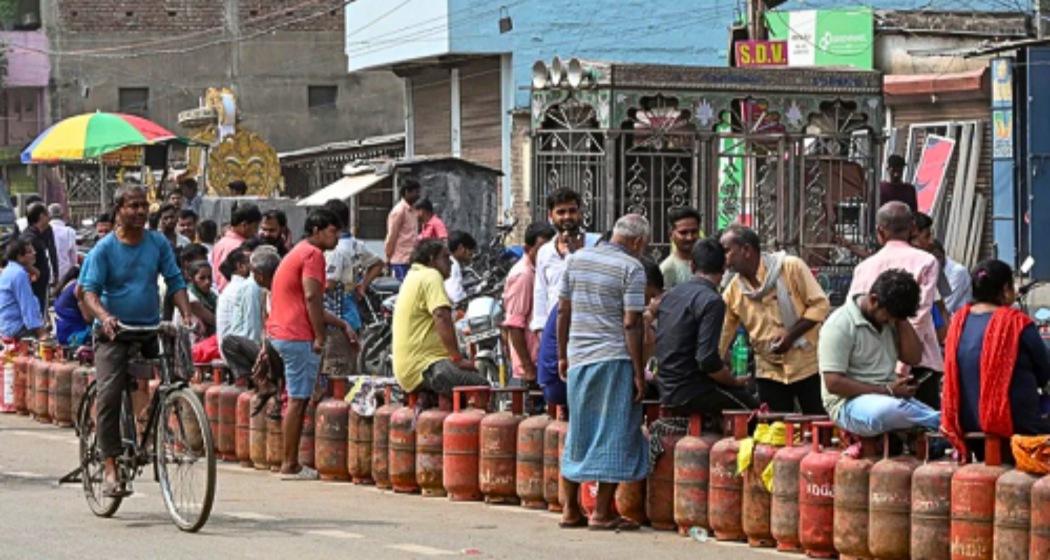
The Centre has stepped up LPG supplies and urged the public to remain calm, as concerns over global supply disruptions continue amid tensions around the Strait of Hormuz.
According to the Ministry of Petroleum and Natural Gas, the sale of 5-kg LPG cylinders has been significantly ramped up to meet rising demand. These smaller, non-subsidised cylinders, known as free trade LPG (FTL) cylinders, are available over the counter at distributorships upon showing valid identification.
Data shared by the ministry shows that more than 90,000 such cylinders were sold on April 4 alone, while around 6.6 lakh 5-kg cylinders have been sold since March 23.
Officials said there are no reports of shortages at distributor points, with over 51 lakh domestic LPG cylinders delivered in a single day. Online bookings accounted for nearly 95 per cent of the total demand, indicating stable supply and distribution channels.
Also read: Crude reroute to China ‘trade optimisation’: Govt
The government has also intensified enforcement against hoarding and black marketing. More than 50,000 LPG cylinders have been seized since March, and over 1,400 show-cause notices have been issued to distributors. So far, 36 dealerships have been suspended for violations.
To ensure uninterrupted supply to essential sectors, authorities have prioritised LPG and piped natural gas (PNG) for households, hospitals and educational institutions. At the same time, commercial LPG supply has been capped at 70 per cent of pre-crisis levels, with increased availability of smaller cylinders to manage demand.
On the natural gas front, the ministry said full supplies are being maintained for domestic and transport sectors, while supply to fertiliser plants is expected to rise to about 90 per cent of average consumption from April 6, supported by incoming liquefied natural gas cargoes.
All refineries are currently operating at high capacity with sufficient crude inventories, and petrol pumps across the country remain adequately stocked.
The government reiterated its appeal to consumers to avoid panic buying and rely on official updates, emphasising that adequate measures are in place to ensure uninterrupted fuel supply.



 Follow us