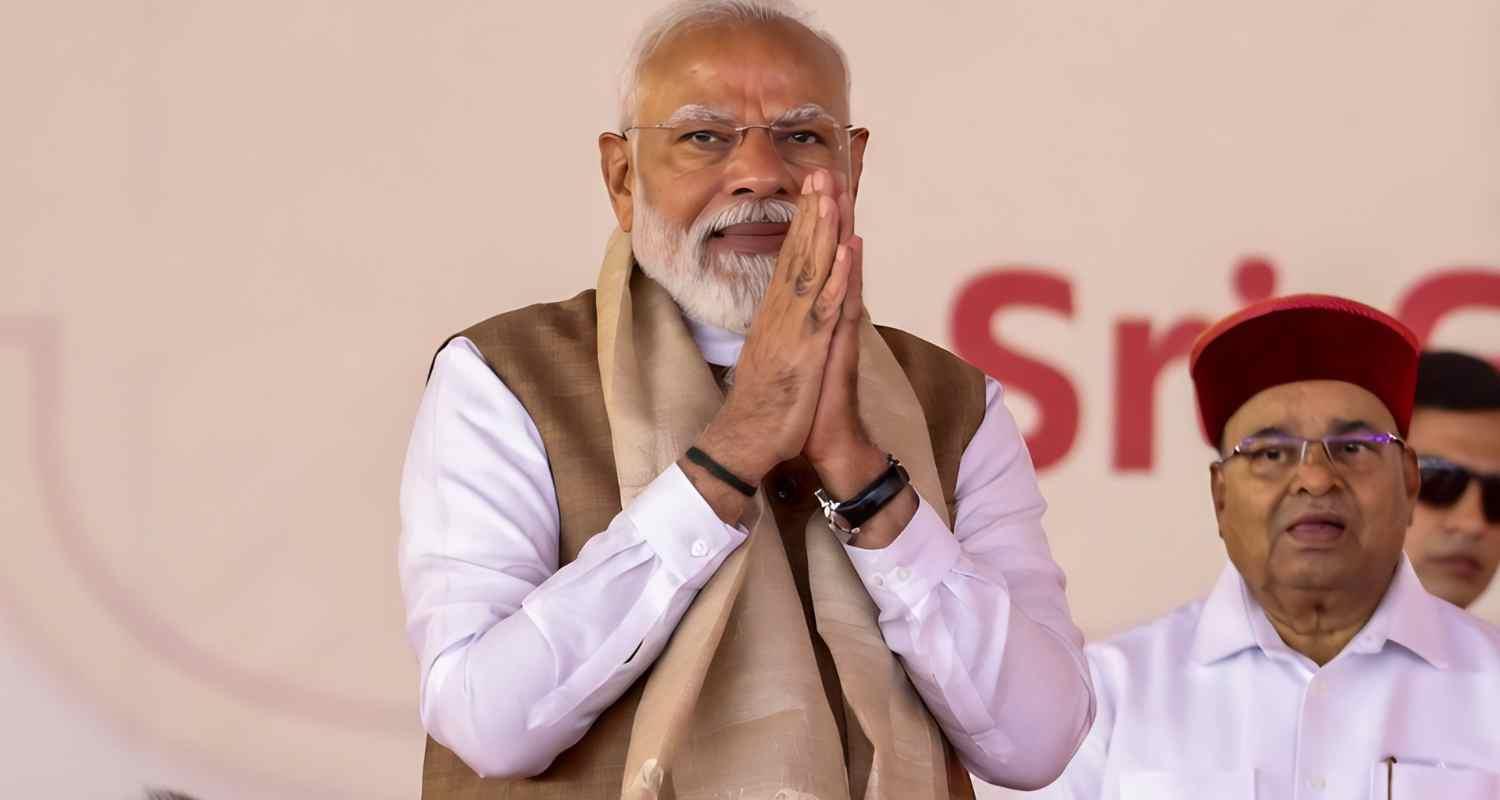
Prime Minister Narendra Modi on Sunday addressed the nation in another episode of his monthly radio address “Mann ki Baat”. During his address, he urged people to purchase at least one bamboo product from the Northeast, saying such efforts will encourage those who toil hard to make them.
According to the law made by the British, bamboo was defined as a tree, and the rules associated with it were very strict, the PM said, adding that it was very difficult to transport bamboo anywhere, and as a result, people here started moving away from bamboo-related businesses.
The prime minister said that by changing the law in 2017, his government removed bamboo from the tree category and put it in the grass. "The results of which are visible to everyone. Today, the bamboo sector is flourishing throughout the Northeast. People are continuously innovating and adding value to it," he said.
Modi said what was once viewed as a burden is now giving new impetus to employment, business, and innovation, and women are its biggest beneficiaries. People will be surprised to know how much change has come about by changing the definition of bamboo, he said.
"I will urge all of you to positively purchase one bamboo product or the other from the Northeast. You can even present it as a gift. Your efforts will encourage those who toil hard to make bamboo products," he said.
The prime minister also said that the Northeast is like 'Ashtalakshmi' and there is immense talent there.
He further hailed as a "historic milestone" the Kalpakkam fast breeder reactor achieving criticality, and said Indian nuclear scientists have brought glory to the country. "Our nuclear scientists have brought glory to India through a major achievement. The fast breeder reactor at Kalpakkam in Tamil Nadu has achieved criticality," he said.
Modi said this is a "historic milestone" in India's nuclear energy journey, and the remarkable thing is that the atomic reactor has been entirely built using indigenous technology.
The prime minister said he had the privilege of witnessing the core loading of the reactor in Kalpakkam in March 2024.
"I congratulate all those who have made invaluable contributions to India's nuclear program," he said.
Modi said the efforts of the scientists to make the lives of fellow citizens better and easier are truly commendable.
Fast Breeder Reactors are a cornerstone of India's long-term nuclear strategy. Unlike conventional thermal reactors, the PFBR uses Uranium-Plutonium Mixed Oxide (MOX) fuel. The reactor is designed to eventually use Thorium-232 in the blanket. Through transmutation, Thorium-232 will be converted into Uranium-233, which will fuel the third stage of India's nuclear power programme.



 Follow us