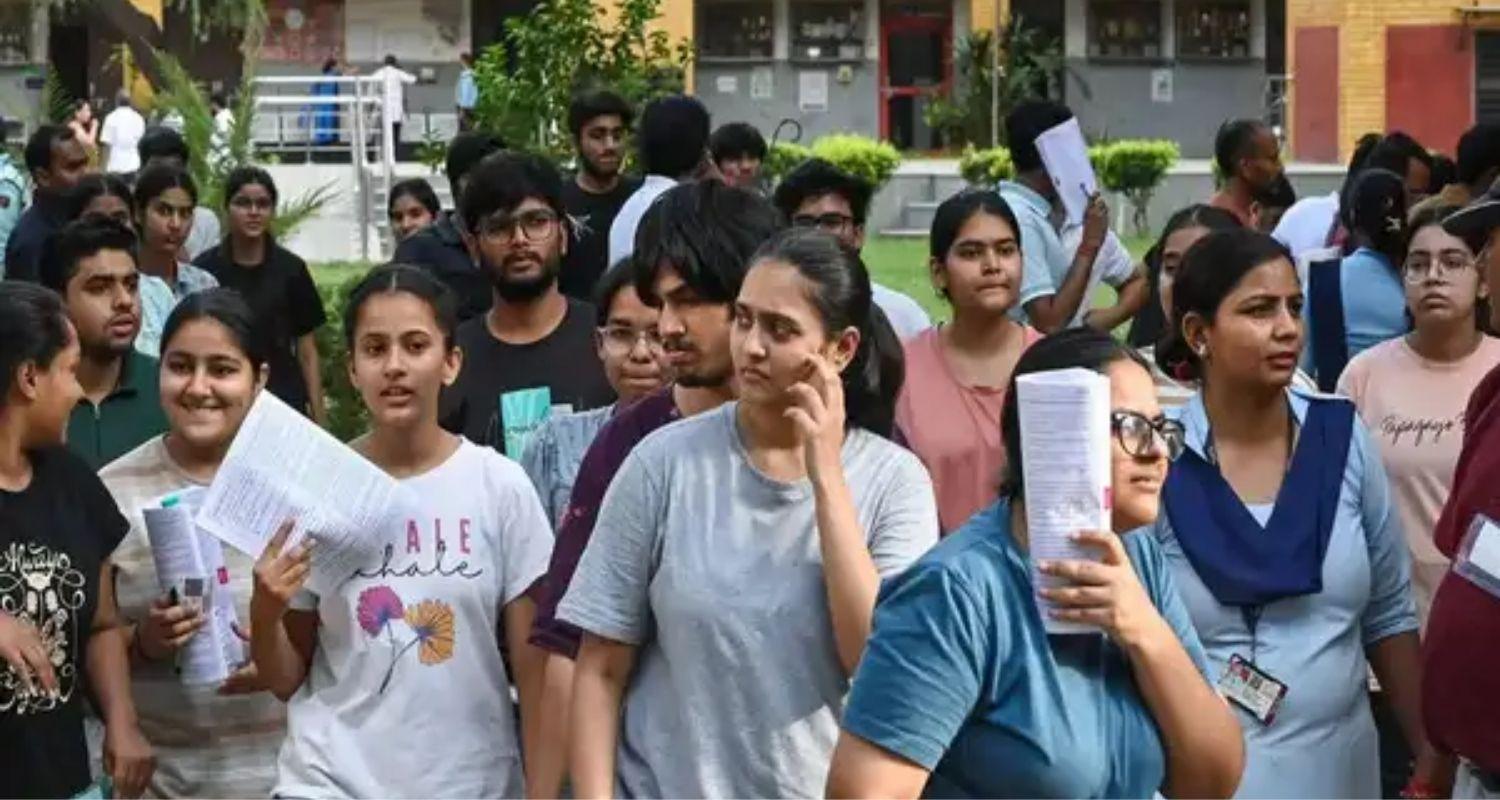
The Centre is considering a major overhaul of India's higher education admission system, with a proposal to give Class 12 board examination marks a 50 per cent weightage in admissions to professional courses that are currently based primarily on entrance examinations such as the National Eligibility-cum-Entrance Test (NEET) and the Joint Entrance Examination (JEE).
The proposal forms part of a broader set of recommendations being examined by a nine-member committee constituted by the Ministry of Education last year. The panel was tasked with reviewing issues such as students' growing dependence on coaching institutes, the increasing prevalence of "dummy schools" and the need to improve fairness, transparency and credibility in high-stakes entrance examinations.
At present, admissions to medical and engineering programmes are determined almost entirely by candidates' performance in entrance examinations such as NEET and JEE. While students are required to secure a minimum qualifying percentage in their Class 12 board examinations to be eligible for these entrance tests, board marks do not currently contribute to the final admission merit in most institutions.
According to sources familiar with the discussions, the proposed reform seeks to reduce the overwhelming importance of a single examination by balancing the weightage between school board performance and entrance test scores. If implemented, candidates' Class 12 board examination marks could account for 50 per cent of the admission merit, with the remaining 50 per cent based on their performance in the entrance examination.
"The changes being contemplated are 50 per cent weightage for board marks in admission merit, closer alignment of entrance tests with school syllabi to reduce dependence on coaching centres, multiple attempts and a gradual shift towards adaptive on-demand computer-based tests," a source said.
The proposed reforms come amid growing concerns over the country's examination system following a series of controversies involving question paper leaks, evaluation discrepancies and allegations of irregularities in major competitive examinations. These incidents have triggered widespread debate over the reliability and fairness of India's current admission framework, which places enormous pressure on students through a single high-stakes examination.
Also read: SC concerned over misuse of AI in judicial decision-making
Besides recommending greater weightage for Class 12 board examination scores, the committee has also proposed bringing entrance examinations into closer alignment with school curricula. The objective is to ensure that students can rely more on classroom learning instead of intensive coaching, thereby reducing the influence of the coaching industry on professional course admissions.
The panel is also examining the possibility of allowing students to appear for multiple attempts at entrance examinations, similar to several international testing models. Such a system is expected to reduce the pressure associated with a single examination and provide candidates with additional opportunities to improve their scores.
Another significant proposal under consideration is the gradual introduction of adaptive, on-demand computer-based entrance tests. Under this model, candidates could potentially take examinations at different times during the year, with question papers tailored to their responses, making the assessment process more flexible and reducing logistical challenges associated with conducting nationwide examinations on a single day.
The committee is expected to submit its final report to the Ministry of Education in the coming weeks. If the government accepts the recommendations, they could pave the way for one of the most significant reforms in India's admission system in recent years, fundamentally changing the manner in which students secure admission to medical, engineering and other professional courses by reducing dependence on a single entrance examination and placing greater emphasis on consistent academic performance in school.



 Follow us