In a significant shift in its official stance, Canada’s intelligence agency for the first time has explicitly blamed Khalistani extremists for the 1985 Air India bombing, marking a departure from decades of guarded language on one of the worst terror attacks in aviation history.
The Canadian Security Intelligence Service (CSIS) identified Canada-based Khalistani extremists as responsible for planting the bomb aboard Air India Flight 182, which was destroyed mid-air on June 23, 1985, killing all 329 passengers and crew members.
The aircraft, a Boeing 747 en route from Toronto to Mumbai and nicknamed Emperor Kanishka, disintegrated over the Atlantic Ocean after a suitcase bomb detonated in the luggage compartment. It remained the deadliest aviation terror attack until the September 11, 2001 strikes.
In a social media post marking the anniversary, CSIS said, “On June 23, 1985, a bomb planted by Canada-based Khalistani extremists destroyed the aircraft, killing everyone on board, most of them Canadians.” It described the incident as the deadliest terrorist attack in Canada’s history.
The attack was carried out by members of the banned Khalistani group Babbar Khalsa, long identified in Indian investigations as being involved in the conspiracy.
India has consistently maintained that the bombing was a Khalistani terror plot, but successive Canadian governments had historically avoided explicitly naming the movement in official statements, often using terms such as “insurgents” or “extremists”.
The latest acknowledgement comes alongside CSIS’s broader assessment that Canada-based Khalistani extremist (CBKE) groups continue to pose a national security threat and are involved in fundraising and extremist activities.
Also read: India hits back at Canada over espionage claims
The agency had earlier flagged CBKE networks in its annual threat assessment report, warning that such groups were using Canadian territory to advance violent extremist agendas.
The Air India bombing investigation had been hampered for decades by intelligence failures, jurisdictional disputes between CSIS and the Royal Canadian Mounted Police (RCMP), and loss of critical surveillance material. A 2010 public inquiry also highlighted systemic lapses and lack of urgency in handling the case, despite most victims being Canadian citizens.
The latest statement is being seen as a notable policy and narrative shift, aligning more closely with India’s longstanding position on the role of Khalistani extremism in the attack.
The development is also expected to have implications for India-Canada relations, particularly on security cooperation and concerns over extremist networks operating within diaspora communities.
Excerpt: Canada’s intelligence agency CSIS has for the first time explicitly blamed Khalistani extremists for the 1985 Air India bombing that killed 329 people, marking a major policy shift.
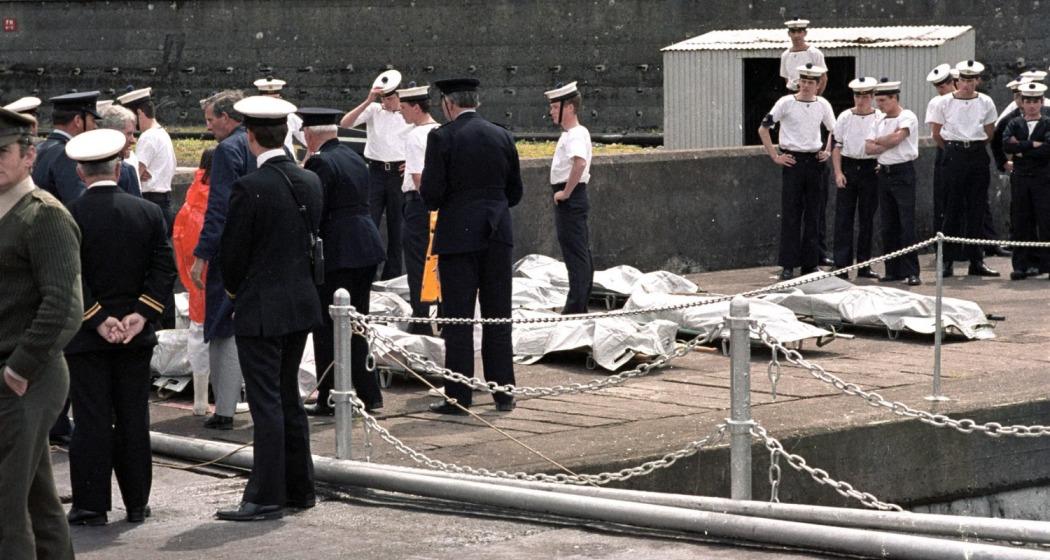
Photo caption: Debris from Air India Flight 182, which was brought down by a bomb in 1985, is seen after being recovered by the Irish Navy from the Atlantic Ocean.



 Follow us