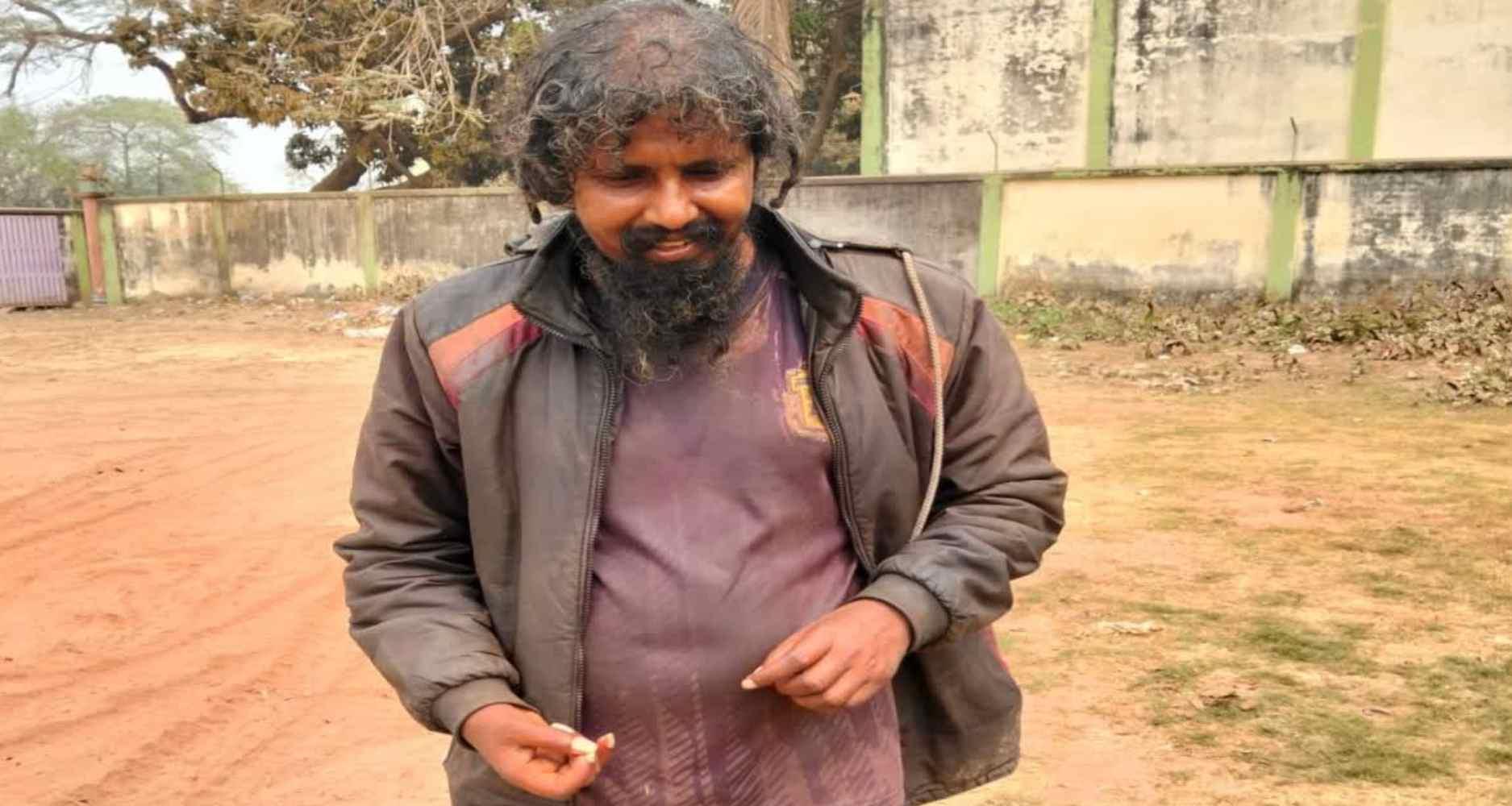
In a story that straddles tragedy, suspicion, and quiet heroism, a man lost to his family for over four decades has resurfaced in a foreign land—mistaken for a spy, nearly consumed by mob fury, and ultimately rescued through an unlikely network of radio enthusiasts.
A resident of Hili in West Bengal’s South Dinajpur district, Jaidul—also known as Lipon Mondal—vanished as a schoolboy, slipping into oblivion when he was barely in the second or third grade. For 41 years, his absence calcified into grief, his memory fading into resignation within a family too poor to search and too broken to hope.
Yet fate, in its peculiar timing, returned him not as a son, but as a suspect.
Across the border in Bangladesh—in the region Bengalis evocatively call ‘Opar Bangla, ' Lipon was recently detained by villagers who grew wary of his erratic movements and disjointed claims. In a climate strained by diplomatic unease between India and Bangladesh, suspicion metastasised rapidly. He was accused of being an Indian intelligence operative.
What followed was a familiar yet chilling script of the digital age—videos of his detention spread like wildfire across social media, capturing an increasingly agitated crowd encircling the bewildered man, interrogating him with a fervour that teetered dangerously close to violence.
Lipon’s own words did little to dispel the doubts. He claimed to hold a Master’s degree in Economics from the University of Dhaka—a claim swiftly debunked. He spoke of passports and visas he could not produce, narratives that collapsed under the weight of their own inconsistency. To the villagers, he was either a liar or something far more sinister.
Then, in a twist that borders on the cinematic, help crackled in over radio waves.
The West Bengal Radio Club—a community of Ham radio operators—intervened with remarkable alacrity. Alerted by contacts in Rangpur, including Joynal Abedin Rajib, the group launched a rapid, improvised investigation. At its helm was Ambarish Nag Biswas, whose account reads like a dispatch from a parallel intelligence network—one powered not by state machinery, but by empathy and persistence.
“Once we saw the video, we knew we had to act,” Biswas said, adding, “We began tracing his identity that very night.”
Through their network, the team accomplished what seemed improbable. They located Lipon’s ancestral home in Kharun village, along the Hili border. The revelation was staggering.
The so-called ‘spy’ was, in fact, a long-lost son—mentally unstable, displaced, and profoundly vulnerable.
What followed was a race against time.
As tensions escalated in Bangladesh and the threat of mob violence loomed, the Ham Radio group recorded a video message from Lipon’s mother, Lilifa Mondal—an elderly woman whose voice trembled under the weight of decades-long loss. Her plea was simple, raw, and devastating—do not harm my son; bring him home.
That message, transmitted across digital and radio channels alike, pierced through the frenzy. Simultaneously, the group flooded social media threads with clarifications, dismantling the spy narrative and urging restraint. They coordinated with local contacts in Bangladesh and informed authorities back home, including the Hili Police Station.
Lipon was extricated from immediate danger and is now in safe custody in Rangpur under the care of a local resident, Zainal Abedin. For the first time in decades, he is no longer a nameless wanderer—but a man with an identity, a past, and a waiting family.
Back in Kharun, the air is thick with a fragile, almost disbelieving hope. The Mondal family—impoverished sharecroppers who had long resigned themselves to loss—now find themselves on the cusp of reunion.
For Lilifa, time has folded in on itself. The child she lost has returned as a man shaped by unknown years and unseen struggles. Yet, to her, he remains simply her son.
As administrative and diplomatic processes inch forward, one truth stands luminous amid the uncertainty: sometimes, it is not governments but ordinary people—armed with radios, resolve, and compassion—who bridge the most unforgiving of borders.


 Follow us