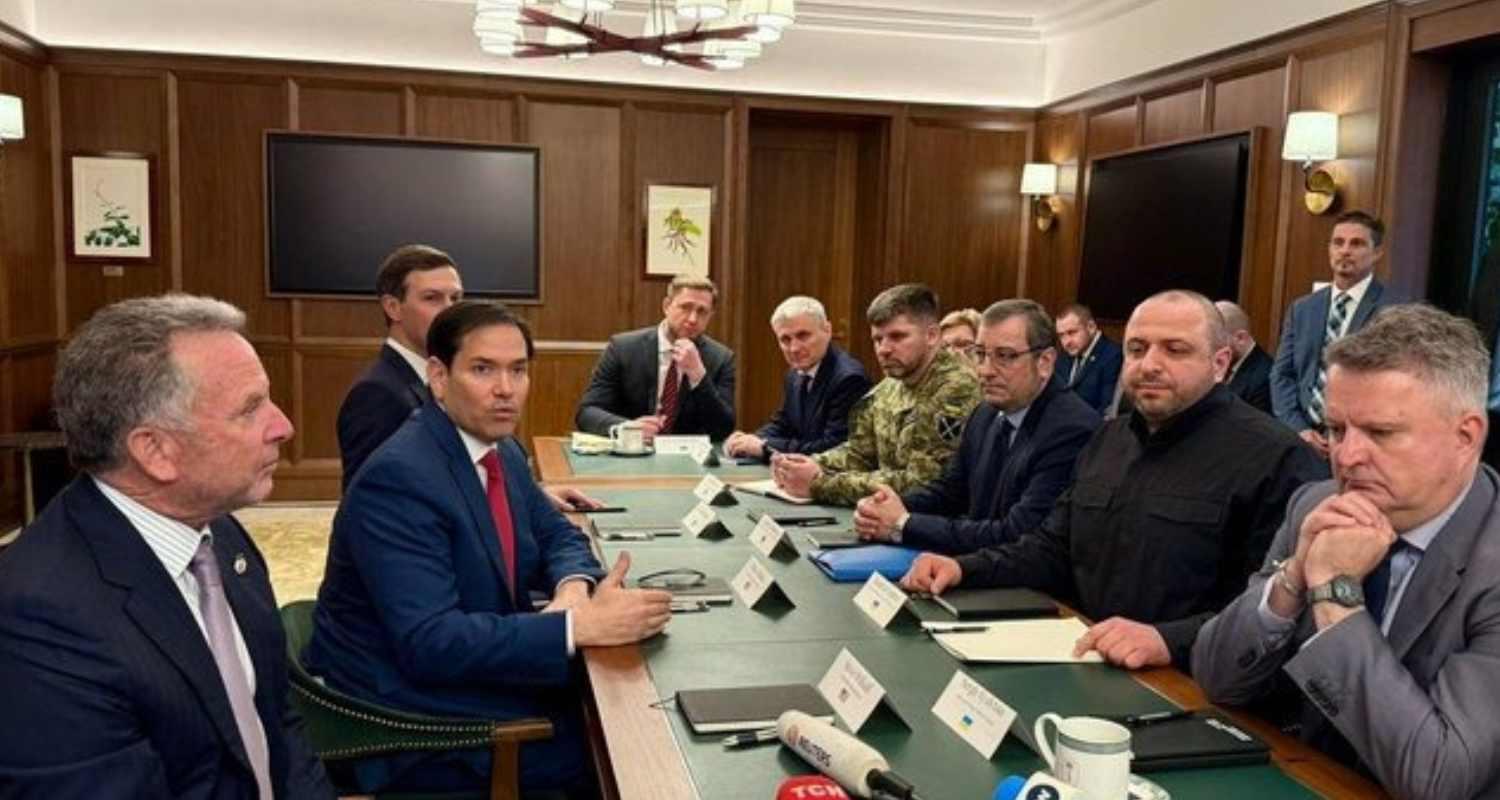
Ukrainian and American delegations will continue peace talks for the third consecutive day in Miami on Saturday, with negotiators stressing that real progress depends on Russia’s willingness to engage in negotiations.
United States pressure tactics, including sanctions and sending weapons to Ukraine, have failed to deter Russia’s ongoing campaign in Ukraine. The talks between the Ukrainian negotiators led by National Security Council Chief Rustem Umerov and US Special Envoy Steve Witkoff, together with US President Donald Trump’s son-in-law, Jared Kushner, have been going on in Florida.
The latest round of negotiations began after both US delegates returned from Moscow on Tuesday, having discussed the peace proposal with the Russian President Vladimir Putin.
In a post on X, Witkoff wrote, "Both parties agreed that real progress toward any agreement depends on Russia's readiness to show serious commitment to long-term peace, including steps toward de-escalation and cessation of killings."
Both sides have also discussed a framework for security guarantees that would be extended to Ukraine after a ceasefire goes into effect.
Washington’s plan involves Ukraine permanently ceding land that has remained under Russian control since 2014, including the majority Russian-speaking Crimea and Donbas.
Meanwhile, the ongoing talks have created tensions between the US and Ukraine’s EU backers, including France, Germany, and the United Kingdom.
French President Emmanuel Macron and German Chancellor Frederic Merz, in a leaked phone call transcript, were quoted as saying, “The US could betray Ukraine. Merz is quoted as saying, “They are betraying us. They are trying to fool us”, apparently referring to two US negotiators.
Meanwhile, Trump on Wednesday said that both delegates had a "reasonably good meeting" with Putin, insisting that they had the "strong impression" that he would like to end the war.
On the other hand, Russian President Vladimir Putin, who was in India this week meeting Prime Minister Narendra Modi, said the talks were "complex" but that he wanted to engage with Trump's plan "rather than obstruct it."



 Follow us