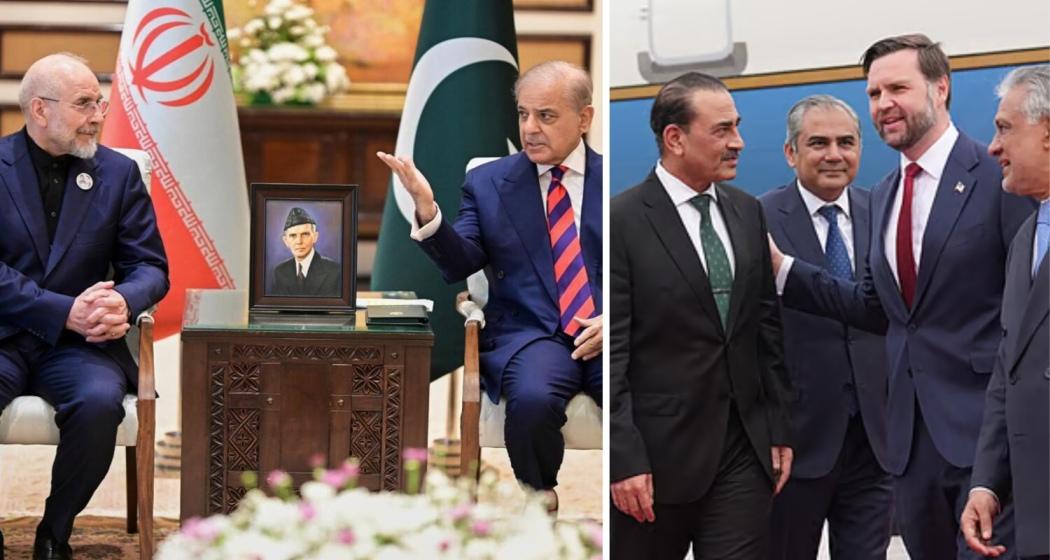
Face-to-face talks between senior officials from the United States and Iran are currently underway in Islamabad, marking the highest-level direct engagement between the two sides in decades as they attempt to end a six-week conflict that has disrupted global energy supplies and destabilised the region.
The negotiations, facilitated by Pakistan, represent a departure from recent backchannel diplomacy, with both delegations meeting directly instead of through intermediaries. The talks come amid a fragile two-week ceasefire and heightened global concern over the security of the Strait of Hormuz, a critical energy corridor.
High-level delegation lead talks
The US delegation was led by Vice President JD Vance, accompanied by special envoy Steve Witkoff and Trump's son-in-law, Jared Kushner.
On the Iranian side, Parliamentary Speaker Mohammad Bagher Ghalibaf led a large delegation, joined by Foreign Minister Abbas Araghchi.
Vance arrived in Islamabad earlier in the day and was received by Pakistan’s top leadership, including Deputy Prime Minister Ishaq Dar and Army Chief Asim Munir, underlining Islamabad’s central role in facilitating the talks.
Officials indicated that initial discussions lasted around two hours before delegations broke for consultations, with further rounds expected.
Sanctions relief, Hormuz among prominent issues discussed
Iran entered the talks with clearly defined “red lines”, including a sustained ceasefire across the region, particularly in Lebanon, the unfreezing of Iranian financial assets, and assurances on freedom of navigation through the Strait of Hormuz.
Tehran has also sought phased sanctions relief and compensation for war-related damages, while signalling cautious openness to dialogue. Ghalibaf said Iran’s past experience with US negotiations had been marked by “breach of promise”, reflecting lingering mistrust.
Also read: In a first since Iran war began, 2 US warships cross Hormuz
US officials, however, denied reports that Washington had agreed to unfreeze Iranian assets ahead of the talks, even as sources suggested that phased arrangements could be discussed as part of a broader settlement framework.
The strategic Strait of Hormuz remains central to the negotiations. Two US Navy guided-missile destroyers reportedly transited the waterway, the first such movement since hostilities began, although conflicting accounts emerged, with Iranian and Pakistani sources disputing the passage.
The strait, through which a significant share of global oil and gas flows, had been effectively shut during the conflict, contributing to widespread supply disruptions. Hundreds of vessels remain in the region, including large numbers of tankers and gas carriers awaiting clearance.
The conflict has had far-reaching consequences for global energy markets. The blockade of the Strait of Hormuz triggered what analysts described as one of the most severe disruptions to oil and gas flows in recent history.
Meanwhile, US President Donald Trump claimed that multiple Iranian mine-laying vessels had been neutralised and indicated efforts were underway to reopen the waterway. He also said large numbers of empty oil tankers were heading towards the United States to load supplies.
IDF strikes 200 targets in Lebanon
Despite the diplomatic push, military activity continues across the region. Israeli forces reported striking over 200 targets linked to Hezbollah in Lebanon within 24 hours, while Tehran has insisted that a ceasefire in Lebanon is a prerequisite for sustained negotiations.
Iran has also warned that failure to meet its preconditions could derail the talks. Meanwhile, US intelligence assessments suggest potential new arms transfers to Iran, adding another layer of complexity to the negotiations.
Global stakeholders have also stepped up diplomatic engagement. French President Emmanuel Macron said he had discussed the ceasefire and regional stability with Turkey’s leadership, calling for adherence to the truce and protection of maritime routes.
The Islamabad talks are being closely watched as a potential turning point in a conflict that has not only escalated regional tensions but also disrupted global supply chains, particularly in energy markets.
While both sides have signalled willingness to engage, deep mistrust, unresolved preconditions and ongoing military activity continue to cast uncertainty over the outcome.



 Follow us