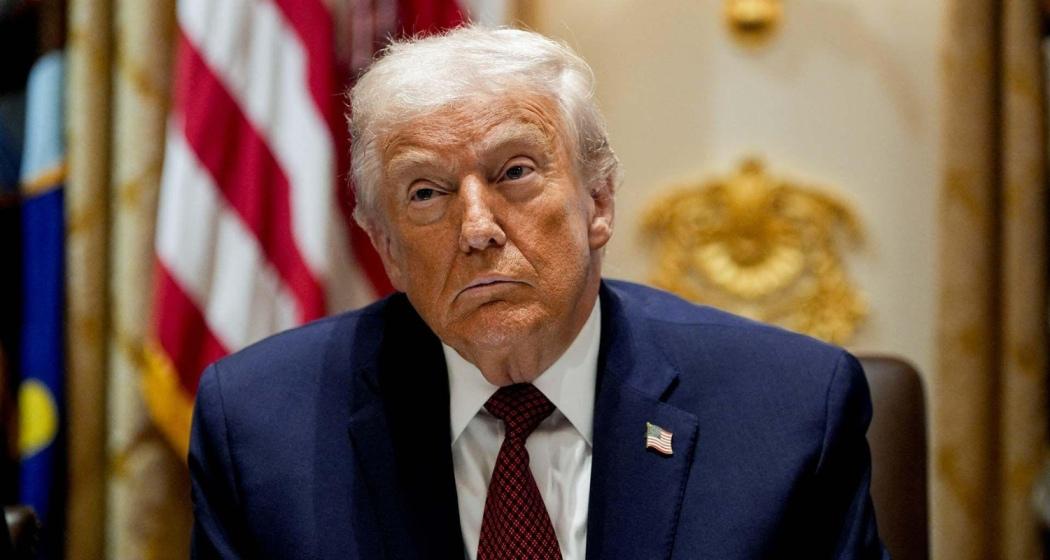
US President Donald Trump on Sunday signalled cautious optimism about reaching a deal with Iran by Monday to reopen the Strait of Hormuz, even as Iranian drones struck oil, power and petrochemical facilities across the Gulf and Israeli forces traded fire with Hezbollah in southern Lebanon. The developments came hours after Trump issued a 48-hour ultimatum threatening to bomb Iranian power plants and bridges if the vital waterway remained closed.
Trump’s mixed signals on Hormuz deadline
Trump told reporters there was a “good chance” of a deal by Monday, adding, “They are negotiating now.” Earlier, he had warned on Truth Social that “time is running out, 48 hours before all Hell will reign down on them” and threatened to “blow up” key Iranian infrastructure. Iran rejected the ultimatum outright, with its central military command calling it “a helpless, nervous, unbalanced and stupid action”. Tehran insisted the strait was closed only to its “enemies” and vowed to open the “gates of hell” if attacks on Iranian civilians escalated.
“Tuesday will be Power Plant Day, and Bridge Day, all wrapped up in one… Open the Strait or you’ll be living in Hell, just watch! Praise be to Allah,” President Trump's post read.
Dramatic rescue of downed US F-15 airman
In a major operational success, US forces rescued a “seriously wounded” F-15 crew member from deep inside Iran’s mountains. Trump described the airman as “really brave” and confirmed he would hold a military briefing at the Oval Office on Monday. Israeli officials, including Prime Minister Benjamin Netanyahu, hailed the operation as “incredible”, revealing that Israel had provided intelligence and paused strikes to facilitate the rescue. Iran claimed the US operation, which allegedly used an abandoned airport in southern Isfahan, was “completely foiled”.
It said it downed two C-130 aircraft, two Black Hawk helicopters and several “flying objects”, and released a photograph of what it said was a downed US
aircraft. Local media reported five Iranians killed in strikes linked to the rescue effort.
Also read: Iran calls Trump's 48-hr deadline 'unbalanced' and 'foolish'
Iranian drones pound Gulf oil and power infrastructure
Iran’s Revolutionary Guards claimed responsibility for coordinated drone attacks on petrochemical plants and energy facilities in the UAE, Kuwait, Bahrain and Israel. In Kuwait, drones hit two power and water desalination plants and units of the Kuwait Petroleum Corporation, causing “severe material damage” and taking two power generation units offline.
A government building in Kuwait City was also damaged. In Abu Dhabi, fires broke out at the Borouge Petrochemicals Factory after debris from intercepted missiles fell; authorities said they were responding to a “missile threat”. Bahrain reported a tank fire at a Bapco storage facility. A container ship also reported an incident at UAE’s Khor Fakkan port. The IRGC warned it would intensify strikes on US economic interests if civilian targets in Iran were hit again.
Clashes intensify on Israel-Lebanon border
Israeli forces struck a building in south Beirut after issuing warnings, killing a Lebanese army soldier, according to the Lebanese army. Sirens sounded across northern Israel, including Haifa. Israel’s Defence Minister Israel Katz vowed that if missile attacks on Israeli civilians continued, Iran would “pay a heavy price” that would “degrade and ultimately cripple” its infrastructure. “We will continue to pursue and neutralise the leadership of terror,” Katz said.
Diplomacy gathers pace amid rising tensions
Oman held talks with Iran to ensure smooth transit through the Strait of Hormuz. China’s Foreign Minister Wang Yi told his Russian counterpart Sergei Lavrov that Beijing was ready to cooperate at the UN Security Council to ease Middle East tensions, stressing that a ceasefire was the only way to resolve navigation issues. Pakistan’s foreign minister discussed de-escalation with his Iranian counterpart. Pro-Iran groups also attacked US diplomatic sites in Iraq, though details remained limited.
Iran defiant as region braces for next phase
Iran’s military spokesman dismissed US targeting as “inaccurate” and warned of a “big surprise” for America and Israel. With the 37-day-old conflict showing no signs of abating, analysts said Trump’s blend of threats and negotiation overtures had left the region on edge. Whether Monday brings a diplomatic breakthrough or further escalation will depend on the outcome of the reported talks, and whether Iran’s proxies continue their barrage.



 Follow us