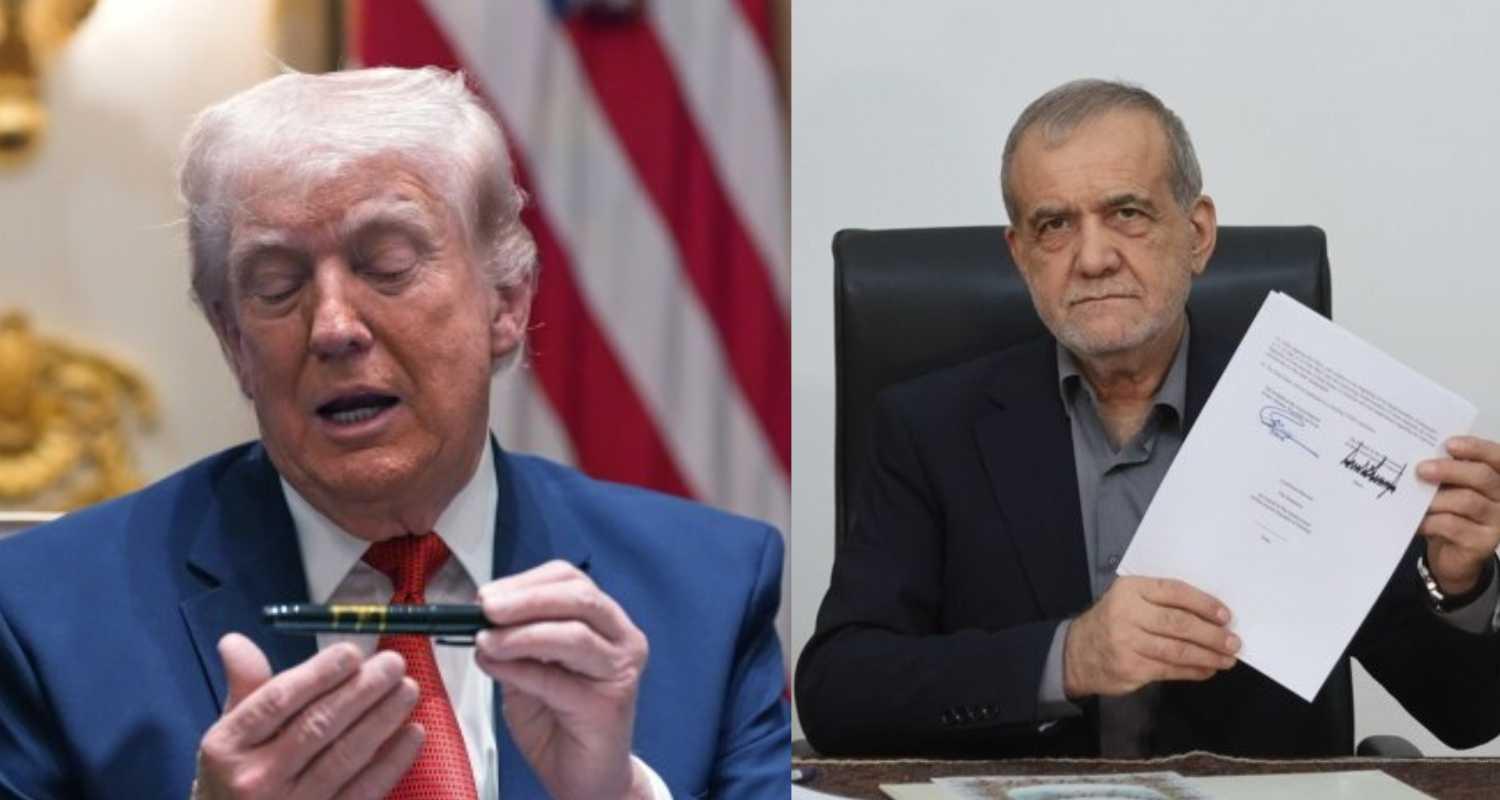
United States President Donald Trump and Iranian President Masoud Pezeshkian have officially signed a Memorandum of Understanding (MoU) to end the US-Israel war with Iran. Trump, who is in France for the G7 summit, signed the document during dinner with French President Emmanuel Macron on Wednesday night, while Masoud Pezeshkian signed it in Tehran, as confirmed by mediators on Thursday.
Both sides say the deal is now in effect.
What’s in the deal?
US officials say it includes Iran agreeing not to develop or acquire nuclear weapons, ending the war on all fronts, and the reopening of the Strait of Hormuz.
Trump’s 14-point peace formula does not mention Iran’s ballistic missile programme. He defended the omission, saying it would be unfair for Iran to lack ballistic missiles when other regional countries, including Israel, possess them. He made these comments at the G7 summit in France, where the peace deal and global peace were the main topics of discussion.
According to regional and international experts, “peace deal negotiations and subsequent discussions on Iran’s nuclear programme are likely to continue for another 60 days.”
Former President Joe Biden had negotiated with Iran, but the talks did not materialise. Trump had also negotiated earlier but failed to achieve a breakthrough, they said.
"These negotiations on nuclear issues are very detailed and exhaustive, and it’s probably going to take more time than just 60 days.”
United States is primarily focused on removing the 400kg of enriched uranium from Iran, while other demands — including peace with neighbours, full opening of the Strait of Hormuz, and the repayment and unfreezing of Iranian assets worth $24 billion — remain under discussion.



 Follow us