The escalating conflict in West Asia has reached a perilous new phase over the weekend, marked by US President Donald Trump's stark 48-hour ultimatum to Iran and Tehran's defiant vows of "irreversible damage." As missile exchanges intensify and global energy markets convulse, the region teeters on the brink of broader catastrophe.
Iran has continued retaliatory strikes against Saudi Arabia and other neighbouring Gulf nations following US–Israeli attacks, with several assaults targeting key energy infrastructure and raising fears of a major disruption to global oil and gas supplies.
Trump's 48hr's ultimatum to Iran
President Trump has issued a direct threat to Iran on Truth Social, declaring that the United States would "hit and obliterate" Iran's power plants if Tehran failed to fully reopen the Strait of Hormuz within 48 hours.
The ultimatum, issued amid reports of disrupted shipping through the vital chokepoint, has sent Brent crude surging past $112 per barrel, reflecting acute fears of prolonged supply shocks.
Trump later posted a provocative message proclaiming the "death of Iran" while pivoting to domestic criticism of the "Radical Left" and Democrats, underscoring the intersection of foreign policy and US politics.
Iran responded with warnings of severe retaliation, including threats to target regional energy infrastructure and "completely destroy" firms with US links if its facilities are hit. The Islamic Revolutionary Guard Corps (IRGC) has shifted its military doctrine to an overtly "offensive" posture, with commanders asserting dominance over Israeli skies and promising intensified strikes.
Also read: Who are top Iranian leaders killed in the US-Israeli attacks?
Iranian missiles strike cities in Israeli
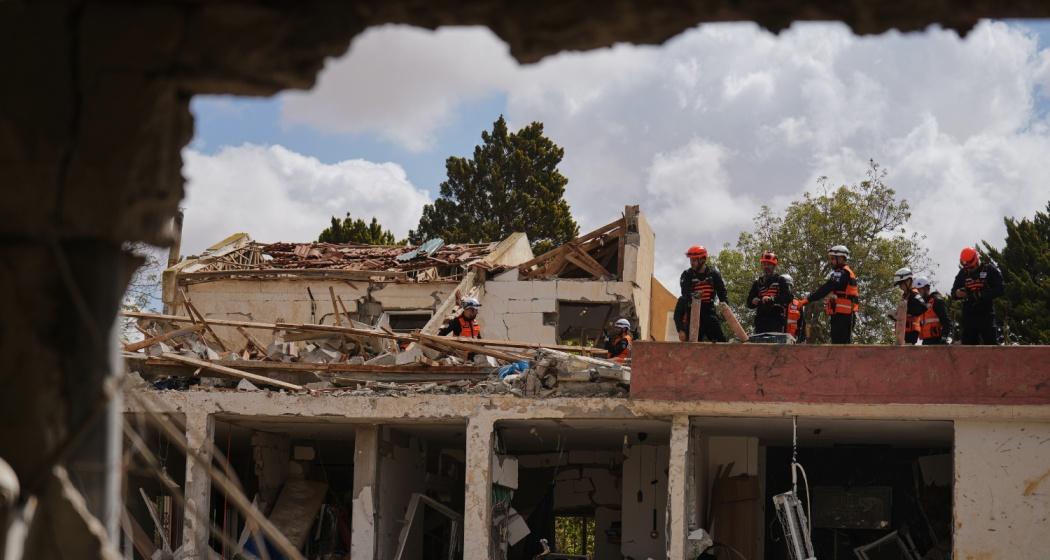
Iran launched over 400 missiles toward Israel in recent volleys, with Israeli authorities claiming 92% interception rates, though breaches caused significant damage. Strikes hit southern cities including Arad and Dimona, also known as 'mini India', proximate to sensitive nuclear facilities, resulting in over 100 injuries, destroyed buildings, and mass casualty declarations. Blasts echoed in Jerusalem and Tel Aviv, with sirens sounding amid fresh alerts.
Israel countered aggressively, launching waves of strikes on Hezbollah positions in south Lebanon, destroying key bridges over the Litani River, and targeting IRGC assets. Prime Minister Benjamin Netanyahu, visiting strike-hit Arad, vowed to pursue IRGC leaders "personally," highlighting Iran's expanded long-range capabilities after a reported missile attack on the US-UK base at Diego Garcia, though Tehran denied involvement.
Proxy fronts flared as Saudi Arabia and the UAE intercepted drones and missiles, while overnight attacks targeted a US-linked facility at Baghdad airport. Hezbollah commanders were eliminated in Lebanon, and Iran claimed successes including downing an F-15 near Hormuz.
War in 'perilous stage': WHO
The WHO warned of a "perilous stage" in the conflict, with over 2,500 deaths reported, predominantly in Iran and Lebanon. The G7 pledged to stabilise energy supplies, while the UK emphasised non-involvement and de-escalation. The EU engaged Iran's foreign minister amid efforts to contain fallout.
Iran maintains selective restrictions in the Strait of Hormuz, allowing passage for non-hostile vessels, including Indian tankers, while threatening enemy-aligned shipping. The US eased some sanctions to release loaded Iranian oil, potentially adding millions of barrels to markets.
As the war enters its fourth week, with US and Israeli operations claiming progress yet facing resilient Iranian retaliation, the risk of wider entanglement looms. Trump's shifting signals, from hints of de-escalation to obliteration threats, have heightened uncertainty, leaving allies and adversaries alike bracing for the next move.



 Follow us