US President Donald Trump on Friday demanded Iran’s “unconditional surrender” as the sole acceptable outcome to end hostilities, offering economic assistance and political support if Tehran complied. Posting on Truth Social, Trump declared: “There will be no deal with Iran except UNCONDITIONAL SURRENDER.” He added that the United States, together with its allies, would rebuild Iran’s economy and install a “GREAT & ACCEPTABLE Leader(s),” coining the slogan “MAKE IRAN GREAT AGAIN (MIGA!).”
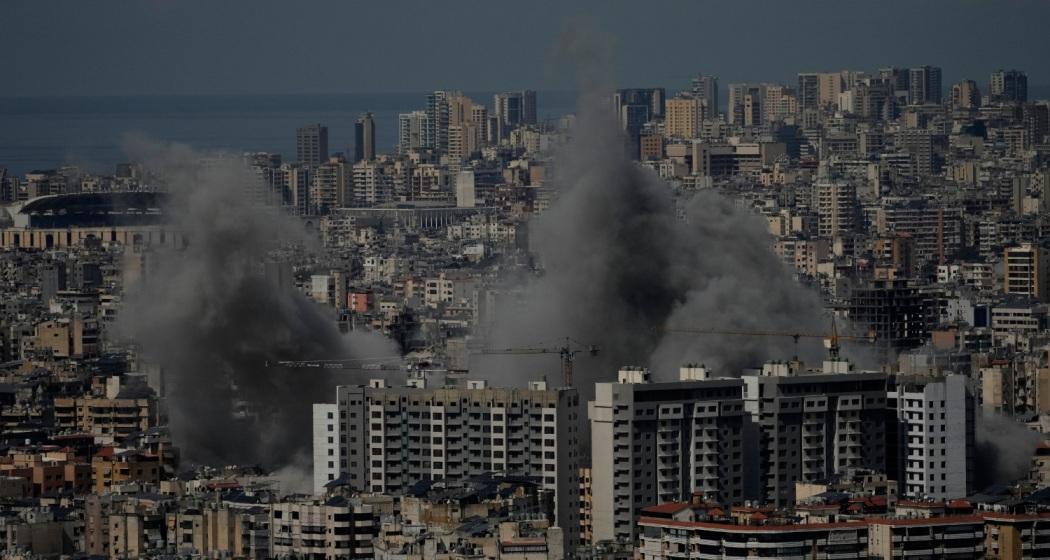
The statement came amid heavy Israeli bombardments of regime targets in Tehran and Hezbollah positions in Beirut. Defence Secretary Pete Hegseth warned that US strikes against Iran were “about to surge dramatically.”
Missile strikes across the Middle East
On the seventh day of the conflict, Iran fired missiles at a US base in Kuwait. Earlier, Kuwait reported intercepting incoming drones and missiles, while four drones targeted Basra airport and oil fields in southern Iraq. One drone crashed into the airport’s cargo terminal, two others struck a US company in the Burjesia oil complex, and a fourth hit the Rumaila oil field.
The UAE intercepted nine ballistic missiles and 109 drones, according to its Ministry of Defence. Israel, meanwhile, reported that 50 jets had struck an underground bunker in Tehran housing Supreme Leader Ayatollah Ali Khamenei. Airstrikes in Tyre, Lebanon, killed one person, while Hezbollah launched rockets at northern Israel, targeting Malkia and Ramot Naftali.
Global flight disruptions
The ongoing hostilities have caused massive disruption to air travel. Over 11,000 flights in the region have been cancelled since February 28 after Gulf countries closed their airspace. Indian carriers alone cancelled 278 international services on Friday, although 96 flights to and from the Middle East were still scheduled. Civil aviation authorities warned that airspace closures and restrictions would continue to affect operations as long as hostilities persist.
Impact on energy supplies
With the Strait of Hormuz effectively blocked, global energy supplies have been severely disrupted. Crude prices surged over 10% to their highest levels since summer 2024. Europe and Asia, heavily reliant on imported LNG from the Middle East, have faced sharp rises in natural gas prices.
Also read: Trump rules out deal with Iran unless 'unconditional surrender'
US waiver for India
In a strategic move to stabilise markets, the US granted India a temporary 30-day waiver to purchase Russian oil cargoes stranded at sea. The waiver covers shipments already loaded on tankers prior to the latest sanctions. US Treasury Secretary Scott Bessent said the measure aimed to prevent supply shortages while reducing pressure caused by Iran’s disruption of global energy flows.
India’s response
Indian refiners swiftly acted to secure supplies, purchasing more than 15 million barrels of Russian crude stranded near Indian waters. Sources indicated that imports could temporarily rise to 1.6–2 million barrels per day, although competition from China may limit the gains.
“India remains highly exposed to potential supply disruptions, with nearly 50% of crude imports transiting the Strait of Hormuz,” noted Sumit Ritolia, analyst at Kpler. Domestic reserves currently cover only about 25 days of demand, making the waiver critical for energy security.
To ensure the continued flow of energy, US Energy Secretary Chris Wright announced plans for the US Navy to escort commercial ships through the Strait of Hormuz “as soon as it is reasonable.” This move is designed to maintain energy shipments to global markets, including India, while mitigating risks from Iranian attacks. Trump also assured political risk coverage for oil and gas tankers operating in the Gulf, signalling a US commitment to secure strategic trade routes amid escalating hostilities.
Escalation across Mideast
The conflict has expanded across the Middle East, involving Iran-backed groups such as Hezbollah and the Houthis. Israel claims to have achieved near-complete air superiority, destroying 80% of Iran’s air defence systems. Nevertheless, Iran continues to launch low-cost drones and missiles to prolong the campaign. The Shahed-136 ‘kamikaze’ drones have been pivotal in these attacks.
Uncertain timelines
Neither the US nor Israel has announced a definitive timeline for the conflict. Trump initially suggested a two-to-three-day resolution, later revising it to four weeks. Defence Secretary Hegseth has indicated there is no set timeframe, leaving the war’s duration open-ended. Analysts warn that unless either side blinks first, hostilities could escalate further.
Economic and political implications
Beyond military action, the conflict has sent ripples through global markets. Energy security, flight disruptions, and crude price spikes have heightened tensions worldwide. India, balancing purchases of stranded Russian crude with other sources, seeks to maintain domestic fuel stability amid uncertainty. The US waiver and naval protection, combined with regional airstrikes, underscore the complex interplay of geopolitics and economic priorities as the war continues to reshape the Middle East landscape.



 Follow us