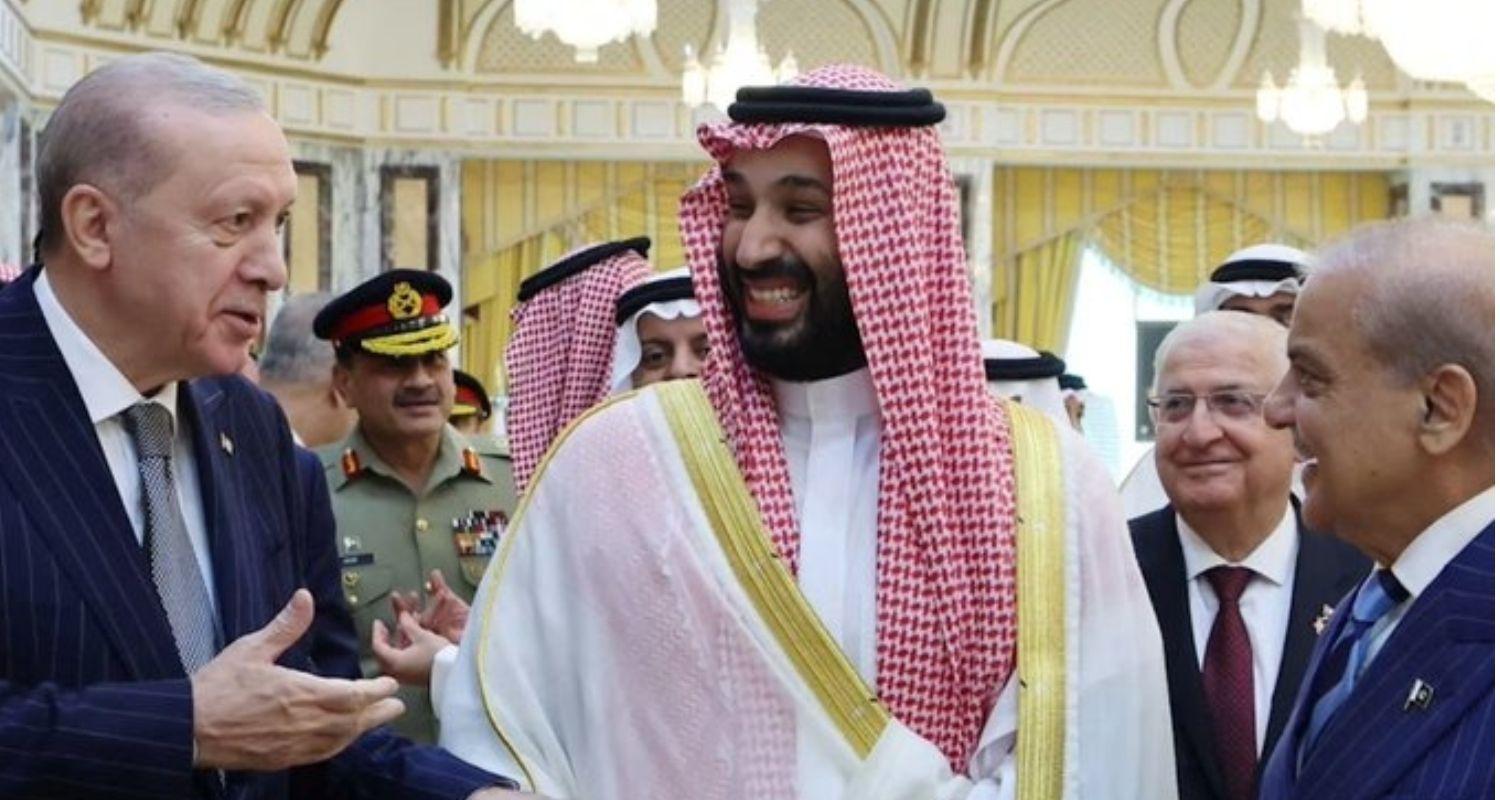
The signing of the trilateral defence deal between Pakistan, Saudi Arabia and Türkiye has given the US administration reason to remain positive about a peace deal with Iran.
Reacting to the latest developments shaping the region, Iranian President Massoud Pezeshkian said that while Tehran doesn’t seek war or territorial expansion, it will not yield to coercion.
Experts credit Iran’s recent attacks on regional countries, including Saudi Arabia, for the signing of the historic Mecca defence pact.
They say all disagreements that had become a roadblock in the deal will now contribute to a new security order in the region against Iran and other Shiite terrorist proxies operating on its behalf, including the Houthis.
For decades, Saudi Arabia's and Türkiye's diplomatic relations were cold, and with the killing of Jamal Khashoggi, they went into a deep freeze.
The relations continued to worsen in 2025 and 2026, but because of Pakistani involvement the two sides decided to put their reservations behind and agree to a new security architecture.
Meanwhile, the United States Central Command (CENTCOM) announced that it has redirected 51 merchant ships, disabled two, and boarded another two since resuming its naval blockade against Iran on July 14.
However, only eight commercial vessels transited the Strait of Hormuz on Thursday, a drop from 15 on Tuesday and 12 last Thursday, according to data firm Kpler.
Before the start of the war in Iran, nearly 140 ships passed through the Strait of Hormuz on a daily basis, carrying 20 per cent of the world’s oil and gas shipments.
Traffic also dropped in the Red Sea’s Bab al-Mandeb Strait. Only 26 vessels crossed on Thursday, according to Kpler.
Some 70 ships used to cross Bab al-Mandeb daily before the Iran-backed Houthis announced a blockade on Saudi ships.
Also read: Trump signs new orders to limit birthright citizenship



 Follow us