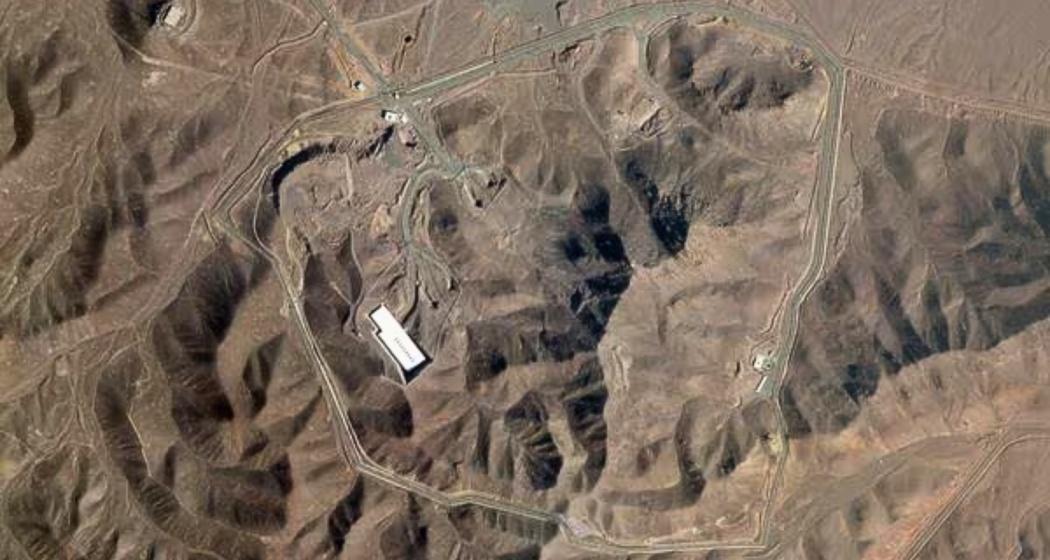
Iran’s principal nuclear enrichment site at Natanz nuclear facility was struck in an airstrike on Saturday, state-linked media reported, as the escalating conflict in West Asia entered its fourth week with no clear signs of de-escalation.
The judiciary-affiliated Mizan news agency said there was no radiation leakage following the strike, seeking to allay fears of a nuclear incident even as the facility remains a repeated target in the ongoing hostilities.
Authorities said the latest strike did not result in any radiological consequences. The United Nations’ nuclear watchdog had earlier also indicated that a previous attack on the same site was unlikely to trigger radiation risks.
Situated around 220 kilometres southeast of Tehran, Natanz is central to Iran’s uranium enrichment programme. Satellite images following earlier attacks showed visible structural damage, underscoring its strategic significance in the conflict.
Despite assurances, analysts warn that repeated targeting of such facilities heightens the risk of unintended escalation, particularly if critical systems are compromised over time.
Trump considering “winding down” military ops
The strike comes amid mixed messaging from the United States. President Donald Trump said he was considering “winding down” military operations in the region, even as Washington pushes ahead with a significant troop build-up.
The US is deploying three additional amphibious assault ships and about 2,500 Marines to the region, adding to the more than 50,000 personnel already stationed across West Asia. Officials have described the deployments as part of efforts to maintain operational readiness and strategic pressure.
The apparent contradiction between de-escalatory rhetoric and increased military presence has added to uncertainty over the trajectory of the conflict.
Also read: Trump considers ending Iran war, urges others to guard Hormuz
Regional spillover and rising threats
Hostilities have continued unabated across multiple fronts. Israel said Iran launched fresh missile attacks early Saturday, while Saudi Arabia reported intercepting around 20 drones over its eastern region, home to vital oil infrastructure.
Iran has also targeted energy facilities across Gulf countries and has issued warnings that recreational and tourist sites worldwide could be at risk, raising fears of the conflict expanding beyond its current geography.
In Lebanon, Israeli forces carried out fresh strikes on positions linked to Hezbollah in Beirut’s southern suburbs, with explosions and fires reported in densely populated areas.
Rising casualties and displacement
The human toll of the conflict continues to mount. More than 1,300 people have been reported killed in Iran, while over 1,000 have died in Lebanon. Israel has recorded fatalities from Iranian missile strikes, and US forces have also suffered casualties in the region.
Millions have been displaced, particularly in Iran and Lebanon, exacerbating an already severe humanitarian situation.
Oil markets and global impact
The conflict has triggered sharp volatility in global energy markets. Brent crude prices have surged significantly from pre-war levels, driven by concerns over supply disruptions linked to attacks on energy infrastructure.
Iran’s continued strikes on oil facilities and shipping routes have compounded fears of prolonged instability, with ripple effects being felt across global economies.
With little progress on diplomatic efforts and military operations continuing on multiple fronts, the conflict appears set to persist. The repeated targeting of strategic sites such as Natanz highlights the high stakes involved.
As tensions remain elevated, the risk of further escalation, both within and beyond the region, continues to loom large, raising concerns over a prolonged and destabilising conflict.



 Follow us