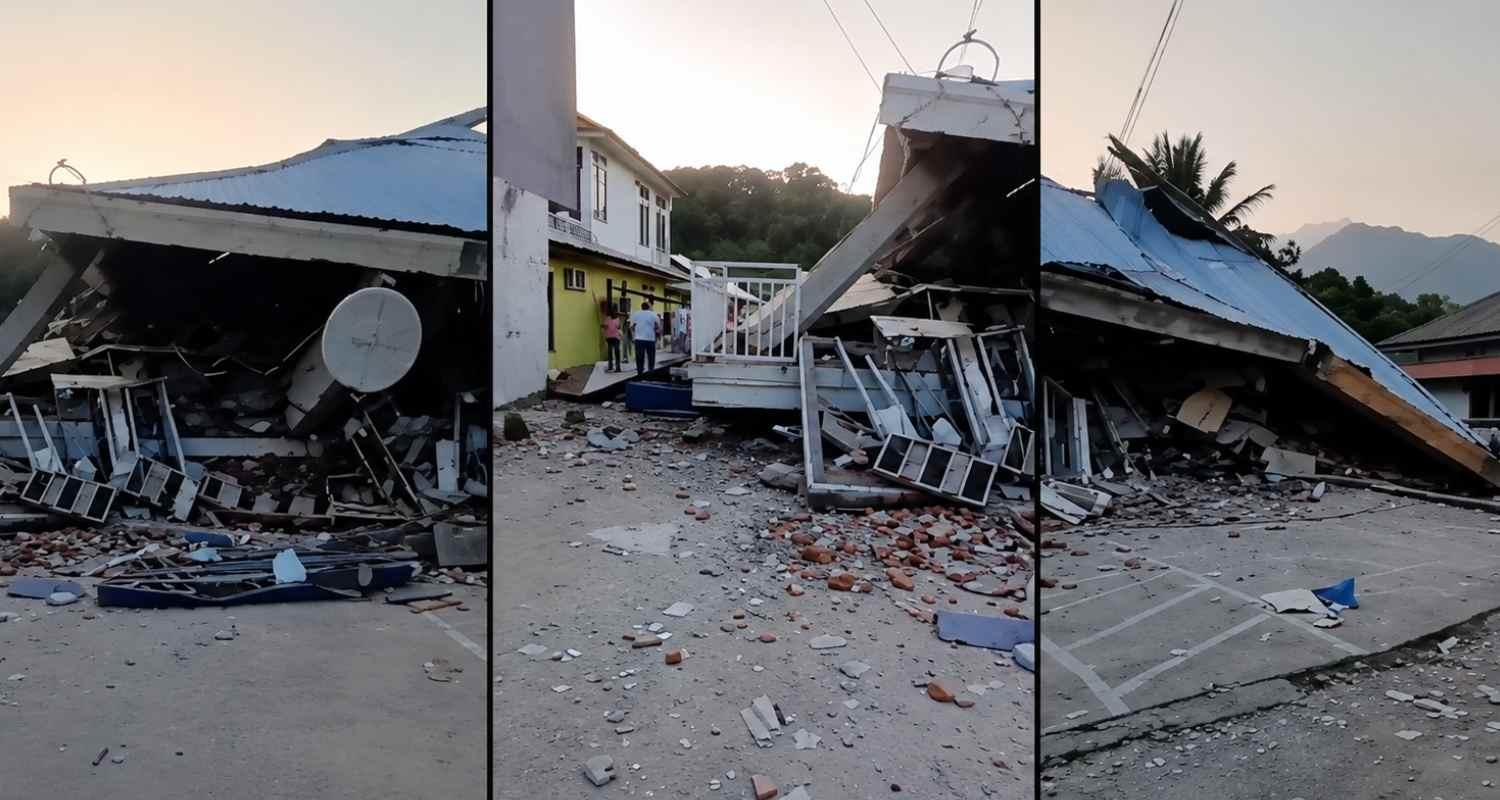
The death toll from yesterday’s strong 7.7-magnitude earthquake that rattled Indonesia’s Flores Island has climbed to 47, as widespread destruction of infrastructure poses serious challenges to rescue teams.
Indonesia became the third country in less than two months to experience an earthquake of magnitude 7 or greater, after Venezuela and Colombia. While Japan was also struck multiple times, its robust infrastructure has kept the population safe despite strong and repeated quakes in 2026.
In Flores, search teams dug through collapsed buildings and landslide debris on Sunday as they looked for more bodies and possible survivors a day after the disaster.
The National Disaster Management Agency said 24 people died in the Manggarai regency and 17 in neighbouring East Manggarai, with additional fatalities reported in the Sikka, Ngada and Ende regencies.
The United States Geological Survey said the quake struck at a shallow depth of about 10 kilometres, 68 km north-northwest of Ende. Strong aftershocks and the risk of further landslides have left thousands displaced.
More than 900 homes were destroyed and nearly 450 others damaged, forcing about 5,000 people into temporary shelters. Many residents spent the night outdoors, fearing their damaged houses would collapse. At least 167 public facilities, including schools, health centres and churches, were also affected.
Landslides blocked sections of the Trans-Flores Highway, isolating remote villages and complicating rescue and relief efforts.
Authorities said restoring electricity, communications and road access remained major challenges.
Indonesia sits on the Pacific “Ring of Fire” and is highly prone to earthquakes. Flores itself suffered a deadly quake and tsunami in 1992 that killed around 2,500 people.



 Follow us