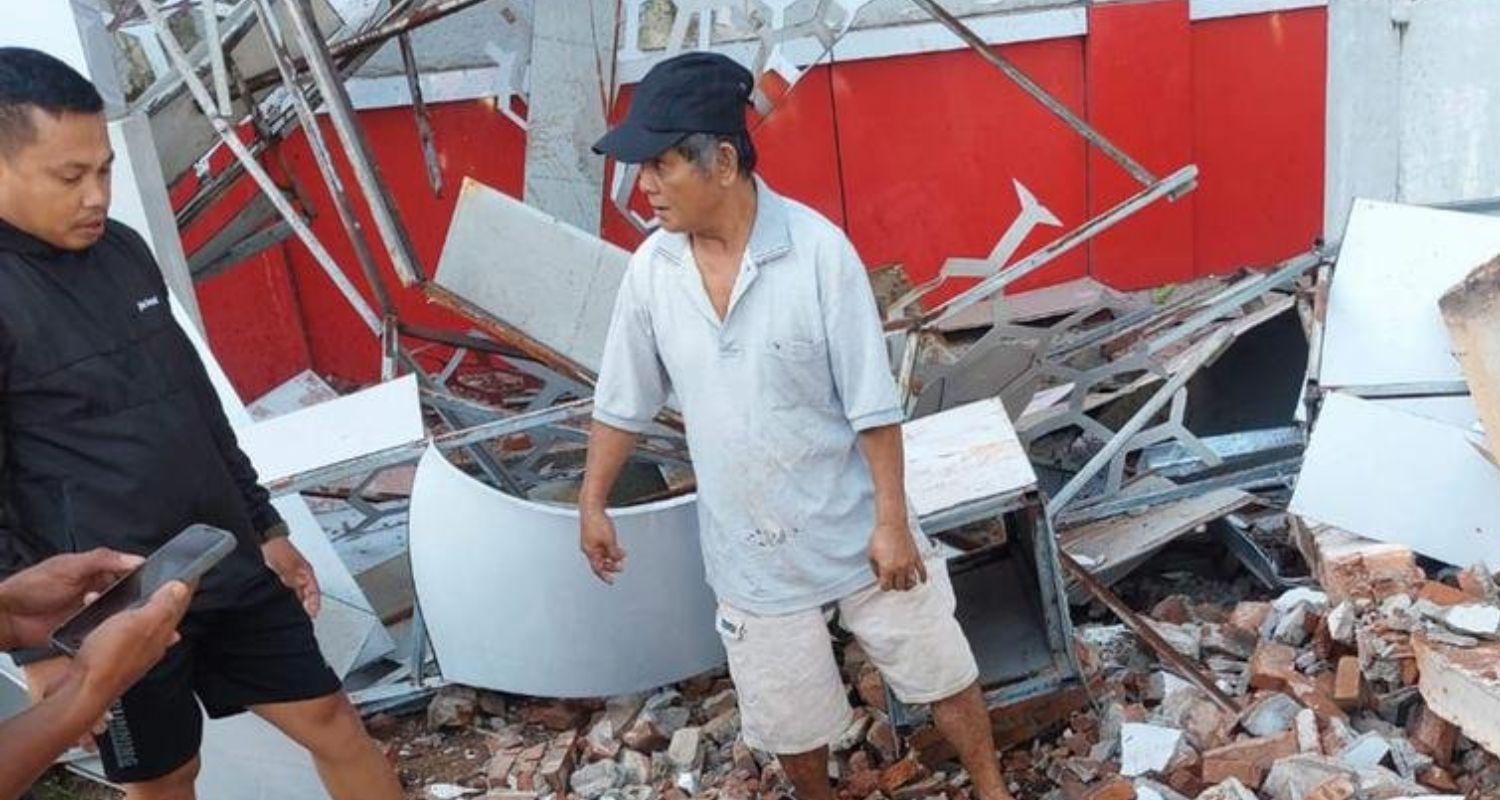
Thousands of people on the Indonesian island of Flores were left waiting for emergency relief on Monday, even as the nation observed its 81st Independence Day, following a powerful earthquake that killed at least 54 people, injured dozens, and damaged hundreds of buildings. Many local residents spent the national holiday searching for missing relatives, mourning the dead, and awaiting assistance in remote communities that remain completely cut off from main transport routes.
The earthquake struck East Nusa Tenggara province on Saturday, damaging more than 1,300 homes, with nearly 250 completely destroyed on Flores alone, according to the National Disaster Management Agency. Around 5,000 displaced residents have been relocated to temporary shelters, whilst 135 people received medical treatment for injuries. In response to the scale of the destruction, the provincial governor declared a 14-day state of emergency on Sunday.
Data from the US Geological Survey showed that the tremor occurred at a shallow depth of 10 kilometres shortly before 6:00 am on Saturday. Coastal residents fled to higher ground as initial tsunami warnings were issued and subsequently lifted. Seismologists have recorded nearly 1,000 aftershocks since the main event, leaving thousands of fearful families sleeping rough under tarpaulin sheets near their collapsed homes.
The earthquake left widespread destruction across Flores, with fallen trees blocking roads, giant boulders dislodged by landslides, and cars crushed beneath collapsed concrete structures. For older residents, the event brought back memories of the devastating 1992 earthquake and tsunami on the island, which claimed around 2,500 lives.
In Reo village, the worst-affected locality in the Manggarai regency, survivors expressed growing frustration over delays in the delivery of essential supplies. Despite the deployment of over 3,500 military and police personnel and the dispatch of 275 tonnes of aid, severe logistical bottlenecks have hindered distribution to isolated areas. Displaced villagers reported a critical lack of food, medicine, clean water, and communal cooking facilities.
Indonesia’s position on the Pacific 'Ring of Fire' — an arc of seismic faults and volcanoes — leaves the archipelago highly vulnerable to natural disasters. The country has suffered several catastrophic events in recent history, including the 2004 Sumatra earthquake and tsunami that killed 230,000 people across the region, and a 2018 quake in Sulawesi that claimed over 4,400 lives. Once again, the population of Flores faces a prolonged recovery effort as humanitarian operations scramble to meet urgent local needs.
Also read: Indonesia quake death toll rises to 47, thousands still displaced



 Follow us