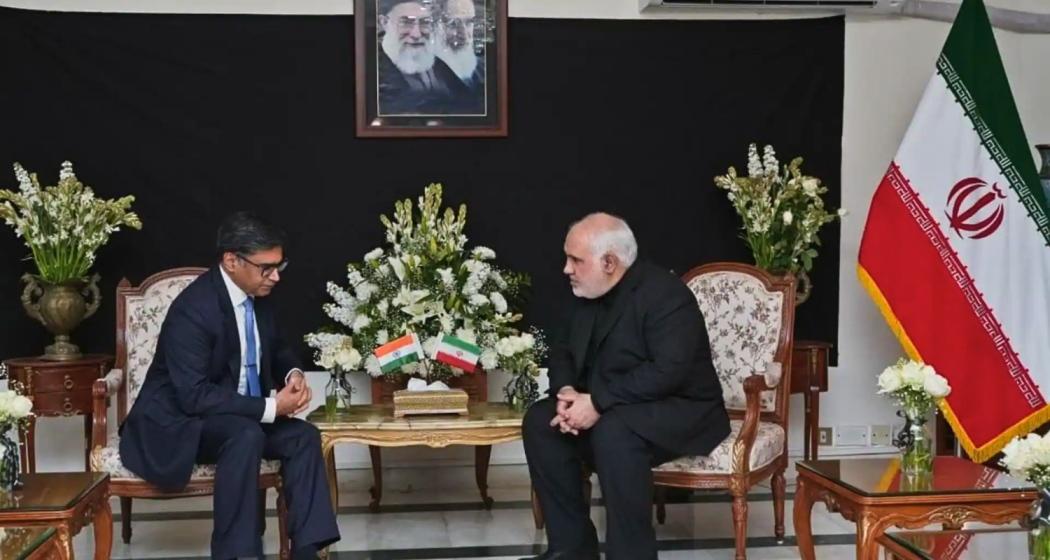
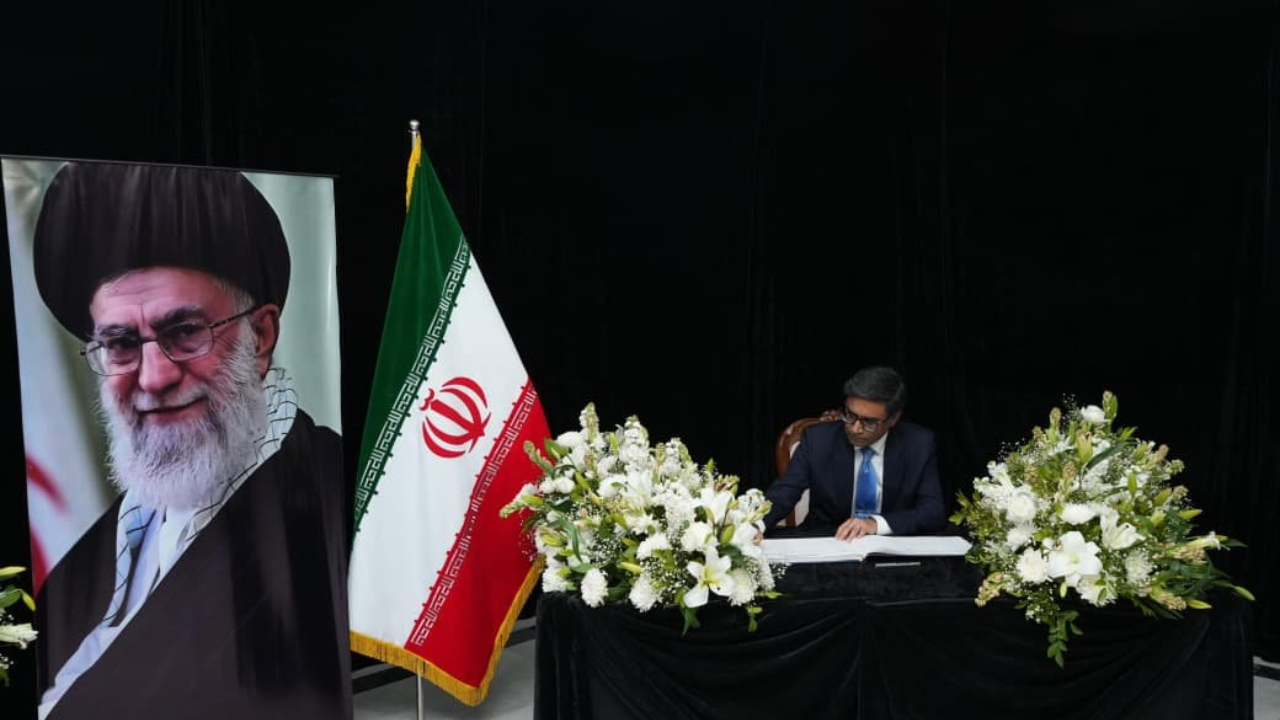
India on Thursday expressed condolences over the death of Iran’s Supreme Leader Ali Khamenei, with Foreign Secretary Vikram Misri visiting the Iranian embassy in New Delhi and signing the condolence book on behalf of the Government of India.
Misri conveyed India’s message of sympathy during his meeting with Iran’s ambassador to India, Mohammad Fathali. The Ministry of External Affairs also released photographs showing the foreign secretary interacting with the envoy during the visit.
Khamenei was killed on February 28 during coordinated strikes carried out by the United States and Israel against targets in Iran, in what analysts describe as one of the most dramatic escalations in the ongoing conflict in West Asia.
The 86-year-old cleric had served as Iran’s supreme leader since 1989, succeeding Ayatollah Ruhollah Khomeini and wielding ultimate authority over the country’s government, armed forces and judiciary. His death has injected deep uncertainty into Iran’s political landscape and the broader regional crisis.
Also read: MEA sets up control room for Indians across West Asia
While India has repeatedly called for restraint and emphasised dialogue and diplomacy to resolve tensions in West Asia, New Delhi had initially refrained from issuing a direct reaction to Khamenei’s killing.
Misri’s visit to the Iranian embassy therefore assumed political significance, particularly after several opposition parties criticised the government for not publicly responding to the Iranian leader’s death earlier.
India shares longstanding civilisational and strategic ties with Iran and has traditionally maintained close diplomatic engagement with Tehran even while balancing relations with Israel and the United States.
New Delhi has also been closely watching the rapidly evolving security situation in the region, which has raised concerns over energy supplies, the safety of Indian nationals in West Asia and broader geopolitical stability.
The conflict intensified after the US-Israeli strikes triggered Iranian retaliation across the region and heightened fears of a wider war in the Middle East.
Against this backdrop, India has continued to reiterate its call for de-escalation and a peaceful resolution of the crisis through dialogue.
MEA expresses 'deep concern' over conflict
The Ministry of External Affairs on Tuesday expressed “deep concern” over the escalating conflict, urging all sides to pursue dialogue and work towards an early cessation of hostilities. Noting that the situation has worsened during the holy month of Ramadan, the ministry said the developments were a cause of “great anxiety” for India as a proximate neighbour with significant stakes in the region’s security and stability. It added that the safety and welfare of nearly 10 million Indians living in the Gulf region remained the government’s “utmost priority”.
Meanwhile, the Congress on Thursday criticised the government’s silence following reports that a US submarine torpedoed and sank an Iranian warship in international waters off Sri Lanka’s coast a day earlier. Leader of the Opposition Rahul Gandhi said that while the country required a “steady hand at the wheel”, it currently had a “compromised PM who has surrendered our strategic autonomy”.
Congress president Mallikarjun Kharge also attacked the government, alleging a “reckless abdication” of India’s strategic and national interests. Referring to the incident, Kharge said the Iranian vessel — which had attended the International Fleet Review 2026 hosted by India — was returning unarmed when it was struck in the Indian Ocean Region.
He further questioned the government’s response as tensions mount in the Gulf, pointing to reports that 38 Indian-flagged commercial ships carrying around 1,100 sailors were stranded in the Strait of Hormuz and raising concerns over maritime safety, energy supplies and India’s contingency planning amid rising oil prices.



 Follow us