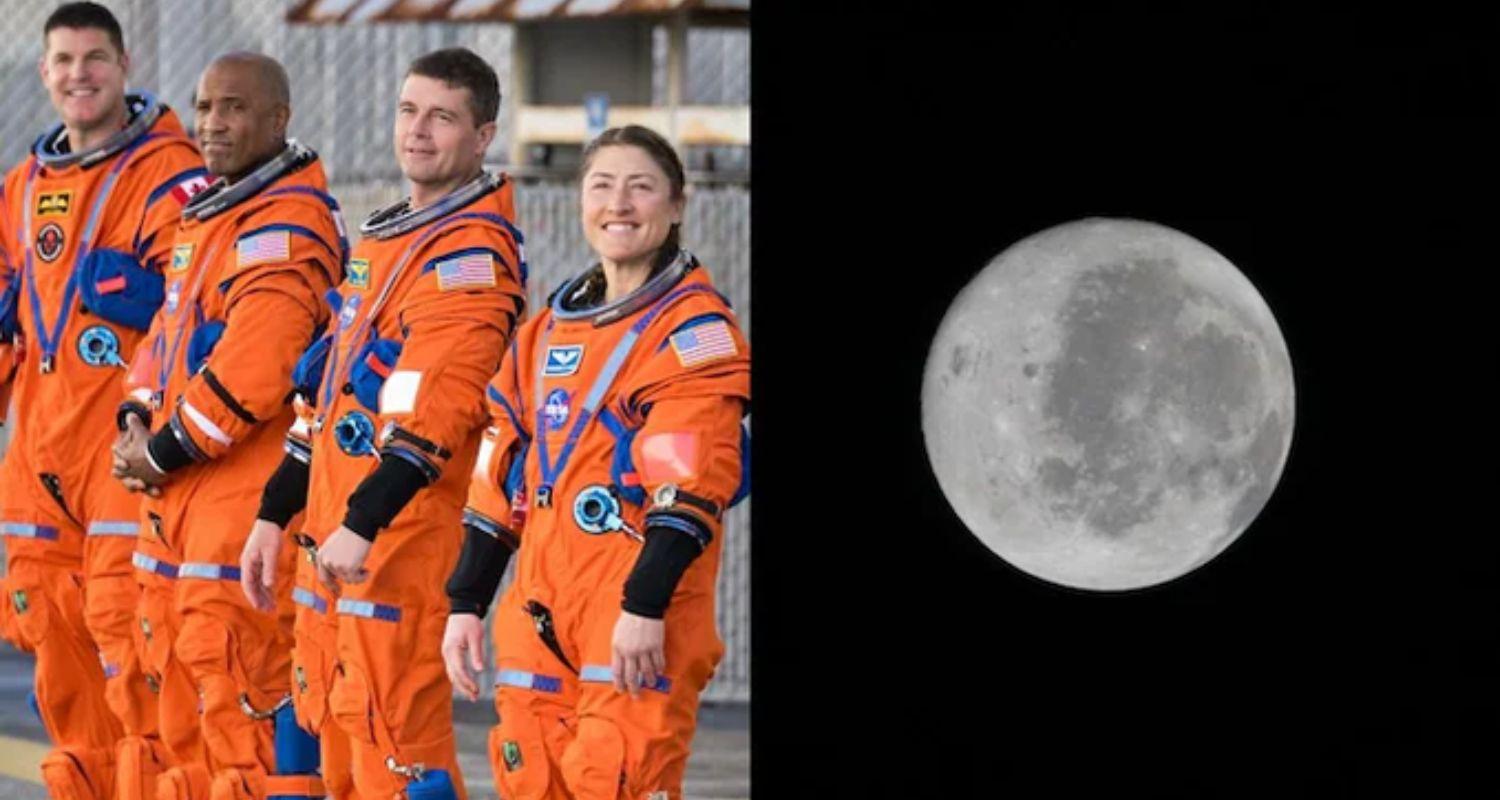
The four astronauts currently undertaking NASA’s first crewed lunar flyby in over fifty years have begun transmitting vivid observations of the Moon after venturing further into deep space than any human in history. Following a tense forty-minute radio blackout while their spacecraft drifted behind the far side of the lunar surface, mission control in Houston finally regained contact with the crew. The relief was palpable as astronaut Christina Koch checked in, remarking on how wonderful it felt to hear voices from home again and poignantly noting that the crew would "always choose Earth."
Earlier in the flight, the Artemis II team eclipsed the long-standing distance record established by the Apollo 13 mission in 1970. They are on track to exceed that previous milestone by 4,105 miles, eventually reaching a peak distance of 252,760 miles from their home planet. Considering this success, Canadian astronaut Jeremy Hansen said he hopes that this record will not last long and will inspire future generations to go even farther into space.
During the journey, the astronauts spent over six hours observing the moon’s geography, providing humans’ point of view about the geographical features observed only by the eyes of mechanical probes before. Victor Glover provided an interesting image of the “terminator,” which is the dividing line between lunar day and night. He said that the light there is incredibly rough and dramatic. His observations were met with enthusiasm by the mission's lead scientist, Kelsey Young, who noted that such intuitive, descriptive details are exactly what human explorers bring to the table. Meanwhile, Christina Koch likened the appearance of certain craters to a lampshade with tiny pinprick holes, noting how intensely they shone against the darker lunar soil.
The Orion capsule is currently executing a "free-return trajectory," essentially performing a massive U-turn around the Moon that will see the crew arrive back on Earth in approximately four days. This mission, commanded by Reid Wiseman, is a landmark for representation in spaceflight, featuring the first woman, the first person of colour, and the first non-American to leave low Earth orbit for the Moon.
Shortly after breaking the distance record, the crew requested to name two previously anonymous craters. The first they suggested naming "Integrity," after their spacecraft’s nickname. The second, a particularly bright feature on the surface, they asked to be named "Carroll" in memory of Commander Wiseman’s late wife, who died of cancer. The proposal prompted an emotional moment of silence between the crew and mission control. NASA has since confirmed it will formally submit these names to the International Astronomical Union for official recognition.
Also read: NASA's Artemis II crew enters Moon’s orbit



 Follow us