The United States has deployed a third aircraft carrier to West Asia, signalling a sharp military build-up, even as Iran’s Foreign Minister Abbas Araghchi prepares to visit Pakistan in a parallel diplomatic push amid fragile ceasefire conditions.
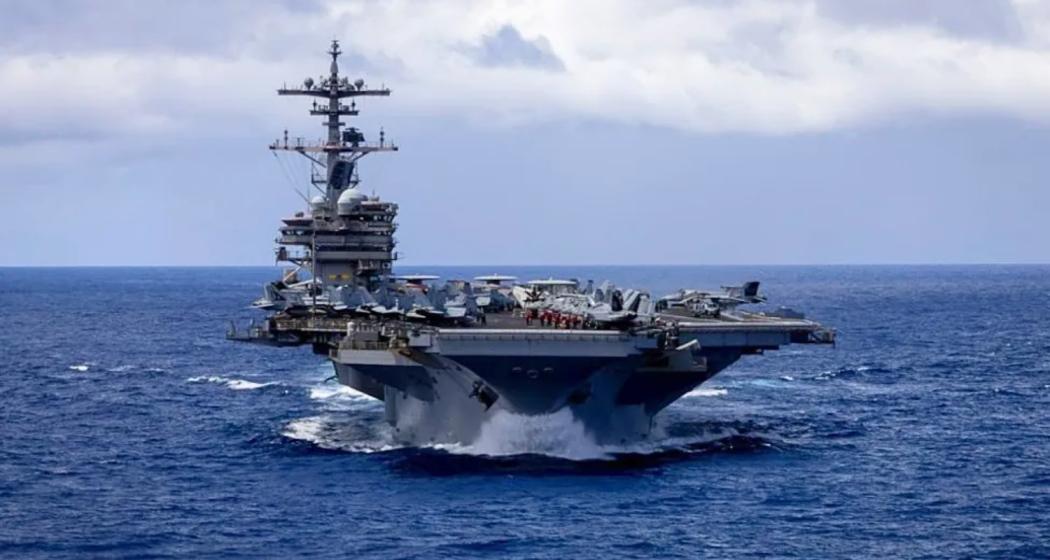
The US military confirmed that the USS George H.W. Bush has entered the region, joining the USS Gerald R. Ford in the Red Sea and the USS Abraham Lincoln already operating nearby.
The deployment of three carrier strike groups marks a significant escalation of American military presence, even as a temporary ceasefire has paused the US-Israel campaign against Iran. Officials indicated the move is aimed at maintaining pressure on Tehran while keeping strategic options open.
Araghchi to visit Pakistan amid stalled talks
Against this backdrop, Iran’s state-run news agency reported that Araghchi will travel to Islamabad, with subsequent visits to Oman and Russia planned.
While there is no official confirmation of a second round of US-Iran talks, Pakistani sources said logistical arrangements are underway, with a US team already present in Islamabad. The visit is expected to serve as a channel for conveying Iran’s position indirectly, amid continued deadlock over key demands, including nuclear rights.
Fresh strikes in Lebanon despite ceasefire extension
Tensions remain high despite diplomatic signals. Israeli warplanes carried out fresh strikes in southern Lebanon hours after US President Donald Trump announced a three-week extension of the ceasefire between Israel and Lebanon.
Local media reported multiple strikes in towns including Touline and Khirbet Selm, raising questions over the durability of the truce.
Also read: Trump orders military to shoot Iranian small boats choking Hormuz
US rules out nuclear option
Trump said he would not consider using nuclear weapons against Iran, asserting that US forces had already caused extensive damage through conventional means.
“Why would I use a nuclear weapon?” he said, adding that such weapons should never be used.
At the same time, US Defence Secretary Pete Hegseth said the American blockade in the Strait of Hormuz was expanding, warning that global shipping routes were increasingly at risk.
EU flags Hormuz reopening, cautious on sanctions
European leaders stressed the urgency of reopening the Strait of Hormuz. António Costa said the strait must reopen “without restrictions”, calling it vital for global trade.
Ursula von der Leyen said it was “too early” to discuss sanctions relief for Iran, though some leaders indicated easing could follow a comprehensive agreement.
The conflict continues to ripple across the region. Kuwait said drones originating from Iraq struck border posts, causing material damage but no casualties. The United Arab Emirates warned that rebuilding trust with Iran would take “ages”.
Iran has begun cautiously reopening its airspace, with international flights from Tehran’s Imam Khomeini Airport set to resume. Separately, a vessel carrying an Indian crew member held by Iran has reportedly been moved to a safer zone in the eastern Strait of Hormuz.



 Follow us