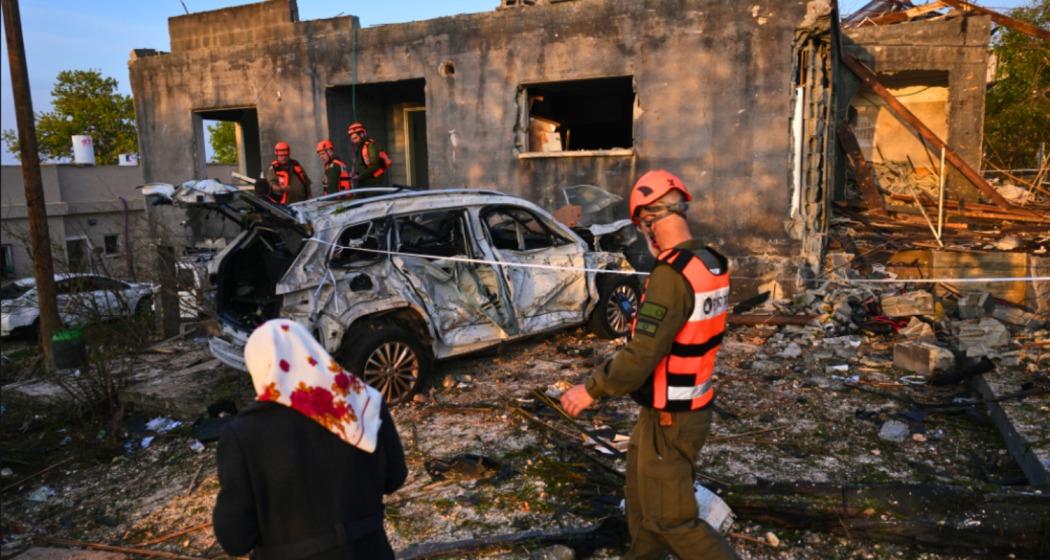
The US-Israel-Iran war entered its 14th day on Friday with no signs of de-escalation, as Washington and Tel Aviv carried out their heaviest bombardment since the conflict erupted on February 28, while Tehran responded with fresh missile barrages and defiant public rallies.
Record strike volume rocks Iranian targets
US Defence Secretary Pete Hegseth announced that American and Israeli forces have hit over 15,000 targets across Iran since the war began, with Friday marking the single highest volume of strikes to date. Fresh waves targeted military infrastructure in Tehran, Shiraz and Ahvaz, including production and storage sites.
Explosions shook the Iranian capital near Ferdowsi Square and Enghelab Square during a major Quds Day rally attended by President Masoud Pezeshkian and senior officials. At least one civilian was killed in the blasts, with three Iranian Red Crescent workers injured on a nearby freeway. Hegseth described Iranian leaders as “moving to bunkers and civilian areas”, while US President Donald Trump, addressing a G7 virtual meeting, declared Iran was “about to surrender” and vowed to hit the regime “very hard over the next week”.
Israeli offensive spills into Lebanon
Meanwhile, Israel launched strikes deep into southern Lebanon, killing eight people, mostly Palestinians, in a village near Sidon. Warplanes destroyed the Zrarieh Bridge over the Litani River, the first acknowledged targeting of civilian infrastructure in the current campaign. Propaganda leaflets were dropped over Beirut urging residents to disarm Hezbollah, described as “Iran’s shield”, causing panic in several districts. Israeli Defence Minister Israel Katz warned of further damage to Lebanese infrastructure if Hezbollah activity continued. An Israeli drone also struck a residential building in Beirut’s Burj Hammoud area for the first time.
Also read: Iran Envoy assures safe Hormuz passage for Indian ships
Strait of Hormuz tensions mount
Hegseth issued a stern warning that the US “will not allow Iran to contest shipping” in the Strait of Hormuz, the vital waterway carrying one-fifth of global oil. He said there was “no clear evidence” Iran had successfully mined the passage, but Trump offered US naval escorts for vessels if needed. Iran’s new Supreme Leader, Mojtaba Khamenei, believed by Washington to be “wounded and likely disfigured”, vowed to keep the strait closed and threatened to open new fronts against Gulf states. Oil prices hovered near $100 a barrel amid the uncertainty.
Iran fires back with missiles and drones
Tehran launched multiple waves of missiles towards Israel and drones at Saudi Arabia. Two missiles were intercepted over northern Israel, injuring two people, while Saudi air defences downed dozens of incoming drones targeting Riyadh. A third Iranian ballistic missile was shot down by NATO over Turkey, triggering sirens at the Incirlik base. The IRGC vowed an “unforgettable lesson” for its enemies.
US losses and international fallout
A US KC-135 refuelling aircraft crashed in western Iraq during Operation Epic Fury, killing four of six crew members; rescue operations continued. The incident added to American casualties, now at least seven service members killed in the campaign. At the United Nations, calls for restraint grew louder, with Secretary-General Antonio Guterres urging an immediate halt to hostilities during a visit to Beirut. India, monitoring the crisis closely for energy security, saw its first crude tanker successfully transit the Strait of Hormuz to Mumbai on Thursday, while 28 Indian-flagged ships remain in the Persian Gulf region — 24 west of the strait and four east of it.
Iranian drone kills 2 Indians in Oman
Two Indian nationals were killed and ten injured today in an Iranian drone attack in Sohar, Oman, amid the ongoing US-Israel-Iran war. The Ministry of External Affairs confirmed the strike targeted the Al-Awahi Industrial Area, expressing deep condolences to the families. Consular teams are providing medical support, treatment coordination, and repatriation assistance to the affected. The government has urged all Indians in the Gulf to exercise extreme caution, avoid high-risk zones, and strictly follow embassy advisories as the 14-day conflict continues to spill over into civilian and industrial areas beyond the main battlefields.



 Follow us