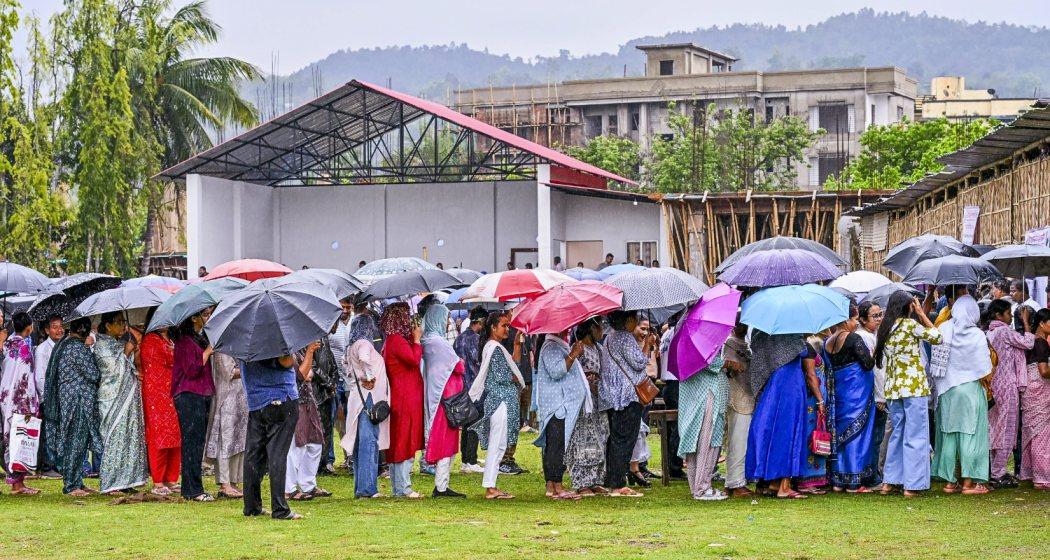
Women voters outnumbered men in Assam’s 2026 Assembly elections, with female turnout reaching 86.50 per cent against 85.33 per cent among men, according to official data released on Friday.
The overall voter turnout stood at 85.91 per cent, among the highest recorded in the state’s electoral history, underscoring both strong participation and a continuing shift in gender dynamics at the ballot box.
The data marks a continuation of a trend that has gathered momentum over the past decade, with women steadily closing the participation gap before overtaking men in successive elections. In the 2021 Assembly polls, female turnout had already edged past male participation, registering 82.01 per cent compared to 81.60 per cent. A similar pattern was visible in 2016, when women marginally outnumbered male voters.
This represents a sharp contrast to earlier decades, when women’s participation lagged significantly behind. In the 1962 Lok Sabha elections, male turnout stood at 58.39 per cent, while female turnout was considerably lower at 42.05 per cent. The disparity persisted through the 1960s and 1970s, reflecting structural and social barriers that limited women’s access to the electoral process.
Also read: Historic poll participation in Assembly, by-elections
Over time, however, Assam has witnessed a steady rise in overall voter participation. From 47.54 per cent in the first elections held in 1951, turnout gradually increased, crossing 70 per cent in the 1990s and exceeding 80 per cent in recent Assembly polls.
Officials and analysts attribute the narrowing and eventual reversal of the gender gap to a combination of factors, including improved electoral infrastructure, sustained voter awareness campaigns, and targeted efforts to encourage women’s participation. Initiatives aimed at ensuring safer polling environments and greater accessibility have also played a role.
The rising turnout among women is also seen as a reflection of broader socio-political changes in the state, with increased awareness, education, and mobilisation contributing to greater political engagement.
The 2026 figures underline a significant milestone in Assam’s democratic trajectory, with women emerging as a decisive electoral force. The sustained increase in participation levels, coupled with a more balanced electorate, is likely to influence political strategies as parties seek to consolidate support among women voters.
With Assam continuing to record high turnout figures, the latest data points to a maturing electorate where participation is both widespread and increasingly inclusive.



 Follow us