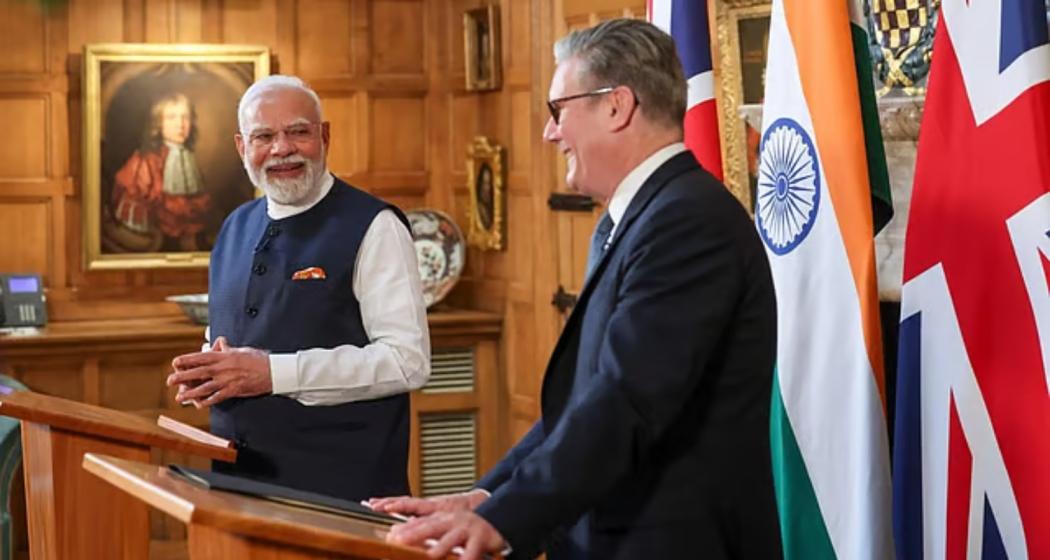
The India-UK free trade agreement is likely to come into force from the second week of May, an official of the Department of Commerce (Ministry of Commerce & Industry) said on condition of anonymity. India and the United Kingdom had signed the Comprehensive Economic and Trade Agreement (CETA) on July 24, 2025, aimed at boosting trade and investment flows. The agreement seeks to eliminate tariffs on a vast majority of goods and improve market access for businesses on both sides.
“We are expecting the pact to be implemented from the second week of May,” the official said, indicating that necessary procedural steps are nearing completion.
Alongside the trade pact, the two countries have also signed the Double Contributions Convention (DCC), which is expected to be implemented in parallel. The agreement is designed to prevent temporary workers from paying social security contributions in both countries, thereby reducing compliance costs and facilitating easier movement of professionals.
Under the trade agreement, about 99 per cent of Indian exports will gain duty-free access to the UK market. Key sectors expected to benefit include textiles, footwear, gems and jewellery, sports goods and toys, which are likely to see improved competitiveness in the British market.
Also read: India-UK trade pact likely from April 2026
India, on its part, has agreed to gradually reduce tariffs on a range of British goods, including automobiles and alcoholic beverages. Tariffs on Scotch whisky, currently as high as 150 per cent, will be cut to 75 per cent immediately after implementation and further reduced to 40 per cent by 2035.
Similarly, import duties on British automobiles will be brought down to 10 per cent over a five-year period from existing levels that can go up to 110 per cent. The reductions will be implemented under a quota-based system, allowing for a calibrated opening of the domestic market.
In return, Indian manufacturers are expected to gain access to the UK market for electric and hybrid vehicles under a quota framework, providing new opportunities in the evolving automotive sector.
The agreement also opens India’s market to a range of British consumer goods, including chocolates, biscuits and cosmetics, while creating a more predictable trade environment.
CETA aims to double bilateral trade from the current USD 56 billion by 2030, reflecting the ambition of both countries to deepen their economic partnership.
With the implementation timeline now in sight, the pact is expected to provide a fresh impetus to trade, investment and mobility between India and the UK.



 Follow us