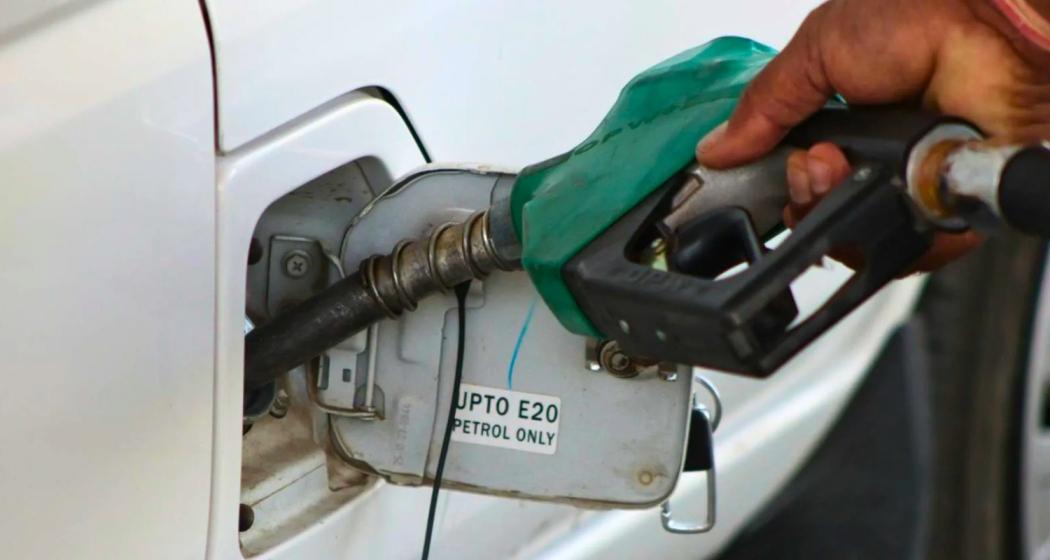
The Centre has mandated the sale of ethanol-blended petrol with up to 20 per cent ethanol and a minimum Research Octane Number (RON) of 95 across all states and Union Territories from April 1, 2026.
In a February 17 notification, the Ministry of Petroleum and Natural Gas directed oil marketing companies to sell ethanol-blended motor spirit (E20) conforming to Bureau of Indian Standards specifications and having a minimum RON of 95. The government may grant exceptions in special situations for specific regions and limited durations.
The move is aimed at reducing crude oil imports, lowering emissions and supporting farmers by boosting demand for sugarcane, maize and other agricultural produce used in ethanol production.
Ethanol is a renewable, domestically produced fuel derived from sugarcane, maize or grain, and burns cleaner than pure petrol. India achieved 10 per cent ethanol blending in petrol in June 2022, five months ahead of schedule. Encouraged by the progress, the government advanced the target of 20 per cent blending to 2025-26 from 2030. Most fuel stations now retail E20.
The insistence on a minimum RON of 95 is intended to prevent engine knocking and potential damage. RON measures a fuel’s resistance to pre-ignition or knocking, uneven fuel combustion that can cause a pinging sound, loss of power and long-term engine harm. The higher the RON, the greater the resistance to knocking.
Ethanol naturally has a high octane value of around 108 RON. Blending 20 per cent ethanol in petrol improves knock resistance and enhances combustion stability.
Industry officials said most vehicles manufactured between 2023 and 2025 are E20-compatible and are unlikely to face major issues. Older vehicles, however, may experience a slight drop in mileage of 3-7 per cent and possible wear in rubber or plastic components.
Also read: Biofuel, new tech antidote to air pollution: Gadkari
According to the oil ministry, ethanol blending has helped India save over Rs 1.40 lakh crore in foreign exchange since 2014-15 through reduced petrol imports.
The push towards E20 fuel had earlier drawn resistance from sections of automobile dealers, transport operators and consumer groups, particularly when the Centre advanced the 20 per cent blending target from 2030 to 2025-26.
Several dealer associations had flagged concerns over vehicle compatibility and warranty issues. “Many customers are worried whether their older vehicles are fully compatible with E20. There is confusion at the retail level,” SIAM (Society of Indian Automobile Manufacturers) had said during consultations last year.
Transport operators had also expressed apprehension over possible mileage reduction. “Even a 3–5 per cent drop in fuel efficiency affects operating costs significantly for commercial vehicles,” a transport union leader had stated.
Some farmer groups, however, backed the move, arguing that higher ethanol blending would stabilise sugarcane prices and provide an assured market for surplus produce. “Ethanol blending supports rural incomes and reduces dependency on imports,” a sugarcane growers’ association had said.
Environmental experts have offered mixed assessments. While many acknowledge that ethanol blending lowers tailpipe emissions and reduces crude oil imports, some researchers cautioned about the water-intensive nature of sugarcane cultivation. “The sustainability question depends on crop choice and regional water stress,” an energy policy analyst had observed.



 Follow us