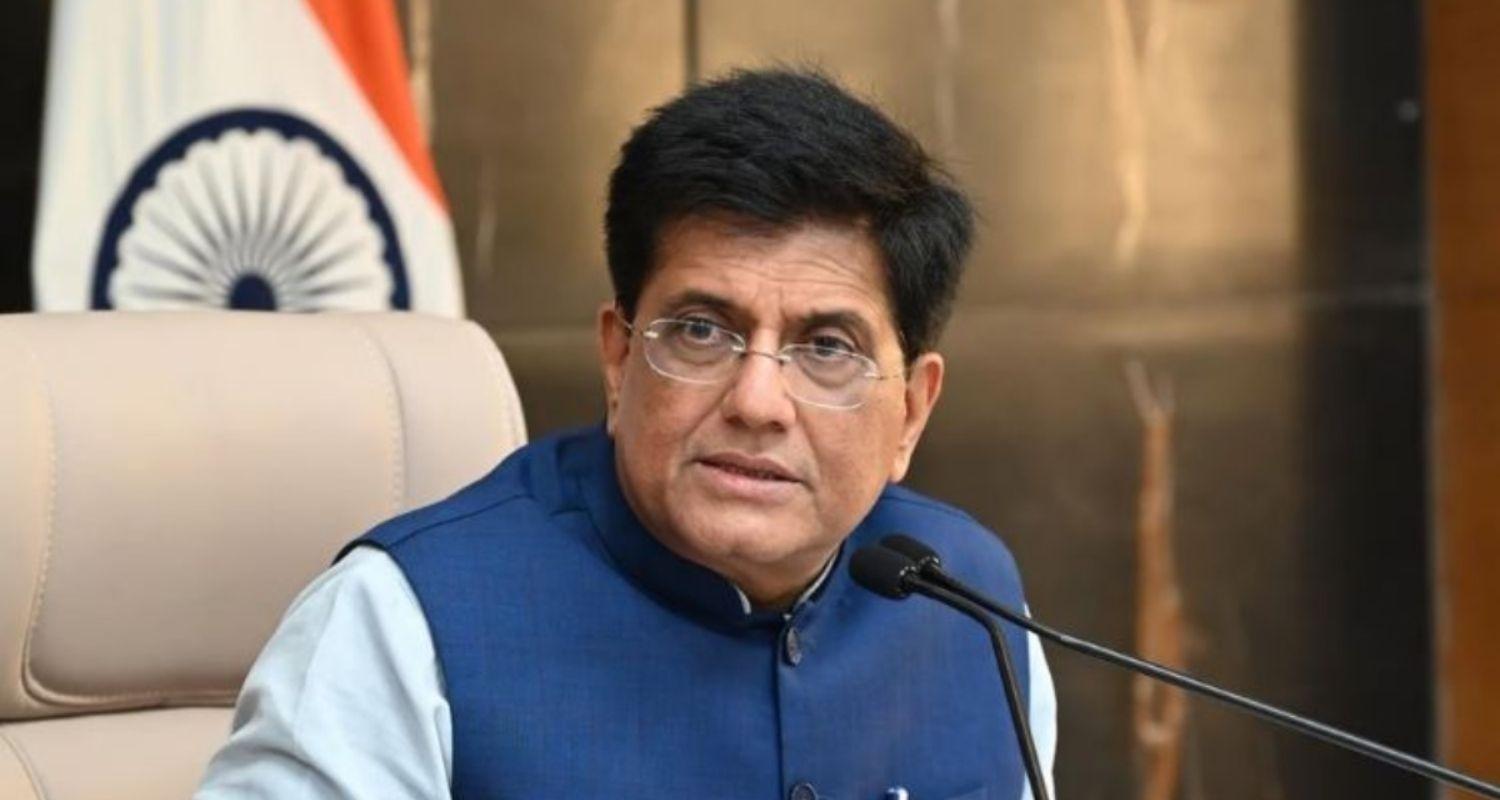
The Free Trade Agreement (FTA) signed between India and the United Kingdom is the most comprehensive trade pact India has negotiated to date, and its economic potential is virtually limitless if businesses on both sides fully utilise the opportunities it offers, Commerce and Industry Minister Piyush Goyal said on Thursday.
Goyal, who arrived in the UK on a three-day visit, is set to review preparations for the implementation of the India-UK Comprehensive Economic and Trade Agreement (CETA), which is scheduled to come into force on July 15.
Speaking at the India Global Forum (IGF) UK-India Week at the beginning of his visit, the minister urged companies in both countries to capitalise on the landmark agreement and work towards significantly expanding the existing bilateral trade relationship, currently valued at an estimated 48 billion pounds annually.
"The UK free trade agreement will be the first and most comprehensive agreement that India has entered into so far," Goyal said. Describing the partnership as one between two complementary and rapidly growing economies, he said both nations share similar outlooks and business cultures, creating ideal conditions for deeper economic integration.
"We understand each other, and our mindsets have many similarities. If businesses on both sides leverage the benefits of CETA effectively, the sky is the limit," he remarked. Goyal also described official UK government projections of a 25-billion-pound annual boost to bilateral trade as a result of tariff reductions under the agreement as relatively conservative.
Also read: Jeju Forum: Jaishankar calls for closer cooperation with S Korea
"That estimate is very modest. I believe businesses in both countries should think much bigger and be far more ambitious," he said, calling on industry leaders to seize the opportunity presented by the agreement and spread awareness about its potential benefits. The minister also praised the UK's approach during the lengthy FTA negotiations, noting that despite political transitions from Conservative to Labour governments, there was remarkable continuity in policy and commitment.
"Ministers may have changed, but I must compliment the UK for maintaining continuity in decisions and for honouring commitments already negotiated," Goyal said. During his visit, Goyal is expected to hold a high-level bilateral meeting with UK Secretary of State for Business and Trade Peter Kyle. Their discussions will focus on regulatory alignment, customs coordination and the finalisation of administrative frameworks necessary for the smooth rollout of CETA.
Speaking at the India Global Forum a week earlier, Kyle had highlighted the significance of the agreement, saying it removes not only tariff barriers but also several non-tariff obstacles that have traditionally slowed trade.
"The deal we have concluded with India removes a wide range of barriers. It's not just about tariffs; it also covers non-tariff issues, data sharing, the use of technology to facilitate trade and stronger legal foundations for intellectual property protection," Kyle said.
According to him, these measures will not only make trade more profitable but also faster and more efficient. He even envisioned the possibility of unprecedented business collaborations emerging from the strengthened partnership. "Wouldn't it be remarkable if the world's first trillion-dollar company was a joint venture between a British and an Indian company? I don't see why such ambitions are impossible in the era we are living in," he said.
Kyle also described Goyal as one of the most effective, knowledgeable and experienced ministers he has worked with, adding that the agreement delivers benefits that extend beyond commercial gains and contribute to the long-term resilience of both economies.
Responding to questions about concerns related to new UK steel tariffs that delayed the implementation of CETA by a few weeks, Goyal acknowledged that trade negotiations often involve complex domestic considerations.
"When it comes to issues such as steel, every country has sectors that are politically, economically or strategically sensitive. There will always be challenges and sticking points," he said.
The minister noted that strong bilateral relationships make it possible to have frank discussions and find solutions when such issues arise. "It is never truly a finished job. What remains most important now is ensuring that businesses fully utilise the opportunities created by CETA and translate the agreement into tangible economic growth," Goyal added.



 Follow us