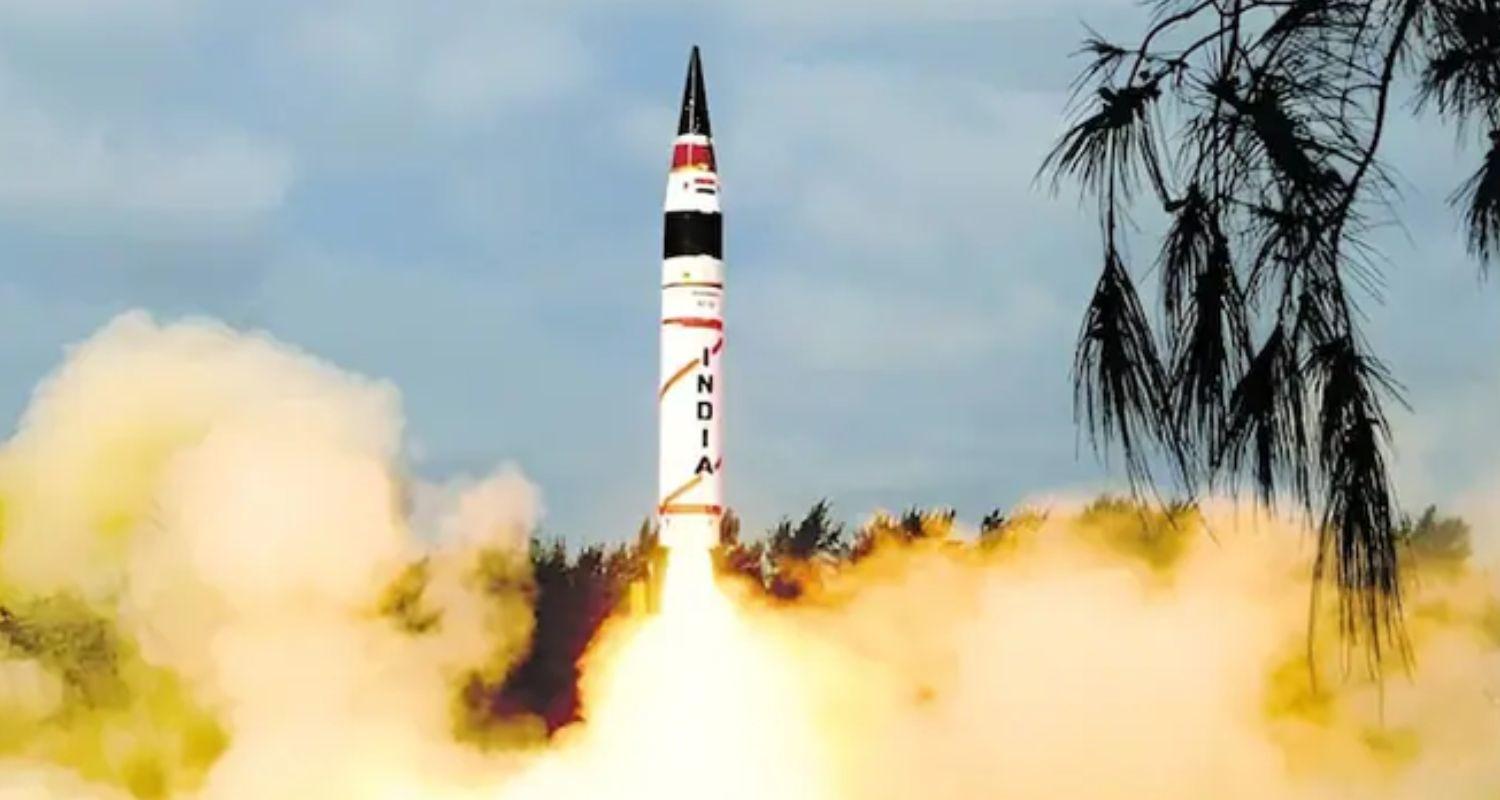
India has now notified a NOTAM declaring a broad swath of the Bay of Bengal as a danger area due to the testing of a long-range missile, which will remain in effect until April 25 to May 6, 2026. The danger area is reported to be about 3,550 kilometres, and such a vast range clearly implies preparations for the launching of an IRBM. According to defence officials, the trajectory and footprint of the NOTAM are consistent with the specifications of the Agni-IV, which is a two-stage missile with solid fuel propulsion and can deploy a payload of 1,000 kilograms to distances up to 3,500 kilometres.
The significance of this test lies in the fact that this period coincides with the one-year anniversary of Operation Sindoor. While the Ministry of Defence has avoided any official connection between the two events, it is considered by the strategists as a regular exercise and a message of operational capability.
This comes after the rigorous testing process undergone by the strategic arsenal of the nation, such as the underwater K-4 and the hypersonic LRAShM, both of which form the basis of the credible minimum deterrence doctrine.
Parallel to these heavy ballistic capabilities, efforts are also underway to modernise tactical vectors. Currently, the BrahMos cruise missile is being tested to extend its range up to 800 km, with the process of full induction set to be completed by the end of 2027.
A NOTAM, which is a regular but important step in any high-profile activity of this nature, ensures that no civilian planes fly in areas of concern. Once the area is cleared, the chances of any mid-air accidents are mitigated, and the military forces can function safely in the area, whether missiles or drones are involved.
Also read: President Droupadi Murmu reviews Army training at ARTRAC



 Follow us